walking upstream…
Keane


sourcesWikipedia
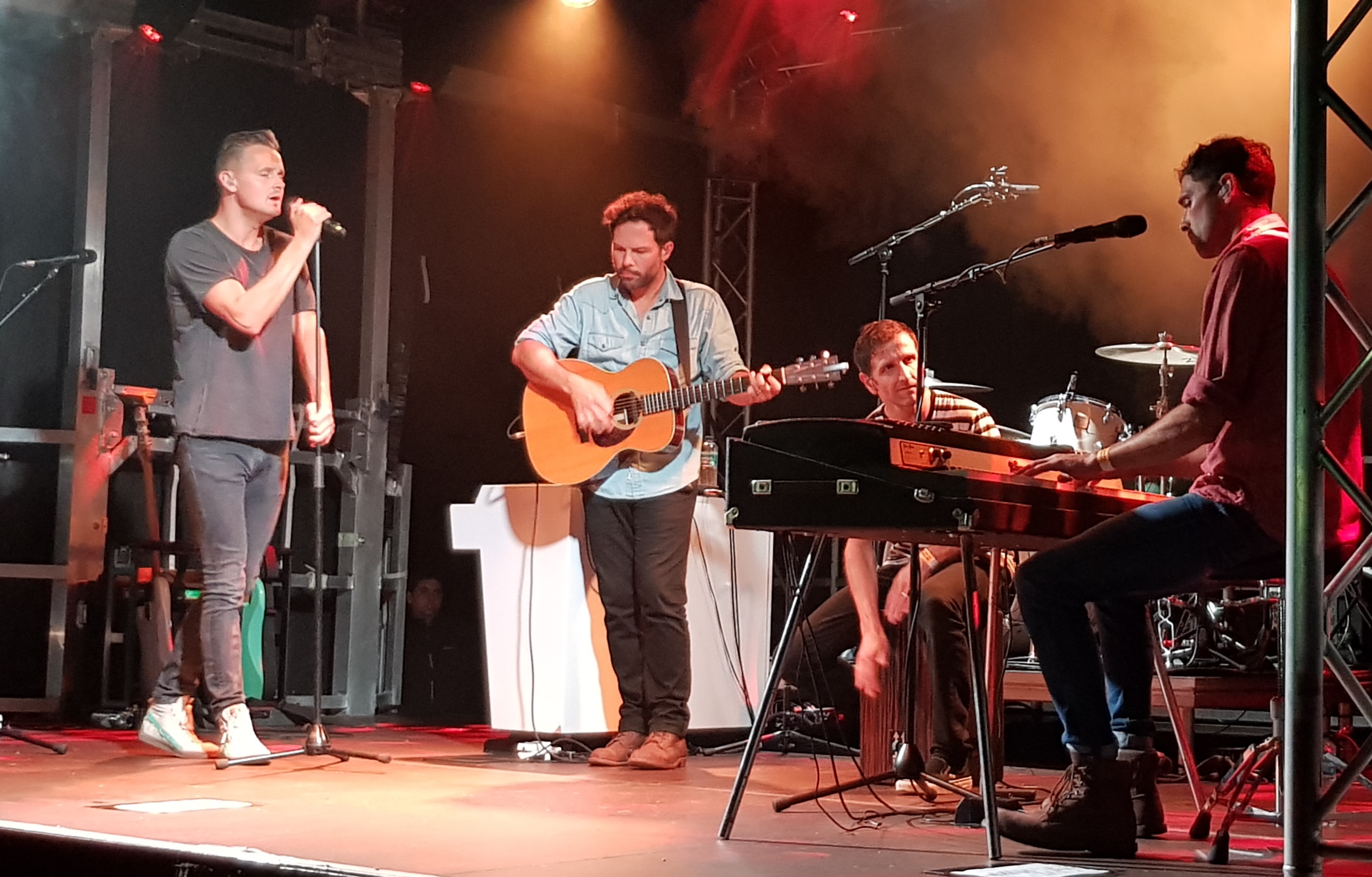
Keane came together in the small East Sussex town of Battle, where childhood friends Tim Rice-Oxley, Richard Hughes, and Tom Chaplin settled into their classic lineup after guitarist Dominic Scott's 2001 departure left them a guitarless trio built around Rice-Oxley's piano. Their 2004 debut 'Hopes and Fears' turned that unusual setup into one of the defining British pop-rock sounds of the mid-2000s: reverberant, keyboard-led, and built for widescreen emotional release, carried by Chaplin's plaintive, wide-ranging tenor. They stayed a fixture of UK arena rock through 'Under the Iron Sea' and 'Perfect Symmetry' before a mid-2010s hiatus, reuniting in 2019 for 'Cause and Effect.'
the sound in question
2004
Somewhere Only We KnowKeane
walk the tributaries ↓
The Smiths1980s · Jangle pop / Post-punk / Alternative rock
Tim Rice-Oxley has called the Smiths 'one of the biggest influences on the whole band,' recalling long van journeys up the M1 with 'The Queen Is Dead' and 'Hatful of Hollow' on repeat. Their imprint isn't in Johnny Marr's guitar jangle — Keane doesn't have a guitarist — but in the trick of setting a plainly sad lyric against a tune so pretty it almost argues back, letting melancholy and melody pull in opposite directions inside the same verse.
listen: upstream & heresource: MusicRadar ↗
1986
There Is a Light That Never Goes OutThe Smiths
2004
BedshapedKeane
listen forCue up 'There Is a Light That Never Goes Out' next to 'Bedshaped' — both let a narrator confess something bleak over a chord progression so lovely it nearly undercuts the words, building toward a chorus that swells rather than collapses.
Kraftwerk1970s–80s · Electronic / Krautrock / Synth-pop
Looking back at Keane's catalogue for a 20th-anniversary retrospective, Rice-Oxley was struck by 'how much electronic stuff seemed to creep into our songs,' tracing it to Kraftwerk's 'Man Machine' album. It surfaces less as a genre shift than a texture: rigid, pulsing sequencer patterns and cold, motorik repetition set against Chaplin's very human, quavering voice.
listen: upstream & heresource: MusicRadar ↗
1978
The ModelKraftwerk
2008
SpirallingKeane
listen forPlay 'The Model' and then 'Spiralling' — both lock into a stiff, unwavering synth pulse that never swings or loosens, the sound of a machine keeping perfect time underneath a song about artifice and performance.
Röyksopp2000s · Electronic / Downtempo / Synth-pop
In that same retrospective interview, Rice-Oxley named Röyksopp's debut 'Melody A.M.' as 'the other side of Keane's electronic influence,' praising its balance of 'melody and atmosphere' — a phrase that doubles as a mission statement for Keane's own synth-washed material. Where Kraftwerk gave them rigidity, Röyksopp gave them the idea that layered, programmed electronics could still feel warm and emotionally legible.
listen: upstream & heresource: MusicRadar ↗
2001
Poor LenoRöyksopp
2008
Black Burning HeartKeane
listen forSet 'Poor Leno' beside 'Black Burning Heart' — both drift over a wide bed of arpeggiated, slightly detuned synths that feel more like weather than rhythm, with a vocal that sounds like it's singing from inside the haze rather than on top of it.