walking upstream…
Stéphane Grappelli
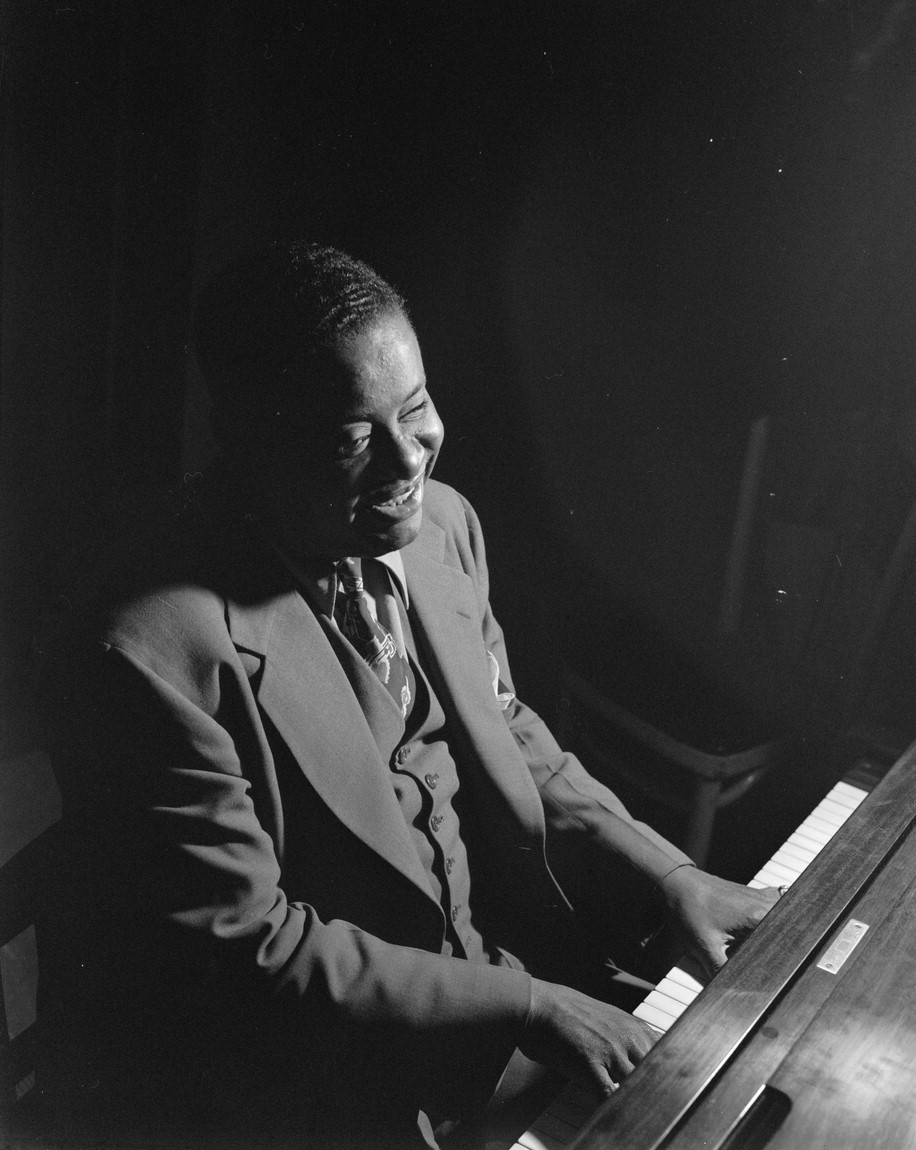

 photo: allan warren · cc by-sa 3.0 ↗
Stéphane Grappelli
sourcesRolling Stone — "Improvising with Jazz Violinist Stéphane Grappelli" (childhood, Isadora Duncan's school, first hearing Debussy) · National Jazz Archive — Stéphane Grappelli · The Independent — "Obituary · The Telegraph — "Stephane Grappelli" obituary (the Quintette as Europe's first jazz style without American ancestry; Grappelli on Django's unreliability) · The Syncopated Times — "Stéphane Grappelli" (Joe Venuti's bowing at the Ambassador Hotel as a formative influence) · The Strad — "Born on this day
Stéphane Grappelli lost his mother at three and spent his childhood in Paris orphanages — "like a Dickens novel," he called it. A rare escape came at six, at a school run by the dancer Isadora Duncan, where he first heard Debussy played live. Self-taught on a three-quarter violin his father pawned a suit to buy, he was busking by fifteen and finding American jazz on a café jukebox soon after: "I felt I was born with jazz," he said. In 1934, fooling around backstage on "Dinah" with the guitarist Django Reinhardt, he helped invent the Quintette du Hot Club de France, later called Europe's first jazz style with no American ancestor — a partnership he'd admit was more ordeal than friendship. Still headlining in his eighties, his own greatest ambition pointed past the guitarist beside him, toward a pianist he never got to share a stage with.
the sound in question
1937
Minor SwingStéphane Grappelli
walk the tributaries ↓
Art Tatum1930s–40s · Jazz / Stride piano / Swing
Asked in 1977 to name his musical touchstones, Grappelli didn't reach for a violinist. "Not so much to the great jazz violinists," he told Rolling Stone, "but rather to pianist Art Tatum. For me, my god is Art Tatum... My greatest ambition is to be the Art Tatum of the violin." By then he'd shared stages with Count Basie, Duke Ellington, and Oscar Peterson, but never Tatum — and the missed chance clearly gnawed at him, proof that a musician's deepest debt isn't always owed to someone playing the same instrument.
listen: upstream & heresource: Rolling Stone — "Improvising with Jazz Violinist Stéphane Grappelli" (Grappelli names Art Tatum his musical "god") ↗
1933
Tea for TwoArt Tatum
Tea for TwoStéphane Grappelli
listen forTatum's 1933 solo "Tea for Two" barely states the tune before reharmonizing under it, cramming double-time runs into every gap the melody leaves open — the touch Grappelli called "an orchestra" in one man's hands. Grappelli's own violin version with the Quintette du Hot Club de France borrows that restlessness rather than the notes themselves: listen for how he keeps pushing past the melody's resting points, stacking arpeggios and quick harmonic detours where a more literal player would simply swing the tune. It's a pianist's density, translated onto a single bowed string.
Joe Venuti1920s–30s · Jazz / Swing
Grappelli had already heard the jazz violinist Joe Venuti live in a Paris hotel orchestra when, backstage at the Hotel Claridge in 1933, he broke a string and started fooling around on "Dinah" with a guitarist he barely knew, Django Reinhardt. "All of a sudden we start fooling around playing 'Dinah' together," he told Rolling Stone, "pretending we are Eddie Lang and Joe Venuti" — Lang being Venuti's regular guitar partner. The jam that founded the Quintette du Hot Club de France began, by Grappelli's own account, as an impression of the specific duo he'd made his private model.
listen: upstream & heresource: Rolling Stone — "Improvising with Jazz Violinist Stéphane Grappelli" (Grappelli on first jamming "Dinah" with Django Reinhardt, pretending to be Eddie Lang and Joe Venuti) ↗
1928
DinahJoe Venuti
1934
DinahStéphane Grappelli
listen forVenuti and Lang's 1928 "Dinah" trades the tune back and forth between violin and guitar like two people finishing each other's sentences, the violin darting into hot double-stops while the guitar answers in single-note runs. On the Quintette's first commercial session in December 1934 — the same tune Grappelli and Reinhardt had used to break the ice backstage — listen for that identical call-and-response shape, now with three guitars behind it instead of one, Grappelli's violin still taking the lead role Venuti had modeled six years earlier.
Louis Armstrong1920s–30s · Jazz
Grappelli never named Louis Armstrong in his own words the way he did Art Tatum or Joe Venuti, but multiple biographical accounts place Armstrong's records at the exact moment jazz took hold of him: as a teenager accompanying silent films, he spent his breaks at a café jukebox that played Armstrong's American recordings, and, per his 1997 Independent obituary, "sought out fellow enthusiasts and records by his first heroes, Armstrong and Beiderbecke." It's secondhand testimony rather than his own, but it's consistent — the jukebox discovery that made him choose jazz over the classical training he'd started with.
listen: upstream & heresource: The Violin Shop (Fein Violins) — "Hot Enough For Ya?" (Louis Armstrong, Eddie Lang, and Joe Venuti named as jukebox-era influences) ↗
1928
West End BluesLouis Armstrong
1934
Tiger RagStéphane Grappelli
listen forArmstrong's 1928 "West End Blues" opens with an unaccompanied cadenza that treats the melody as raw material to be stretched, delayed, and reshaped in real time rather than simply stated. The Quintette's 1934 "Tiger Rag" — a much older vaudeville tune remade as a showcase for pure improvised speed and daring — carries that same appetite for taking liberties with a familiar theme rather than playing it straight. No single phrase passes from one recording to the other; it's the willingness to gamble on a melody that does.