walking upstream…
Soft Cell



In the late 1970s, at Leeds Polytechnic, Marc Almond staged a performance piece called Mirror Fucking — naked, smeared in cat food, confronting his own reflection — while fellow art student Dave Ball supplied bleeping synthesiser noise from the side. The noise became songs; the songs became Soft Cell. Working the cloakroom at a Leeds club called the Warehouse, Almond heard the DJ drop a scratchy 1964 Northern Soul B-side and ran up to ask its name. Their cover of that record, "Tainted Love," became the best-selling UK single of 1981 and set a US chart record for weeks at number one. Their debut album, Non-Stop Erotic Cabaret, married the seaside melancholy of Blackpool and Southport to stark electronics and Soho sleaze — theatrical pop built by two self-described "weird guys from art school" who never once wanted to be new romantics.
the sound in question
1981
Tainted LoveSoft Cell
walk the tributaries ↓
Gloria Jones1960s-70s · Northern soul / R&B / Soul
Dave Ball knew the song before Soft Cell existed — a Northern Soul club-night staple in his native Blackpool, buried as a B-side to a single that flopped in 1964. Marc Almond arrived at it differently: a devoted T. Rex fan, he had seen Gloria Jones singing with Marc Bolan's band on tour. Choosing between it and Frankie Valli's "The Night" for their live set, he said, "I was a huge T Rex fan and had seen Gloria Jones sing with them, so that clinched it." The pick wasn't chart strategy. It was two record collections colliding in a rehearsal room.
listen: upstream & heresource: The Guardian — How we made Soft Cell's Tainted Love (Ball/Almond on Gloria Jones, the Warehouse club, Bowie/Bolan stagecraft) ↗
1964
Tainted LoveGloria Jones
1981
Tainted LoveSoft Cell
listen forPlay Jones's 1964 original first: a Northern Soul stomper, horns and a driving rhythm section pushing under her raw, gospel-schooled belt. Then Soft Cell's version — same melody, same title — with the band and horns gone, replaced by a flat drum-machine clatter and a two-note Korg riff. Almond sings it cooler and further back in the mix than Jones ever would, turning her plea into something closer to a sneer. It is the most literal transformation in the catalogue: identical song, opposite temperature.
Kraftwerk1970s–80s · Electronic / Krautrock / Synth-pop
Dave Ball's account of becoming an electronic musician starts in a Blackpool ice cream van. "Like most people of my age, I was blown away by Autobahn," he told Mojo. "I was working in an ice cream van in Blackpool with a guy who had a cassette of it," and he had seen Kraftwerk on Tomorrow's World, the BBC's science and technology programme. He went straight to a Blackpool music shop and bought a second-hand synthesiser — the instrument that, a few years later, would carry every Soft Cell record he and Almond made.
listen: upstream & heresource: The Quietus — Non-Stop Erotic Cabaret ↗
1974
AutobahnKraftwerk
1981
BedsitterSoft Cell
listen forKraftwerk's "Autobahn" is built from clean, sustained synthesiser tones with almost no percussive attack, sound treated as pure texture rather than performance. Listen for that same commitment to synthetic minimalism on Soft Cell's "Bedsitter": the twangy bassline is a Korg Synthe Bass unit Ball carried into the New York sessions, and the drums are a Roland TR-808, among the first ever heard on a UK chart single. Where Kraftwerk kept its machines cool and remote, Soft Cell put a bored, restless voice on top — but the electronic backbone traces straight back to that ice cream van cassette.
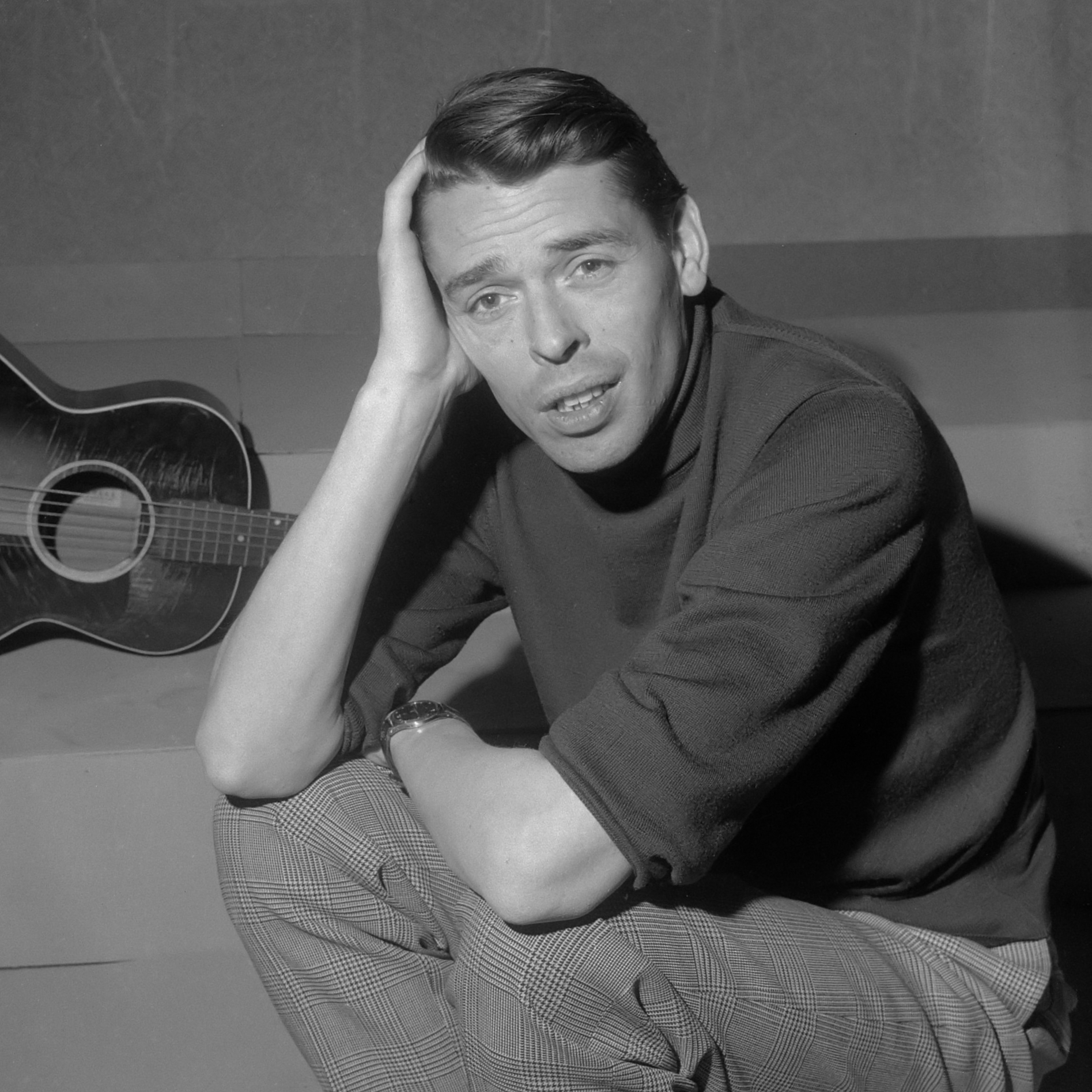
Jacques Brel1950s-60s · Chanson / Cabaret
Almond grew up on Dusty Springfield's polished English translation of Brel's "Ne me quitte pas," but when he came to record the song himself he went back to a harsher, truer version of the French original and found it changed shape in his hands: "it becomes a pleading, desperate song, voyeuristic, sexual and sinister," he said. In 1989 he recorded an entire album of Brel covers, Jacques, and has traced his own approach to singing directly to the Belgian songwriter, describing himself as a storyteller before he is ever a technician.
listen: upstream & here
1959
Ne me quitte pasJacques Brel
1982
Say Hello, Wave GoodbyeSoft Cell
listen forBrel's "Ne me quitte pas" builds from a hushed, almost pleading vocal into a physically wrung-out crescendo, no arrangement flourish, just Brel emptying himself into the microphone. Almond named that same quality when he called his own "Say Hello, Wave Goodbye" Brelian: "songs like Say Hello Wave Goodbye have a Brelian sense of disillusioned romance," he said. Listen for how the synth-pop backing drops away under his voice at the chorus, leaving him alone with the title's flat, exhausted goodbye. Neither song hides behind its melody.