walking upstream…
Snoop Dogg

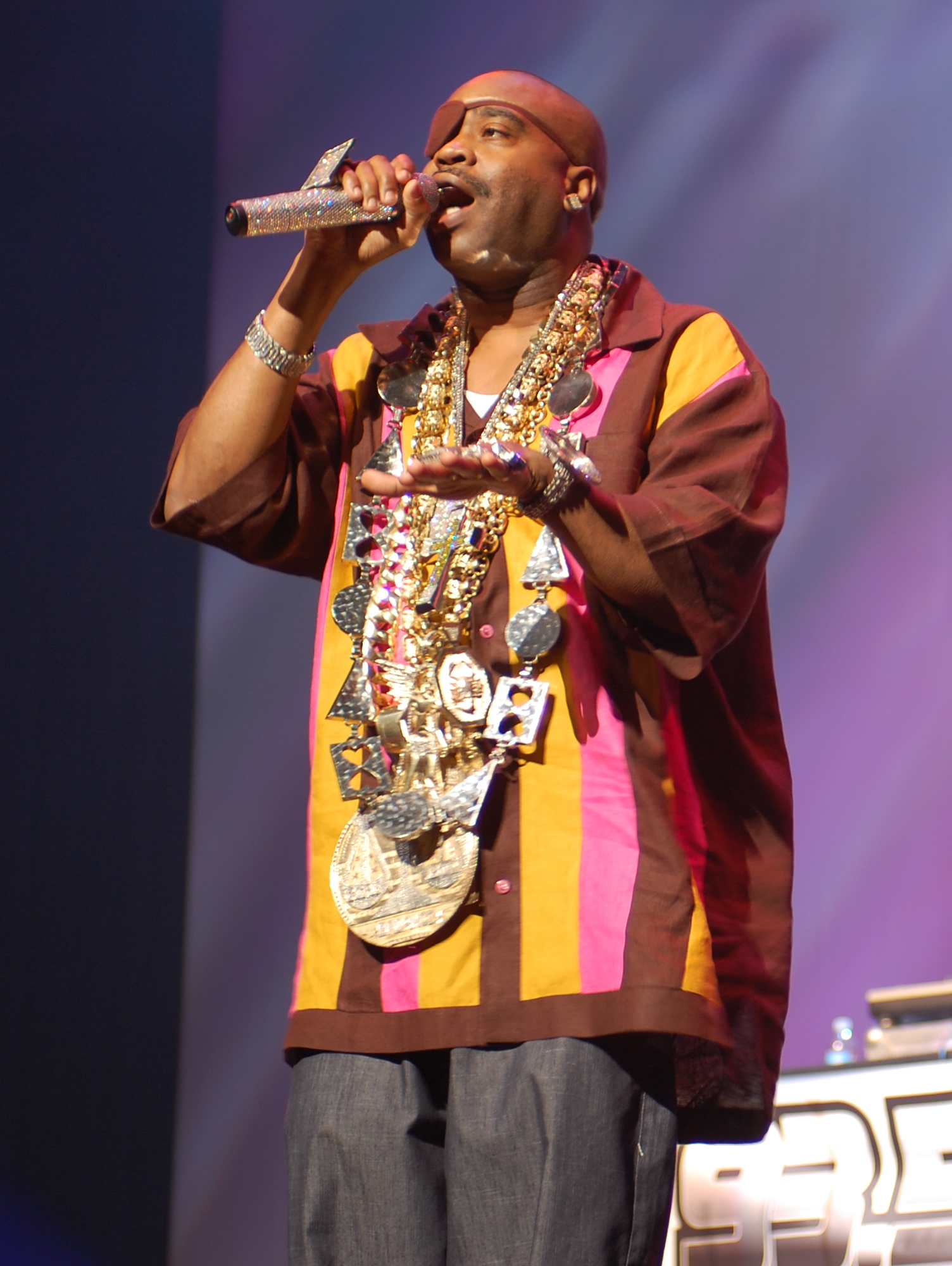
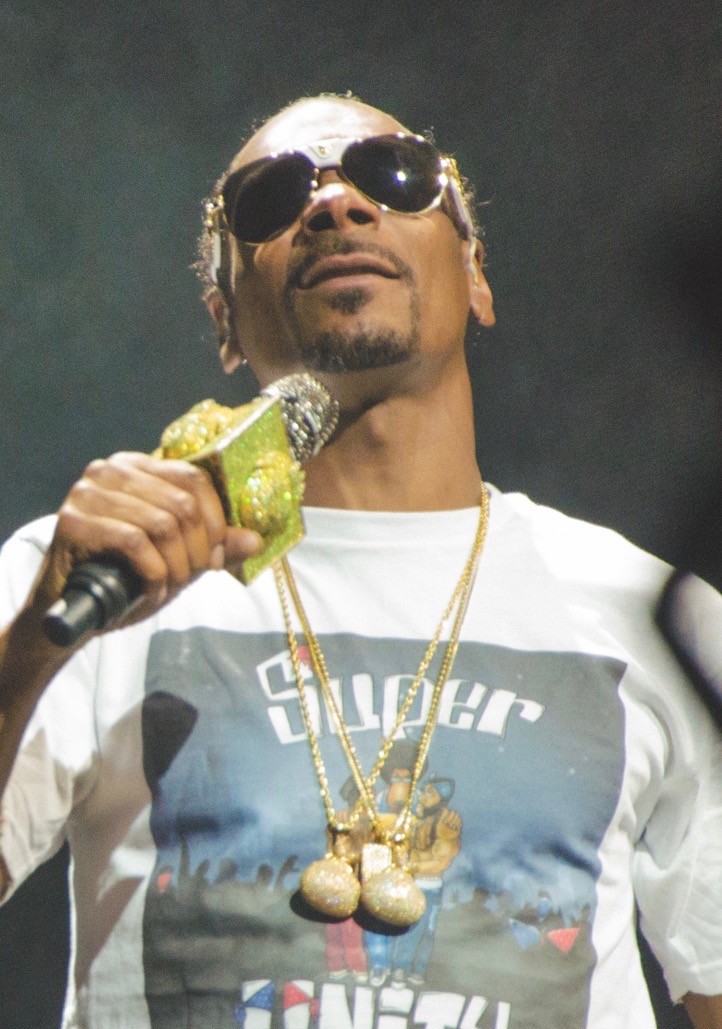
In 1991, a mixtape of Long Beach freestyles — one verse laid over En Vogue's "Hold On" — found its way to Dr. Dre, who called the twenty-year-old in to audition. Calvin Broadus Jr., soon Snoop Doggy Dogg, appeared on Dre's "Deep Cover" and then The Chronic before Dre built an entire album, Doggystyle, around his unhurried drawl; it debuted atop the Billboard 200 in 1993 with 806,000 copies sold in its first week. "Dr. Dre has like always been a big brother, a mentor," Snoop said later, crediting him with teaching "professionalism" as much as hooks. But the raw material Dre shaped — the laid-back cadence, the character work, the funk worn on his sleeve — Snoop had been gathering since childhood, one bedroom poster and one cassette tape at a time.
the sound in question
1994
Gin and JuiceSnoop Dogg
walk the tributaries ↓
George Clinton1970s · Funk / Psychedelic soul / R&B
As a kid, Calvin Broadus kept a poster on his bedroom wall of Sir Nose, George Clinton's cartoon alter-ego, standing on top of water — "because he didn't like to swim," Snoop told Rolling Stone. "I didn't even know what dope was...but I knew it was funny and it felt good to me." That feeling became doctrine: when Dr. Dre built Snoop's 1993 breakthrough single around Clinton's own "Atomic Dog," Snoop wasn't just borrowing a bassline, he was quoting the record he'd worshipped as a child. Clinton, unlike peers who fought sampling, "allowed us to use his music," Snoop said — turning worship into collaboration.
listen: upstream & heresource: Rolling Stone — How George Clinton Taught Snoop Dogg the Meaning of 'Dope' (2015, George Clinton influence, verified quotes) ↗
1982
Atomic DogGeorge Clinton
1993
Who Am I? (What's My Name?)Snoop Dogg
listen forClinton's original rides a single, dirty synth-bass hook under his own half-sung, half-barked vocal — the character voice of a dog that talks. On "Who Am I? (What's My Name?)," Dr. Dre lifts that bassline nearly whole and slows it into the rolling, syrupy pocket that would define G-funk, while Snoop's melodic, elongated "bow-wow-wow" hook answers Clinton's original bark line for line. Listen for how both tracks make the bass, not the drum, the lead voice — Snoop's cadence rides on top of it exactly the way Clinton's did eleven years earlier.
Slick Rick1980s · Hip-hop / East Coast hip-hop / Old-school hip-hop
On Doggystyle, one track breaks format entirely: "Lodi Dodi" is a nearly word-for-word remake of Slick Rick and Doug E. Fresh's 1985 talking-blues classic "La Di Da Di," rerecorded eight years later over Dr. Dre's slow-rolling G-funk. Covering another rapper's song outright was still close to taboo in hip-hop; as the culture site Albumism later put it, the record "bucked this trend," opening a door hip-hop covers walked through by the mid-'90s. Snoop's cadence — flexible enough to hold a joke, a character voice, and a punchline in the same bar — descends directly from the storyteller he chose to imitate rather than sample.
listen: upstream & heresource: Albumism — Rediscover Snoop Dogg's Debut Album 'Doggystyle' (2019, Slick Rick / 'Lodi Dodi' cover, verified quote) ↗
1985
La Di Da DiSlick Rick
1993
Lodi DodiSnoop Dogg
listen forRick's original is pure vocal theater: no chorus, just a talking-blues cadence that speeds up, drops to a whisper, and snaps back for the punchlines, with Doug E. Fresh's beatbox as the only rhythm track. Snoop's "Lodi Dodi" keeps Rick's plot and phrasing nearly intact but pours it into Dre's thick, synth-bass G-funk pocket — the same elastic, unhurried delivery, now with a live groove instead of a human beatbox underneath it. Listen for how closely Snoop tracks Rick's exact pauses and inflections; the cover is as much an impression as a remake.