walking upstream…
Sepultura


sourcesWikipedia
Brothers Max and Igor Cavalera formed Sepultura in Belo Horizonte, Brazil, in 1984, the same day Max heard Black Sabbath's 'Vol. 4' in the wake of their father's sudden death. Early releases leaned into first-wave black and death metal before 'Beneath the Remains' (1989) and 'Arise' (1991) refined a technical, down-tuned deathrash sound that stood alongside the genre's American and European vanguard. 'Chaos A.D.' (1993) pulled the tempos back into a martial, groove-driven crawl, and 'Roots' (1996) folded in Brazilian percussion and indigenous collaborators, a fusion largely unheard of in metal at the time. Max's 1996 departure split the band, but under guitarist Andreas Kisser, Sepultura has kept recording and touring for decades as Brazil's most influential metal export.
the sound in question
1993
Refuse/ResistSepultura
walk the tributaries ↓
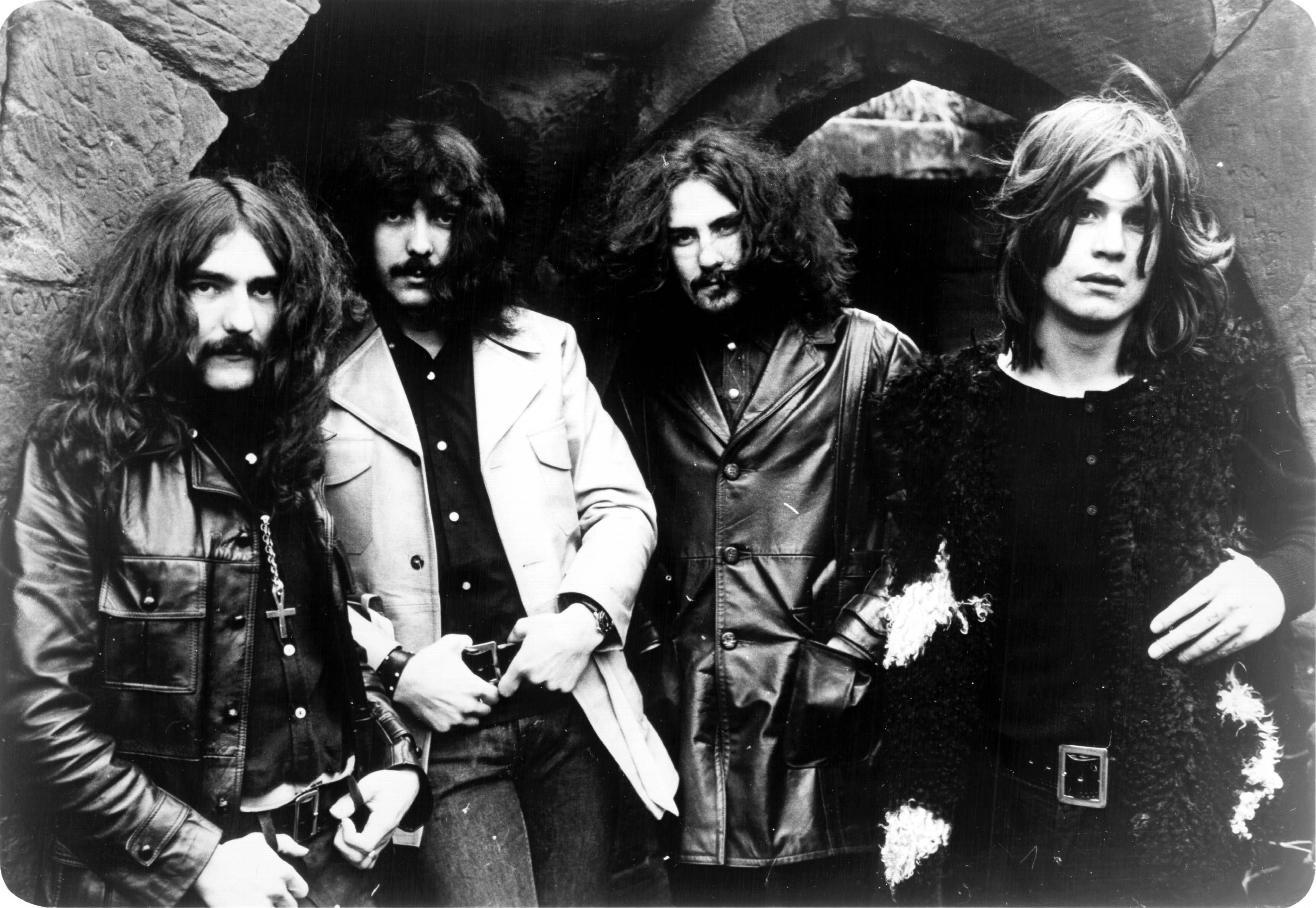
Black Sabbath1970s · Heavy metal / Hard rock
Max Cavalera has said the central riff of Sepultura's earliest signature track came directly from Black Sabbath: 'I fused the original riff, I was very inspired by Sabbath, especially "Heaven and Hell" ... and that's how I created the first riff' of 'Troops of Doom.' That Sabbath debt — a heavy, descending riff built around dread more than speed — sits underneath even Sepultura's fastest early material, and it was Black Sabbath's 'Vol. 4' that Max was listening to the day he decided to start a band at all.
listen: upstream & heresource: Whiplash.Net ↗
1980
Heaven and HellBlack Sabbath
1989
Troops of DoomSepultura
listen forPlay 'Heaven and Hell' next to 'Troops of Doom' — both hinge on a slow, weighted central riff that telegraphs menace before either band ever speeds up, treating heaviness as a mood rather than just a tempo.
Slayer1980s · Thrash metal
Cavalera has named Slayer's 'Haunting the Chapel' EP and 'Reign in Blood' among his all-time favorite records, and the whiplash-fast, tremolo-picked riffing Slayer pioneered runs straight through Sepultura's late-'80s thrash records — 'Beneath the Remains' was received by critics as a South American answer pitched at roughly the same order as 'Reign in Blood' itself.
listen: upstream & heresource: Whiplash.Net ↗
1986
Raining BloodSlayer
1989
Beneath the RemainsSepultura
listen forCompare 'Raining Blood' with the 'Beneath the Remains' title track — both barrel through alternate-picked riffing at a near-unsustainable tempo, using speed itself as the hook rather than a chorus.
Metallica1980s–90s · Thrash metal / Heavy metal
Reflecting on 'Arise,' Cavalera pointed straight at Metallica: 'I think it's a big influence by [Metallica's] "Blackened," if I'm not mistaken. It's [the] same kind of idea, but we made it thrashier and just more energetic.' Guitarist Andreas Kisser also brought a deeper appreciation of Metallica's more complex, riff-driven songwriting into the band once he joined, pushing Sepultura's arrangements past pure blunt-force aggression.
listen: upstream & heresource: Revolver ↗
1988
BlackenedMetallica
1991
AriseSepultura
listen forLine up 'Blackened' with 'Arise' — both open on a galloping, tremolo-adjacent riff that keeps shifting gears through a long tempo arc, more interested in building a multi-part thrash epic than a single hook.