walking upstream…
Sandro



Sandro (Roberto Sánchez) was one of the first Latin American singers to front a rock and roll band singing in Spanish, before reinventing himself as "El Gitano," a bolero-inflected romantic crooner whose theatrical stage presence — hip-shaking, breathless, direct-address lyrics — made him a continent-wide idol through the late 1960s and 70s. His hit "Rosa, rosa" remains one of the best-selling singles in Argentine pop history.
the sound in question
1969
Rosa RosaSandro
walk the tributaries ↓
Elvis Presley1950s–70s · Rock and roll / Rockabilly / Pop / Gospel
Like most Argentine teenagers of the mid-1950s, Sandro was captivated by Elvis Presley and began imitating him before he'd finished primary school — the hip-driven physicality of Sandro's early rock and roll years traces straight back to that imitation.
listen: upstream & here
1957
Jailhouse RockElvis Presley
1968
Porque Yo Te AmoSandro
listen forElvis's theatrical, body-forward performance on "Jailhouse Rock" is the direct template for Sandro's swaggering delivery on "Porque yo te amo" — both treat the performance, not just the song, as the product.
Little Richard1950s · Rock and roll / Rhythm and blues / Gospel
Sandro's earliest rock and roll conversations with bandmates reportedly centered on Little Richard alongside Chuck Berry and Elvis — Little Richard's shouted, all-in vocal delivery is audible in the more uptempo, less bolero-leaning corners of Sandro's catalog.
listen: upstream & heresource: Los Inrockuptibles — Sandro's early rock and roll idols ↗
1955
Tutti FruttiLittle Richard
1968
Quiero Llenarme de TiSandro
listen forThe unhinged energy of "Tutti Frutti" and the driving "Quiero llenarme de ti" both push the voice to its limit rather than holding anything in reserve.
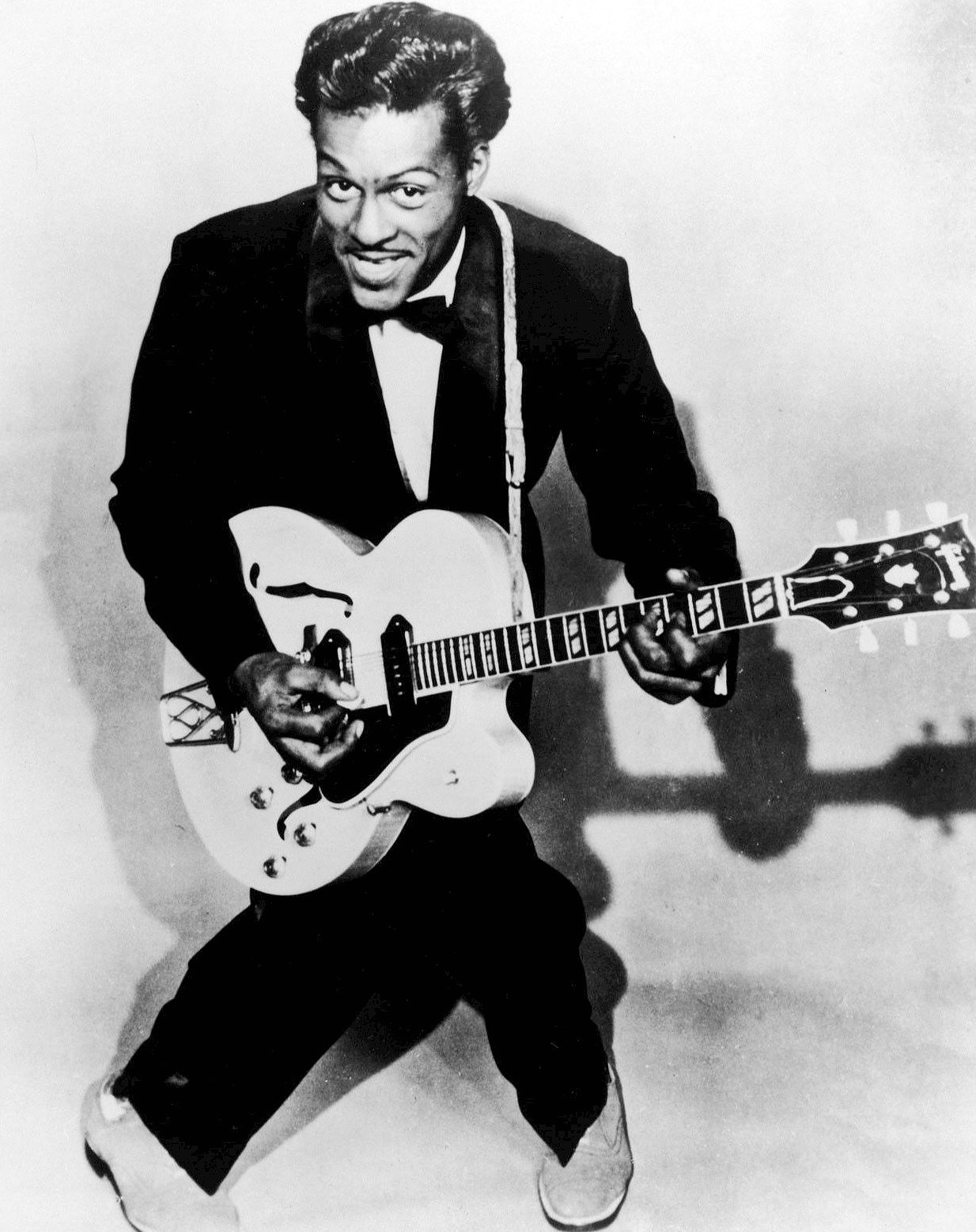
Chuck Berry1950s · Rock and roll / Rhythm and blues
Chuck Berry rounds out the trio of early rock and roll idols — alongside Little Richard and Elvis — that Sandro and his first bandmates modeled themselves on, audible in the driving guitar-and-backbeat energy under Sandro's uptempo numbers.
listen: upstream & heresource: Los Inrockuptibles — Sandro's early rock and roll idols ↗
1958
Johnny B. GoodeChuck Berry
1969
TrigalSandro
listen forBerry's chugging, guitar-forward "Johnny B. Goode" and Sandro's "Trigal" both ride a simple, relentless rhythmic engine rather than leaning on vocal drama.