walking upstream…
Roy Eldridge


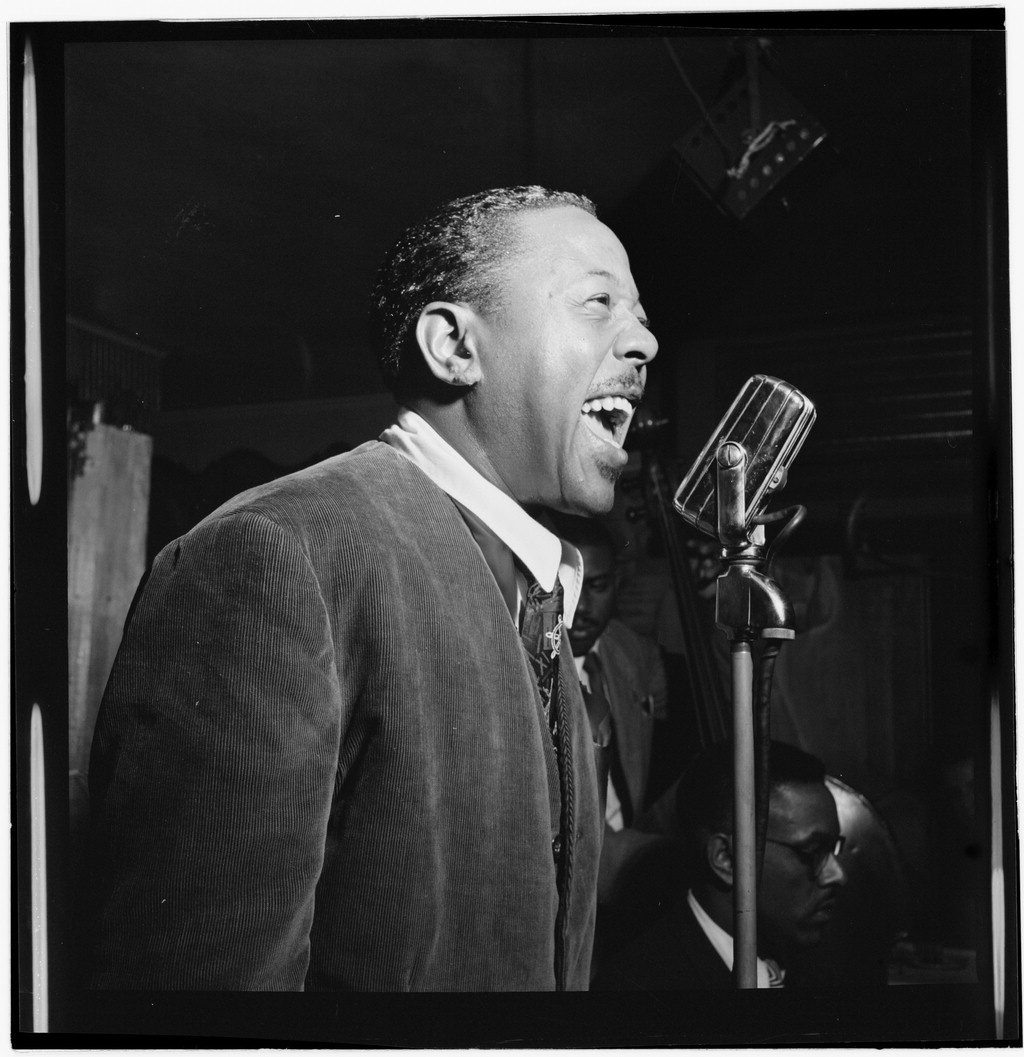 photo: william p. gottlieb · public domain ↗
Roy Eldridge
sourcesJerry Jazz Musician — John Chilton interview (Hawkins, Carter, Armstrong influences; biographical detail) · Jazz Journal — "In My Opinion · New York Times — obituary (Hawkins/"Stampede" influence, career overview) · PBS/Ken Burns Jazz, via The New Grove Dictionary of Jazz — biography (Armstrong study dated to 1932) · Encyclopedia.com, Contemporary Musicians (Gale) — biography (Hawkins/Armstrong influence detail) · NPR A Blog Supreme — centennial retrospective (Hawkins influence, "Rockin' Chair" favorite-recording quote) · Big Band Library — biography and discography (confirms 1944 Decca "Body and Soul" session)
In 1926, a fifteen-year-old drummer turned trumpeter named Roy Eldridge borrowed a friend's Fletcher Henderson record and taught himself, note for note, a saxophone solo: Coleman Hawkins's tenor break on "Stampede." Playing it on trumpet won him a job in a touring carnival band, and it set the terms for everything after — Eldridge decided to play his horn like a saxophonist, chasing the harmonic reach and unbroken lines trumpet players of the day left alone. Ambition and thin skin ran side by side in him: fiercely competitive on the bandstand, sensitive enough that a hostile doorman once reduced him to tears mid-gig. By the late 1930s in Chicago he had pushed the trumpet's range and vocabulary further than anyone before Dizzy Gillespie, who spent his young mornings learning Eldridge's records by heart. Told he "bridged" Armstrong and Gillespie, Eldridge only ever found the label reductive.
the sound in question
1937
After You've GoneRoy Eldridge
walk the tributaries ↓
Coleman Hawkins1930s · Jazz / Swing
Eldridge named Hawkins, alongside Benny Carter, as one of "the two men who have been my favorites ever since I began playing music" — the two saxophonists who showed him a harmony trumpet players of his day ignored. "Trumpet players didn't play enough of the harmony for my money," he told his biographer John Chilton, "while the saxes used to run through all the chord changes. So I resolved to play my trumpet like a sax." He'd already proven it as a teenager, learning Hawkins's 1926 tenor solo on "Stampede" note for note — a party trick vivid enough to win him a carnival job.
listen: upstream & here
1939
Body and SoulColeman Hawkins
1944
Body and SoulRoy Eldridge
listen forHawkins's 1939 "Body and Soul" is the textbook case of the chord-running Eldridge described — barely touching the melody, spinning fresh lines through each change instead of restating the tune. Cue Eldridge's own 1944 Decca recording of the same standard, cut on the song most identified with Hawkins, and listen for that instinct transplanted to brass: long, unbroken runs threading the harmony rather than simply carrying it, the exact transfer — saxophone logic on trumpet — Eldridge said he set out to make.
Benny Carter1930s · Swing / Jazz
Carter is named in the same breath as Hawkins among Eldridge's favorites, but where Hawkins was one galvanizing discovery, Carter became a standing partnership: the two worked together on and off for two decades, cutting a full joint session, The Urbane Jazz of Roy Eldridge and Benny Carter, in 1955. Late in his career, describing what he prized in a horn player's tone, Eldridge still reached for Carter's name alongside Hawkins's: "like Louis Armstrong, Benny Carter, Coleman Hawkins, people like that all get their own kind of sound."
listen: upstream & here
1933
Symphony in RiffsBenny Carter
1937
Wabash StompRoy Eldridge
listen forNo cover or quote links these two sides — only the vocabulary Eldridge said he was chasing. Carter's 1933 "Symphony in Riffs" turns eight-bar phrases into long chains of harmony on alto, exactly the playing trumpeters "didn't play enough of," by Eldridge's own account. Cue his 1937 Chicago recording "Wabash Stomp" next to it and listen for that instinct moved to brass: extended, harmonically restless lines that keep pushing past where a more conventional trumpet solo would settle and resolve.
Louis Armstrong1920s–30s · Jazz
Critics love calling Eldridge the bridge between Armstrong and Gillespie; his biographer John Chilton says he was "a bit touchy about that link" — a genius reduced to a way station. But a separate, real debt survives in his own words. Taken uptown by the trumpeter Hot Lips Page to hear Armstrong live for the first time, he described a conversion: "lots of people can play like Louis but they can't get that sound — that's what puts Louis in first place... I still dig it." Reference works date a serious study of Armstrong's phrasing to 1932, years after Hawkins had already remade his harmony.
listen: upstream & here
1929
Rockin' ChairLouis Armstrong
1941
Rockin' ChairRoy Eldridge
listen forArmstrong's 1929 "Rockin' Chair," cut with Hoagy Carmichael, is the vocal-trumpet phrasing — long tones that swell and fall away like a spoken line — that reference works credit with teaching Eldridge "logic and climax." Cue his own 1941 "Rockin' Chair" with Gene Krupa's band, the recording Eldridge himself called his all-time favorite ("there isn't really a flaw in it"), and listen for that same instinct driven hotter: the phrase still breathes and resolves the way Armstrong's does, just under far more heat.