walking upstream…
Patti LaBelle


sourcesSpin — "Diva · T · Billboard — "Patti LaBelle on First Jazz Album & Taking Chances" (2017 Bel Hommage tracklist, incl. Simone's "Wild Is the Wind") · Grammy.com — "Patti LaBelle On Her Hero, Aretha Franklin" (background · Library of Congress — National Recording Preservation Board interview, Apr. 27, 2021 ("Lady Marmalade" origin and Labelle-era detail)
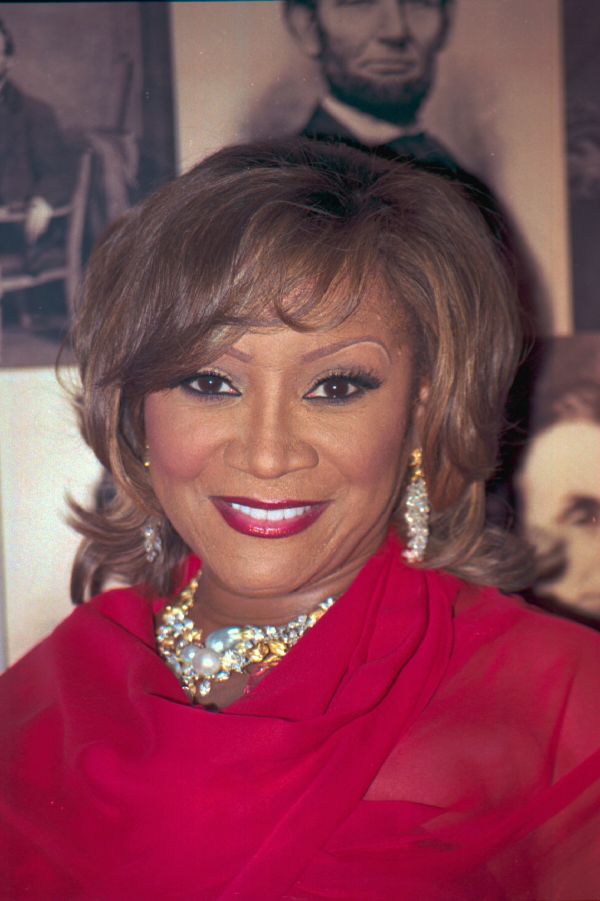
Patricia Holte sang into a broom in her family's Philadelphia rowhouse before she ever sang for a room, by her own account in her 1996 memoir. Her turn came at Beulah Baptist Church, where choir director Harriet Chapman refused to let her hide in the back — "Oh, no, Patsy, you have to come in front and do the lead," LaBelle remembered her saying — and the congregation rose up shouting during "God Specializes." Off-stage, she filled those same years with a short list of favorite singers, LaBelle said in 1986, "to listen to, but not to emulate or imitate." She carried the church belt into Patti LaBelle and the Bluebelles' doo-wop, then Labelle's glam-funk reinvention on 1974's "Lady Marmalade," and finally a solo run of force-of-nature ballads. Six decades on, critics call her the Godmother of Soul for a voice built less on borrowed style than on church-bred conviction.
the sound in question
1983
If Only You KnewPatti LaBelle
walk the tributaries ↓
Nina Simone1960s · Jazz / Soul / Blues
Simone tops the list twice over — named in a 1986 interview and again, a decade later, in LaBelle's memoir, where the same three singers are credited with giving her, during a period of family trauma, "something to believe when I thought I had lost my faith." That's testimony to formative listening, not borrowed technique; LaBelle never modeled her voice on Simone's. What she did do, thirty-one years later at seventy-three, was return to Simone's own songbook — proof the listening never stopped, even if the imitation never started.
listen: upstream & here
1966
Wild Is the WindNina Simone
2017
Wild Is the WindPatti LaBelle
listen forThe follow-through: LaBelle's 2017 jazz-standards album Bel Hommage revisits Simone's "Wild Is the Wind" more than five decades after she named her a teenage favorite. Simone's original holds back, letting the title phrase gust and settle over a spare arrangement; LaBelle's version pushes the same melody toward gospel testimony, holding notes until they build rather than settle — the Beulah Baptist belt standing in where Simone stayed hushed.
Dakota Staton1950s-60s · Jazz / R&B / Soul / Blues
Staton is the second name on the same list, present in both the 1986 interview and the 1996 memoir passage, always paired with Simone and Lynne and never singled out with her own anecdote. What that consistency documents is a bebop-schooled singer known for pushing standards past polite phrasing into hard-swinging, blues-inflected extremes — company a teenage LaBelle kept without, by her own account, trying to sound like her.
listen: upstream & here
1957
The Late, Late ShowDakota Staton
1966
Over the RainbowPatti LaBelle
listen forNo cover or interpolation ties the two directly, so the clearest audible link is stylistic: Staton's 1957 title-track hit "The Late, Late Show" takes a standard past careful phrasing into dynamic extremes — a held note stretched until it cracks, then released. The Blue Belles' 1966 "Over the Rainbow" works the same way, trampling the song's polite melody with notes sung as though each might be her last. The link is a shared attack, not a documented transmission.
Gloria Lynne1960s · Jazz
Lynne completes the trio — the third name in both the 1986 interview and the 1996 memoir passage, credited in identical terms to Simone and Staton. She had scored a rare feat in 1964, topping the jazz, R&B and pop charts simultaneously with "I Wish You Love," the same year a teenage LaBelle would have been absorbing exactly that kind of warm, sophisticated balladry at home. As with the other two names, LaBelle's own account draws a hard line: heard often, imitated never.
listen: upstream & here
1964
I Wish You LoveGloria Lynne
1983
If Only You KnewPatti LaBelle
listen forThe clearest pairing is stylistic rather than documented: Lynne's "I Wish You Love" holds its warmth in reserve through a restrained verse before opening the voice fully on the chorus. LaBelle's 1983 solo hit "If Only You Knew" follows the identical shape — a held-back opening that detonates into full-throated declaration — without any confirmed cover or session tying the two records together.