walking upstream…
Paramore
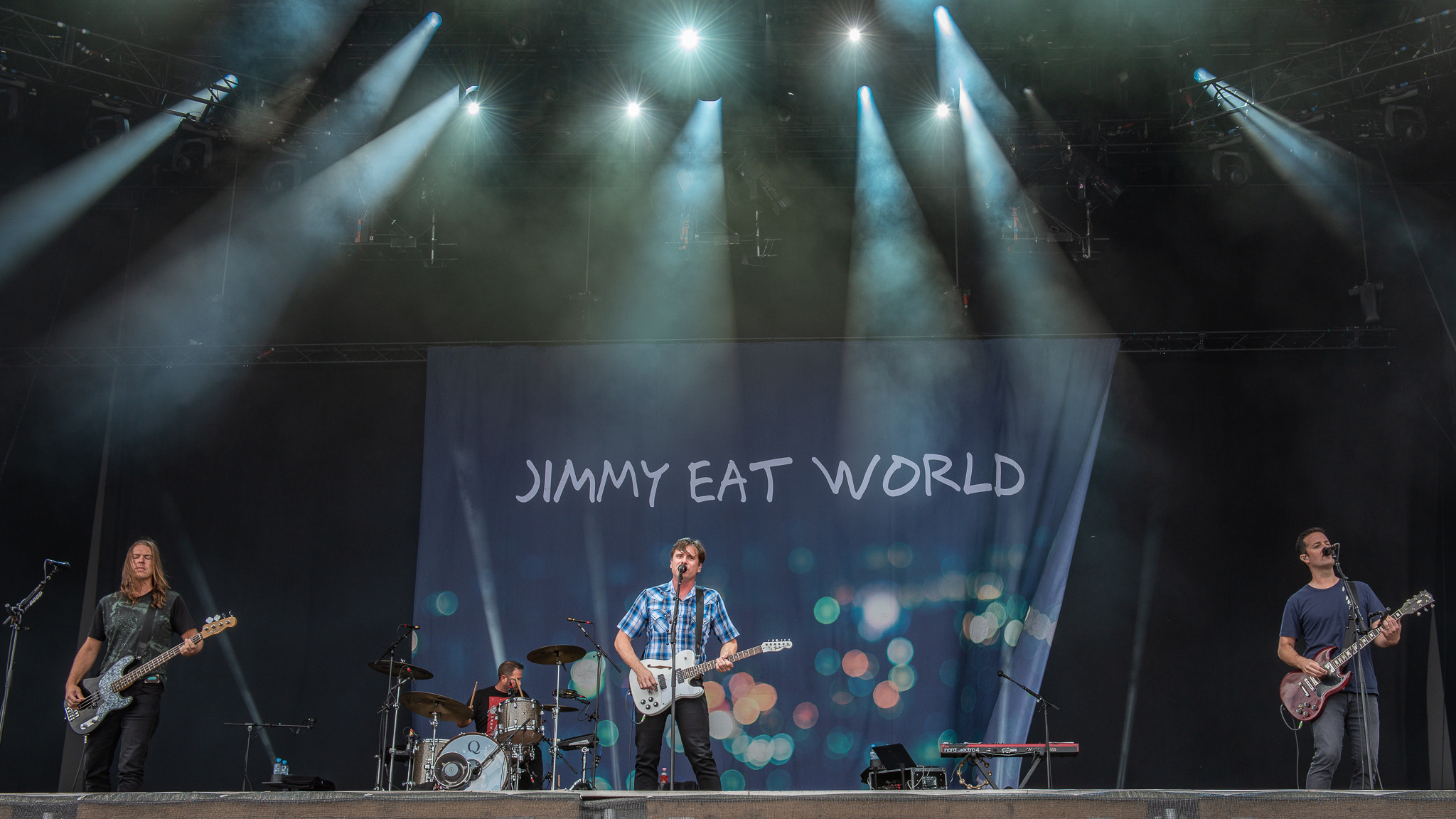

 photo: raph_ph · cc by 2.0 ↗
Paramore
sourcesRolling Stone — Paramore's Hayley Williams on Jealousy and Nirvana (Gwen Stefani stage-presence quote) · Everything in Time — Hayley Williams on Being Compared to Gwen ("first Hayley, not the second Gwen Stefani") · Paramore Music LiveJournal — Jeremy Enigk on Paramore's Sunny Day Real Estate cover · NME — Women's Rage Has Been Such a Catalyst for Beautiful Things (2020 interview backing the Sade bio quote) · Wikipedia — Paramore (general influences reference)
Hayley Williams was eight years old in a Mississippi record shop when she first heard Sade. "Sade's grooves are so sexy, but they're tough," she said years later, "there were teeth, too." That mix of polish and edge followed her to Nashville, where she and brothers Josh and Zac Farro — homeschooled teenagers barely out of their bedrooms — formed Paramore in the mid-2000s inside the city's post-hardcore and emo scene. By 2007's Riot!, the band had turned that inheritance into something louder: a teenage girl fronting a genre built by and for boys, refusing to apologize for it. Two albums later, on 2013's self-titled record, Paramore had outgrown emo altogether — but the teeth never left.
the sound in question
2007
Misery BusinessParamore
walk the tributaries ↓
Jimmy Eat World1990s–2000s · Pop-punk / Emo pop / Alternative rock / Power pop
A Manchester journalist walked into Paramore's dressing room in 2007 wearing a Jimmy Eat World tour shirt, and before he'd even sat down, Hayley Williams and Zac Farro were peppering him with questions — which tour, did they play anything off Clarity, was it the best show he'd ever seen. Williams later named the band outright as a career blueprint: "Jimmy Eat World, who I don't think ever disappoint their fans — that's really important," she said, filing them alongside No Doubt and U2 as groups whose integrity had outlasted their fame.
2001
SweetnessJimmy Eat World
2008
Sweetness [Jimmy Eat World cover]Paramore
listen forSome nights on Jimmy Eat World's 2008 US tour, Paramore didn't just open — they covered them, closing sets with "Sweetness" from 2001's Bleed American. Jim Adkins's original rides a spacious, chiming guitar figure into a hushed-then-open falsetto hook; Paramore's version keeps the structure intact but tightens the guitars and pushes Williams's chorus louder and rawer than Adkins ever goes — the same melody, sung by a band that grew up wanting to be exactly this loud.
Sunny Day Real Estate1990s · Emo / Post-hardcore / Alternative rock
"They're the reason we started this band, them and Sunny Day Real Estate," Hayley Williams and Zac Farro told a Manchester journalist in 2007, naming Jimmy Eat World's Clarity and Sunny Day Real Estate as the records that turned two Tennessee teenagers into a band. Paramore paid the debt back directly, working Sunny Day Real Estate's "Faces in Disguise" into their live set that year, including a Warfield show that November. Word reached Jeremy Enigk, SDRE's own singer, who watched the footage and was floored: "I think it's amazing," he said. "I was absolutely flattered! She has an amazing voice."
1994
2008
DecodeParamore
listen forSunny Day Real Estate's "Seven" spends its first minute coiled — clean guitar, restrained vocal — before Jeremy Enigk's voice cracks open into a soaring, almost gospel wail over crashing power chords. Paramore's "Decode," recorded a decade later, runs the identical shape: a hushed verse, guitars building underneath, then Williams matching that same all-or-nothing vocal leap at the chorus — the post-hardcore blueprint SDRE helped write, detonating almost unchanged.
No Doubt1990s · Ska punk / Pop rock / New wave
In the summer of 2009, a nineteen-year-old Hayley Williams was opening arena shows for the band whose frontwoman she'd spent years studying. "Gwen is so laid-back," she told Rolling Stone, "but she goes onstage and just owns it" — a performance philosophy Williams absorbed and made her own, snapping between wallflower verses and full-throttle choruses. Yet she resisted the easy comparison journalists kept making: "I want to be the first Hayley from Paramore," she said. "Not the second Gwen Stefani."
listen: upstream & here
1995
Just a GirlNo Doubt
2007
Misery BusinessParamore
listen forPlay "Just a Girl" next to "Misery Business" and the shared move is in the sneer: both hold back a tight, coiled verse before the chorus detonates into a full-throated dressing-down of whoever underestimated them. Neither singer sounds polite about it, and both let a hook that could pass for pure pop carry real venom — the trick that got each song onto rock radio that had little use, in 1995 or 2007, for a woman fronting the show.