walking upstream…
No Doubt


sourcesWikipedia — No Doubt (formation, timeline) · Guitar World — Tom Dumont names 10 guitarists that shaped his sound (2 Tone influence testimony) · Orange County Register — "No Regrets, No Doubt" (Eric Carpenter memoir, band formation and early years) · Alt Press — No Doubt cover Bad Brains' "Sailin' On" (founding-era ska diet)
Eric Stefani met singer John Spence at an Anaheim Dairy Queen in 1986, and by that fall they had a horn-driven ska band rehearsing in his parents' garage. Spence's death by suicide fourteen months later nearly buried the project before its first record; the band regrouped around Eric's sister Gwen, who traded backing vocals for the microphone, and slowly filled out with bassist Tony Kanal, guitarist Tom Dumont, and drummer Adrian Young. The early years were lean — five dollars a head for rehearsal time, gigs that barely covered gas, a debut album that fizzled commercially. What held the band together through it was the sound its teenage members had grown up on: the clipped, horn-punched ska of Britain's late-1970s 2 Tone scene, the record collection Tom Dumont had to relearn his guitar to play.
the sound in question
1995
Just a GirlNo Doubt
walk the tributaries ↓
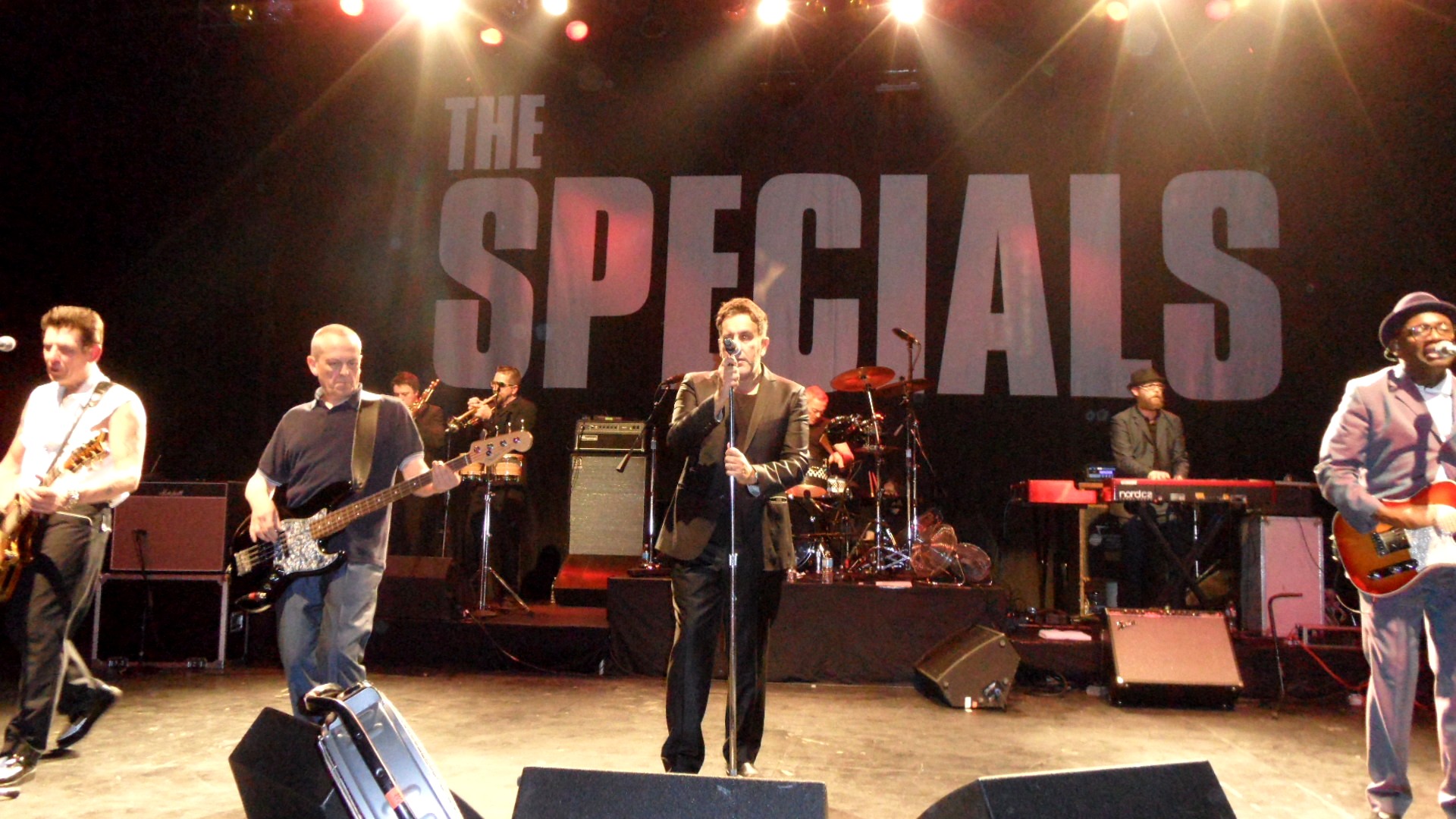
The Specials1980s · Two-tone / Ska revival / Punk rock
Tom Dumont arrived at No Doubt straight from a metal band called Rising, all overdrive and shredding. The Specials undid that. "The Specials' Gangsters is the song," he told Guitar World in 2024. "There's a big riff, but also the really tight, upbeat ska parts with clean tones. That was a huge adjustment for me when I joined No Doubt... I had to relearn how to play with fully clean guitars." Guitarist Lynval Golding's rhythm playing became the new blueprint — the first thing Dumont had to unlearn his old band to master.
listen: upstream & here
1979
GangstersThe Specials
1992
Trapped in a BoxNo Doubt
listen for"Gangsters" rides on Lynval Golding's clipped upstroke skank under Terry Hall's deadpan verses — no distortion, no sustain, just dry, quick chops on the offbeat. Cue up No Doubt's "Trapped in a Box" and listen for Dumont doing the same thing: the verses ride a fully clean guitar chopping upstrokes against Tony Kanal's bassline, the sound he said he had to relearn after years of all-out metal overdrive.
The Selecter1980s · 2 Tone / Ska revival / Ska
Before she ever joined the band, Gwen Stefani's first ska performance was solo. The ska historian Kevin Partridge writes that in high school, years before John Spence's garage band existed, she sang the Selecter's 1979 single "On My Radio" at a talent show, lyric sheet in hand. It's the clearest evidence that the sound No Doubt built itself around wasn't secondhand — their eventual frontwoman had already stood up and sung the source material herself, before she'd sung a note in the band that made her famous.
listen: upstream & here
1979
On My RadioThe Selecter
1992
Different PeopleNo Doubt
listen for"On My Radio" opens on a bright organ stab syncopated hard against the offbeat, Pauline Black's voice riding just ahead of the beat, urgent and clipped. Listen for the same architecture on No Doubt's "Different People": a keyboard chops the same offbeat pattern under Gwen Stefani's vocal, phrased in that same quick, talky rush rather than a held note — the imprint of a singer who first learned ska standing alone with someone else's lyric sheet.
Madness1980s · Two-tone / Ska / Pop
Tom Dumont's clearest account of No Doubt's formation names three bands in one breath: "Madness, the Selecter and the Specials were the big bands that influenced the early days of No Doubt," he told Guitar World in 2024. The journalist Anna Zanes corroborates the memory from the other direction, describing how, behind an Anaheim Dairy Queen, the band's teenage founders bonded "through a love for ska music" that ran through Madness alongside the Specials and Bad Brains. Madness never got a single named riff from Dumont the way the Specials did; its fingerprint here is broader — the whole horn-driven, working-class pop template of English 2 Tone.
listen: upstream & here
1979
One Step BeyondMadness
1995
SpiderwebsNo Doubt
listen for"One Step Beyond" opens cold on an instrumental skank hook, bouncing organ and horns doing the work before a single lyric arrives — ska's rhythm turned into a pop entry point. No Doubt built "Spiderwebs" the same way: a bright, horn-inflected riff announces the song before Gwen Stefani sings a word, the groove itself doing the hooking. Where the Specials reset Dumont's guitar and the Selecter gave Gwen her first ska performance, Madness shows up here as a shared method: rhythm first, voice second.