walking upstream…
Mitski


sourcesThe Line of Best Fit — "Tall Child · The New Yorker — "On the Road with Mitski" (upbringing, formative listening) · Under the Radar — "The Under the Radar Cover Story" (career shape, favorite artists vs. songwriting models) · The New York Times Magazine — "Mitski Is More Than TikTok" (Working for the Knife, Laurel Hell) · Impose Magazine — "Taking All Of Mitski" (writing "Bag of Bones" in Ankara)
Mitski Miyawaki grew up "always the new kid, always the foreigner" — by eighteen she'd lived in Japan, the Congo, Turkey, Malaysia, Czechia, Alabama, and Virginia, trailing her father's State Department postings. Songwriting wasn't an inherited ambition: "it never occurred to me that anything I made up would be important enough to be songs," she has said. That changed one night in Ankara, drunk and nineteen, when she wrote her first song, "Bag of Bones" — "my heart was pounding like I just saw the rest of my life. I was fucking doomed." She trained classically at SUNY Purchase's conservatory, then stripped her sound down for 2014's Bury Me at Makeout Creek, trading orchestral polish for guitar and rage. Five albums on, she has turned a lifetime of not fitting anywhere into pop songs built to make everyone feel briefly, uncomfortably seen.
the sound in question
2021
Working for the KnifeMitski
walk the tributaries ↓
M.I.A.2000s · Alternative hip hop / Electronica / Worldbeat
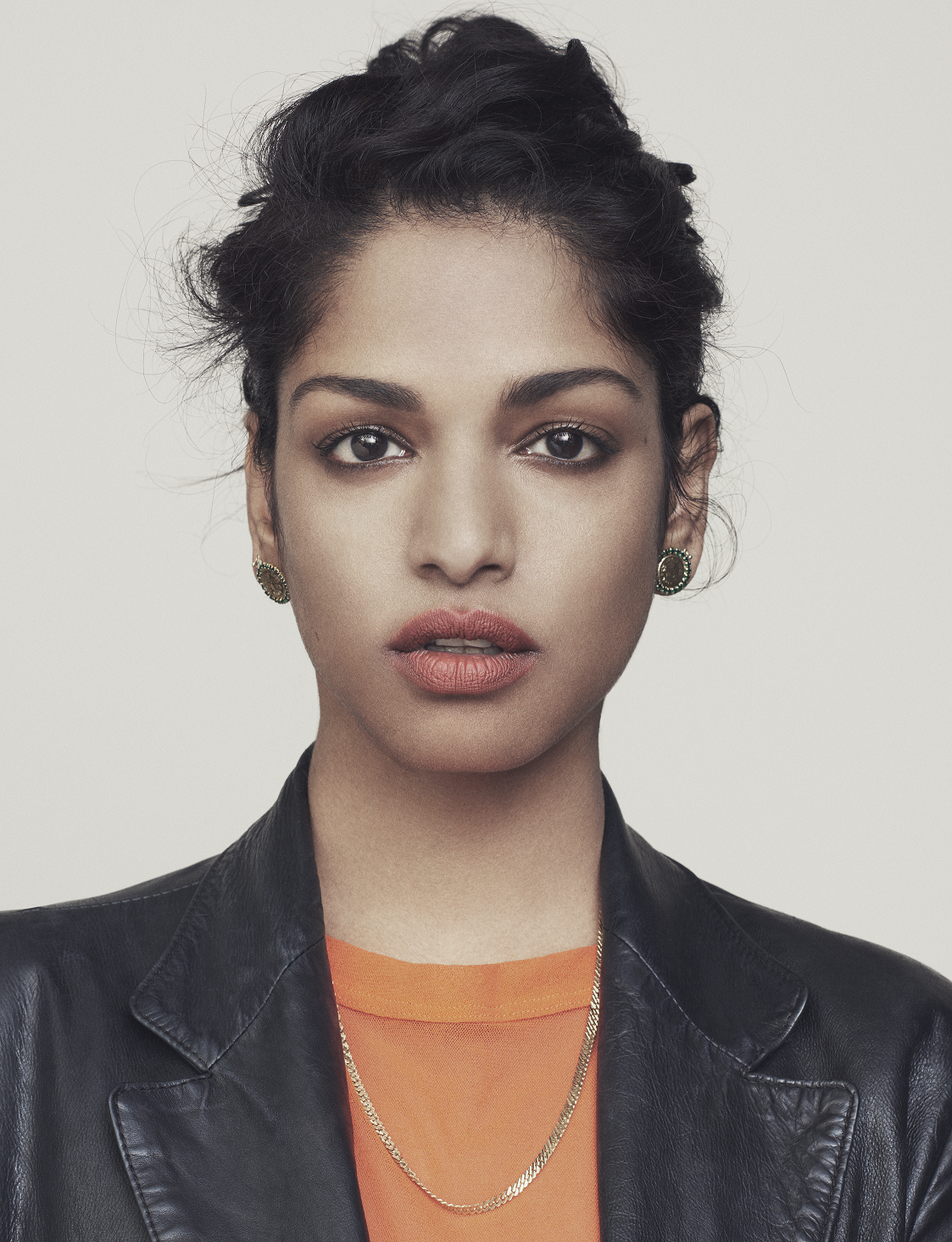
Mitski doesn't equivocate about this one. "The one figure who has always been my hero is M.I.A.," she told The Line of Best Fit in 2016. "She's unafraid...she's been bashed and been criticised but she keeps doing what she wants to do, and does it really well." What Mitski took wasn't a sound so much as a stance: an artist who stayed pop, stayed mainstream, and refused to soften herself to get there — a template for staying uncompromising once the audience actually shows up.
listen: upstream & here
2012
Bad GirlsM.I.A.
2021
Working for the KnifeMitski
listen forPlay M.I.A.'s "Bad Girls" and hear the engine-revving loop grind under her chant, daring the danger to keep coming, all synthetic motor and swagger; Mitski's "Working for the Knife" runs on the same defiant machinery nine years later — its industrial-tinged synth chords "clank like factory equipment," as The New York Times Magazine described it, under a voice that refuses to sound beaten down by the grind it's naming.
Björk1990s · Art pop / Electronica / Experimental
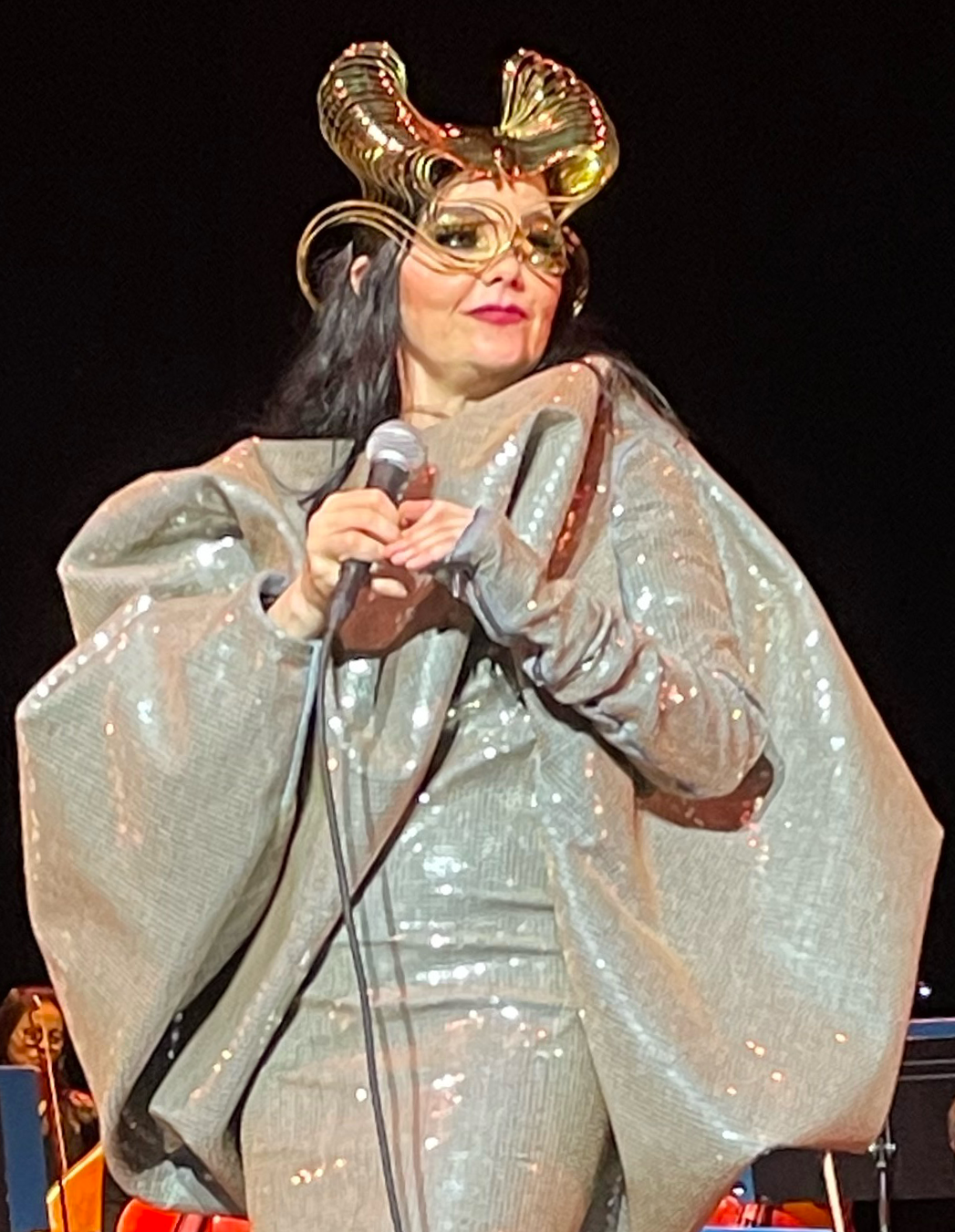
Mitski was fifteen, in a Japanese record store, when she first put on Björk through the headphones at a listening station. "It actually viscerally scared me," she told The Skinny in 2016 — a fear she traces to how bare the record left her: "The Vespertine album especially really helped me look further into myself, and I think that's why it was so terrifying when I was 15. I was just not ready for it." Björk remains, by Mitski's own account, one of the very few artists she loves rather than merely admires.
listen: upstream & heresource: The Skinny — "Peripheral Vision ↗
2001
UnravelBjörk
2013
Class of 2013Mitski
listen forBjörk's "Unravel" strips the arrangement down to a music-box pulse and clicks, leaving her hushed, close-mic'd voice to carry the entire ache; Mitski's "Class of 2013" does the same trick on a bare piano, her plain-spoken voice alone in the room until a wash of guitar finally closes the song — the specific kind of vulnerable, stripped-down intimacy Mitski says the Vespertine album taught her to reach for in herself.
Ringo Sheena2000s · J-pop / Art rock / Avant-pop
Ask Mitski for a dream album and she doesn't reach for a Western touchstone. "There is a Japanese artist, Shiina Ringo...it's my favorite album in that there's so much attention to detail, so many instruments," she told Minnesota Public Radio's The Current in 2016, naming Kalk Samen Kuri no Hana as the record she was "turned to" — a solo artist building something so dense it functions almost like a one-woman orchestra.
listen: upstream & heresource: The Current (MPR) — "Mitski on lyrical undertones, metaphors and Puberty 2" (Ringo Sheena favorite album) ↗
2003
DoppelgängerRingo Sheena
2018
GeyserMitski
listen forRingo Sheena's "Doppelgänger" piles on horns, strings, and shifting time signatures until the song barely holds its own shape, refusing to simplify itself into anything catchier. "Geyser," which opens Be the Cowboy, works the same way: it starts nearly bare, then keeps adding drums, strings, and choral voices until the arrangement turns as maximalist and overloaded as the feeling it's trying to hold.