walking upstream…
Minnie Riperton


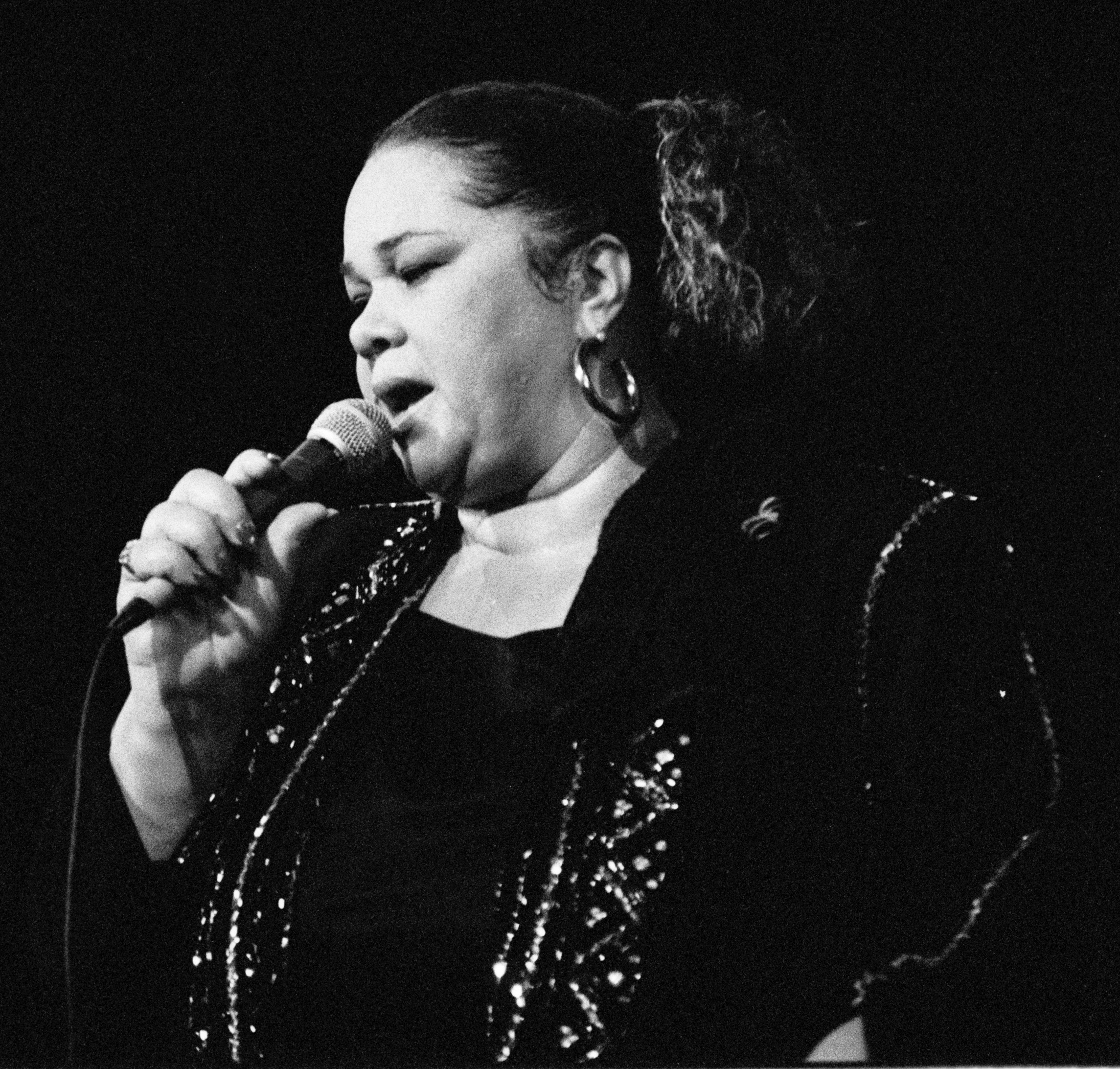
 photo: epic records · public domain ↗
Minnie Riperton
Minnie Riperton grew up on Chicago's South Side, taking opera lessons from her teacher Marion Jeffery until family money ran short — she was the eighth of eight children — and, at fifteen, traded the classical track for a job at Chess Records: receptionist by day, backing singer by night in the label's vocal group the Gems, behind stars like Etta James and Fontella Bass. "I was like Leonard Chess's little pet," she said. At Chess she met composer-arranger Charles Stepney, who spent the next decade building songs around the four-octave range she'd trained but rarely gotten to use. His 1970 showcase for her, Come to My Garden, was so entirely his design that his family wanted the album billed "Charles Stepney presents Minnie Riperton"; he refused the credit and stayed the unbilled architect of her sound until her death in 1979, at 31.
the sound in question
1974
Lovin' YouMinnie Riperton
walk the tributaries ↓
Stevie Wonder1970s · Soul / Funk / R&B
In 1971, at a Chicago industry expo, Riperton introduced herself to Stevie Wonder, already a fan of his: "Everybody was trying to meet Stevie," she told Rolling Stone in 1974, "...I was really into his music — so I made it quick." Wonder, stunned to learn who she was, pulled her into the studio to sing background on his own "Creepin'" that same day. Three years later he repaid the favor as producer of her breakthrough Perfect Angel, playing the Fender Rhodes on "Lovin' You" and co-writing "Take a Little Trip" — the fan turned into the hand shaping her sound.
listen: upstream & heresource: Rolling Stone — Minnie Riperton on 'Perfect Angel,' Working With Stevie Wonder (backs the 1971 meeting, Chess/Gems backstory) ↗
1973
Golden LadyStevie Wonder
1974
Lovin' YouMinnie Riperton
listen forWonder's "Golden Lady," from that same 1973 stretch, floats a soft-focus melody over close, jazz-tinged Rhodes chords that never quite resolve where you expect. "Lovin' You," recorded the following year with Wonder himself at the keys, sits Riperton's voice on that same cushioned electric-piano bed — built to let a single sustained note, the wordless run she holds at the song's end, drift rather than land. Listen for the chords underneath, not just the famous high note above them.
Aretha Franklin1960s-70s · Soul / R&B / Gospel
By 1969 Riperton was co-fronting the psychedelic soul group Rotary Connection, which aimed straight at the song that had made Aretha Franklin the voice of the era: Otis Redding wrote "Respect," but it was Franklin's 1967 version — the "sock it to me" ad-libs and all — that Rotary Connection was answering. "Minnie Riperton and Mitch Aliotta were in charge of the vocals," one retrospective notes, "and turned it into a groovy, high energy duet." Riperton had also logged studio time behind Franklin directly, one more name on the session list from her Chess years.
listen: upstream & heresource: Encyclopedia.com / Gale — Contemporary Black Biography ↗
1967
RespectAretha Franklin
1969
RespectMinnie Riperton
listen forFranklin's "Respect" drives on a tight, horn-punched backbeat, her voice cracking the title word into pieces and stacking the backing singers' "sock it to me" underneath. Rotary Connection strips that urgency out entirely — the tempo drops to a sway, strings and sitar swap in for horns — but Riperton's lead vocal keeps Franklin's trick of breaking a single word into syllables for emphasis, now stretched across a slower, hazier arrangement. It's the same phrasing habit, filtered through 1969 psychedelia.
Etta James1960s · Blues / R&B / Soul
Riperton's professional life began at fifteen behind Etta James, singing backup with the Gems on Chess sessions where James was the label's reigning star. The lesson apparently went further than the paycheck: "When I was a teenager, Etta James really turned me on to singing," Riperton is quoted as saying — though the remark, preserved only on a later fan retrospective, was never traced back to an original interview. What's undisputed is the years spent close enough to study James's phrasing firsthand, before Riperton found her own instrument was built for an entirely different register.
listen: upstream & heresource: Encyclopedia.com / Gale — Contemporary Black Biography ↗
1960
At LastEtta James
1975
Adventures in ParadiseMinnie Riperton
listen forJames's "At Last" holds its power in reserve, riding string swells with a controlled, husky warmth that only opens up at the very top of a phrase. Riperton's "Adventures in Paradise," the title track of her third album, does something similar at a far higher register — the voice floats over its own string arrangement, holding back until a phrase's peak, then releasing into a light, extended note. Same restraint-then-release shape, transposed from James's alto into Riperton's soprano.