walking upstream…
MC Lyte

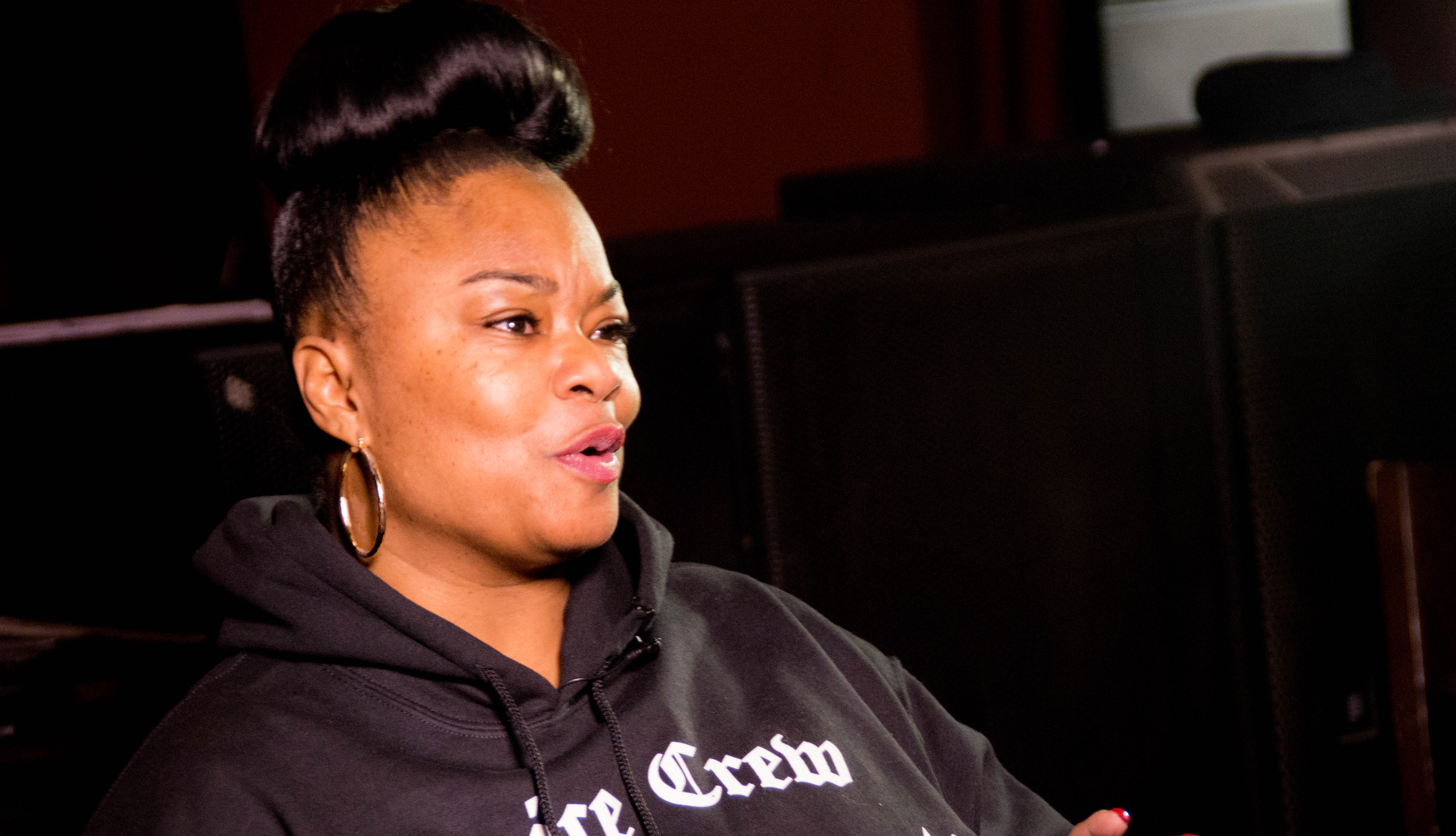

On September 13, 1988, seventeen-year-old Lana Moorer released Lyte as a Rock under the name MC Lyte — the first full-length solo album by a woman rapper, built from a rhyme notebook she'd kept since she was twelve. Her debut single, "I Cram to Understand U (Sam)," disguised a drug-addiction story as a breakup song and was cut at sixteen for her stepfather Nat Robinson's Brooklyn label, First Priority. "I wasn't really thinking about anything except being heard for what it was that I was saying," she told HuffPost decades later, of the anti-drug message under the baggy clothes and the bravado. Five years after her debut, "Ruffneck" made her the first woman in rap certified gold as a solo artist. She built a blunt, unhurried, unbothered template the women who followed her spent decades answering to.
the sound in question
1993
RuffneckMC Lyte
walk the tributaries ↓
Sha-Rock1970s–80s · Hip hop
Before Lyte ever held a microphone, she was an eleven-year-old visiting cousins in Harlem, replaying cassette tapes of Sha-Rock, the "+1" who joined the Bronx crew Funky 4 + 1 and is widely credited as hip-hop's first female MC. "When you talk about MC Lyte, she'll say when I was 11-years-old coming up to Harlem I used to hear Sha Rock on cassette tapes, and she influenced me to do what I do today," Sha-Rock has said. Lyte's own list of what she "lived and breathed" as a kid names Sha Rock and the group alongside Run-DMC and Rakim — proof of the listening, not a lesson in the craft.
listen: upstream & heresource: XXL — "MC Lyte Wants To Inspire People By Any Means Necessary" (Sha-Rock and Salt-N-Pepa named in her own listening list) ↗
1979
Rappin and Rockin' the HouseSha-Rock
1988
Lyte as a RockMC Lyte
listen forListen for the group hand-off on "Rappin and Rockin' the House" — five voices trading the mic in tight, unbroken relay, each MC picking up the last one's line without losing the beat. Lyte never traded verses that way, but "Lyte as a Rock" borrows that relay's confidence for a single voice: short, declarative lines stacked end to end with barely a breath between them, daring the track to keep up. It's a listener's connection, not one she's spelled out herself — the cadence makes the case, not a quote.
Salt-N-Pepa1980s · Hip hop / Pop rap
"Everybody — Salt-N-Pepa, Run-DMC, Rakim, Grandmaster Flash and the Furious Five... I lived and breathed it," Lyte told XXL in 2013, naming the artists she wore out on cassette before she'd written a rhyme of her own. HuffPost's Taryn Finley reports she pointed to one record specifically: Salt-N-Pepa's 1985 single "The Show Stoppa (Is Stupid Fresh)," a teenage duo dressing down a boasting man on wax, was what convinced a not-yet-recording Brooklyn kid that she could do this herself, not just listen to it.
listen: upstream & heresource: XXL — "MC Lyte Wants To Inspire People By Any Means Necessary" (Sha-Rock and Salt-N-Pepa named in her own listening list) ↗
1985
The Show Stoppa (Is Stupid Fresh)Salt-N-Pepa
1988
Paper ThinMC Lyte
listen forBoth records work as a house call on a man who's stepped out of line, delivered without raising a voice. Salt and Pepa trade the story of "The Show Stoppa" back and forth like gossip already decided, daring the target to object. "Paper Thin" runs that same even, unbothered delivery solo — Lyte's flow stays level and conversational even as the lyrics tighten the screws, the calm itself doing the damage a shout never could.
Roxanne Shanté1980s · Hip hop
HuffPost reports — in paraphrase rather than a direct quote — that Lyte credited Roxanne Shanté's 1984 answer record "Roxanne's Revenge," alongside Salt-N-Pepa's single, as one of the first times she heard a woman put a man in his place on record and thought: this could be me. Shanté was a teenager from Queensbridge already famous for that trick years before Lyte cut her own first single. Wikipedia's own citation for the connection, a thin AllMusic discography page, undersells what HuffPost's account actually establishes.
listen: upstream & heresource: HuffPost — "How MC Lyte's Voice Helped Bridge Generations In Hip-Hop" (Salt-N-Pepa and Roxanne Shanté named as formative records; anti-drug message quote) ↗
1984
Roxanne's RevengeRoxanne Shanté
1988
10% DisMC Lyte
listen forShanté's "Roxanne's Revenge" set the template for the answer record: an unbothered, conversational takedown that never raises its voice, aimed at the men who'd invented her character to begin with. Lyte's "10% Dis" borrows that same flat, confident delivery for a fight closer to home — a public dispute with fellow rapper Antoinette over a sampled beat — proof the posture Shanté pioneered outlasted the specific grievance that started it.