Manhattan Brothers
Formed in Johannesburg and recording from 1948, the Manhattan Brothers — led by Nathan "Dambuza" Mdledle — were South Africa's first vocal jazz sensation, fusing American close-harmony technique with Zulu, Xhosa and Sotho lyrics and township jive. Their 1956 single "Lovely Lies" became the first South African record to chart on the US Billboard Hot 100, and it was this group that gave a 21-year-old Miriam Makeba her first professional stage, the only woman ever to sing alongside them.
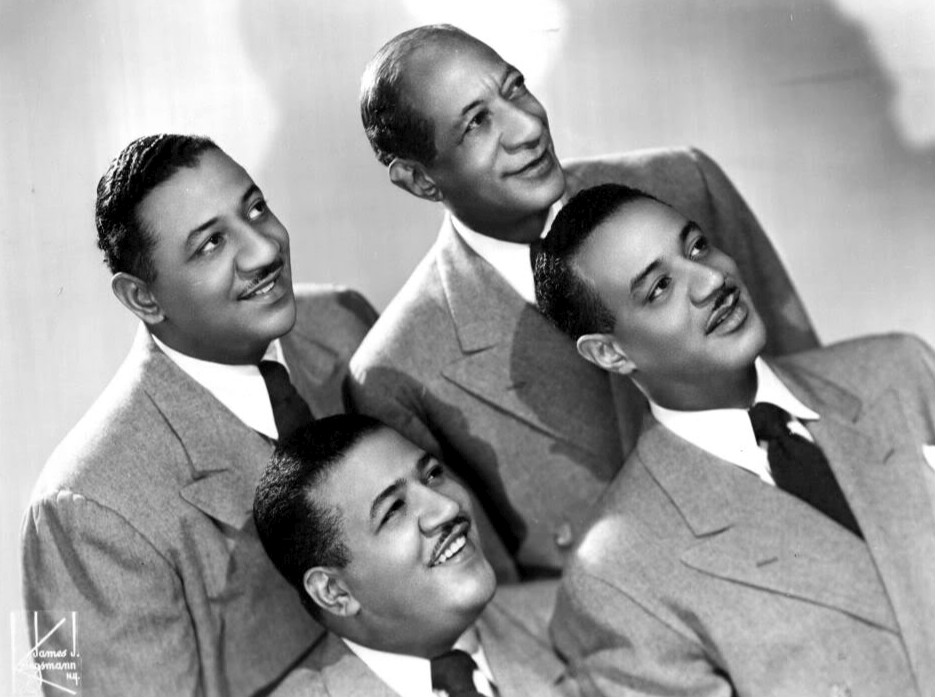
The Manhattan Brothers modeled their four-part vocal blend directly on the Mills Brothers' seamless, instrument-free harmonizing, adapting that close-harmony sound to Zulu, Xhosa and Sotho lyrics rather than American pop standards.
listen forHear how the Mills Brothers make their voices imitate muted horns and rhythm section on 'Tiger Rag' (1931), then catch that same voices-as-instruments trick, filtered through township jive, on the Manhattan Brothers' 'Lovely Lies' (1956).
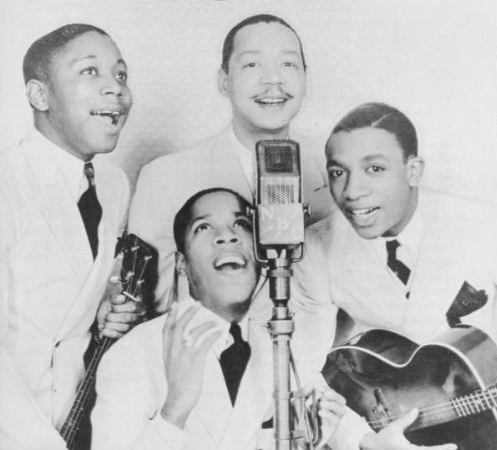
The Ink Spots' formula of a high, pleading tenor lead floating over a murmured spoken bass gave the Manhattan Brothers a template for the tender, romantic side of their repertoire, balancing out their up-tempo jive numbers.
listen forThe hushed spoken-word verse and aching falsetto lead on the Ink Spots' 'If I Didn't Care' (1939) has a clear echo in the tender vocal blend of the Manhattan Brothers' 'Baby Ntsoare' (1954).