walking upstream…
Luke Bryan

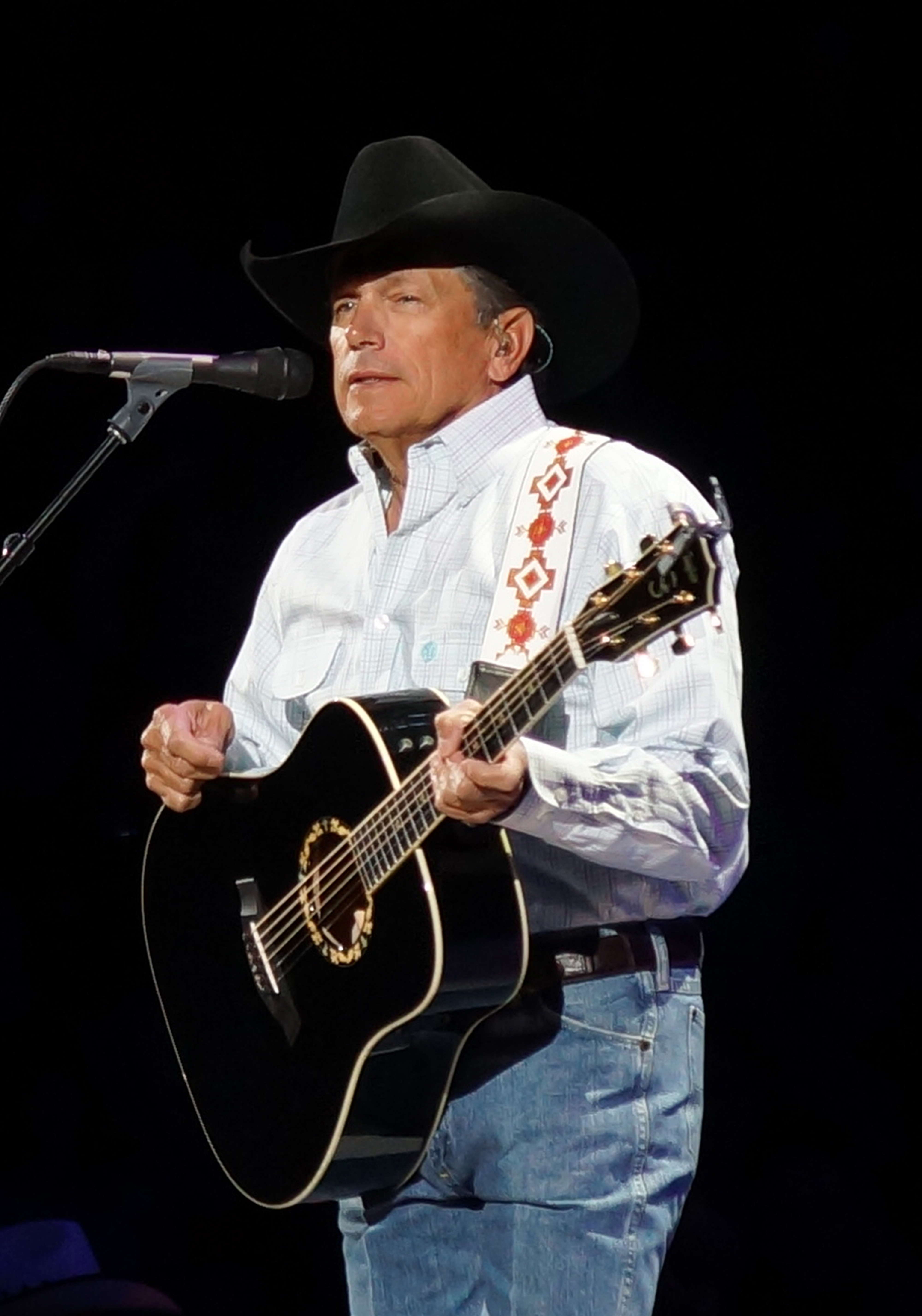

 photo: joe bielawa · cc by 2.0 ↗
Luke Bryan
sourcesWikipedia · Biography.com · Billboard
Luke Bryan grew up Thomas Luther Bryan on a peanut farm outside Leesburg, Georgia, soaking up his parents' country records — George Strait, Conway Twitty, Merle Haggard — while friends across town introduced him to Dr. Dre and Pearl Jam. A guitar at fourteen and years of local bar gigs led him to Nashville in 2001, first as a staff songwriter for other acts before his own 2007 debut, 'I'll Stay Me.' By the early 2010s, 'Tailgates & Tanlines' and 'Crash My Party' had made him country radio's biggest party-and-porch-light hitmaker, a five-time ACM/CMA Entertainer of the Year whose easy charisma — equal parts football-Saturday nostalgia and unguarded grief over the siblings he lost young — carried the bro-country wave he helped launch into the 2020s.
the sound in question
2011
Country Girl (Shake It for Me)Luke Bryan
walk the tributaries ↓
Alan Jackson1990s · Country / Neotraditional country / Honky-tonk
Alan Jackson turns up alongside Strait and Haggard in accounts of the country music young Bryan grew up on, and Jackson's particular trick — taking one hyper-local Southern memory (a river, a summer, a girl on a tailgate) and blowing it up into an unembarrassed, shout-along anthem — is close to a blueprint for Bryan's own catalogue of rural-nostalgia singles.
listen: upstream & here
1993
ChattahoocheeAlan Jackson
2015
Huntin', Fishin' and Lovin' Every DayLuke Bryan
listen forLine up 'Chattahoochee' with 'Huntin', Fishin' and Lovin' Every Day' — both catalogue a specific, sunburned adolescence (a river, a truck bed, a girl) as a communal singalong, trading in twang for a chorus built to be hollered back at a festival crowd.
George Strait1980s–90s · Country / Neotraditional country / Honky-tonk / Western swing
Bryan was raised on his parents' record collection, which biographers list as George Strait, Conway Twitty, and Merle Haggard, and he's separately named Strait as a formative influence in interviews. What carries over isn't Strait's Western-swing shuffle so much as his refusal to oversing a sad line — a plainspoken, unhurried delivery that lets the words do the work instead of vocal runs.
listen: upstream & here
1982
Amarillo by MorningGeorge Strait
2013
Drink a BeerLuke Bryan
listen forPut 'Amarillo by Morning' next to 'Drink a Beer' — both let a restrained, conversational vocal sit on top of a spare, mid-tempo arrangement while carrying real loneliness or loss, never straining for a bigger note than the lyric needs.
Conway Twitty1970s-80s · Country / Countrypolitan / Honky-tonk
Conway Twitty's records were part of the country diet Bryan's parents put on the turntable at home, right alongside Strait and Haggard. Twitty spent the 1970s and '80s as country's reigning balladeer of adult romance — smooth, unhurried, and frank about desire without ever getting crude — and that same low-key, conversational seduction is the mode Bryan reaches for on his own slow-build romantic singles.
listen: upstream & here
1970
Hello Darlin'Conway Twitty
2011
I Don't Want This Night to EndLuke Bryan
listen forSet 'Hello Darlin'' beside 'I Don't Want This Night to End' — both are patient, low-register come-back-to-me ballads that lean on warmth and intimacy in the delivery rather than twang or vocal fireworks to sell the moment.