walking upstream…
Ludwig van Beethoven

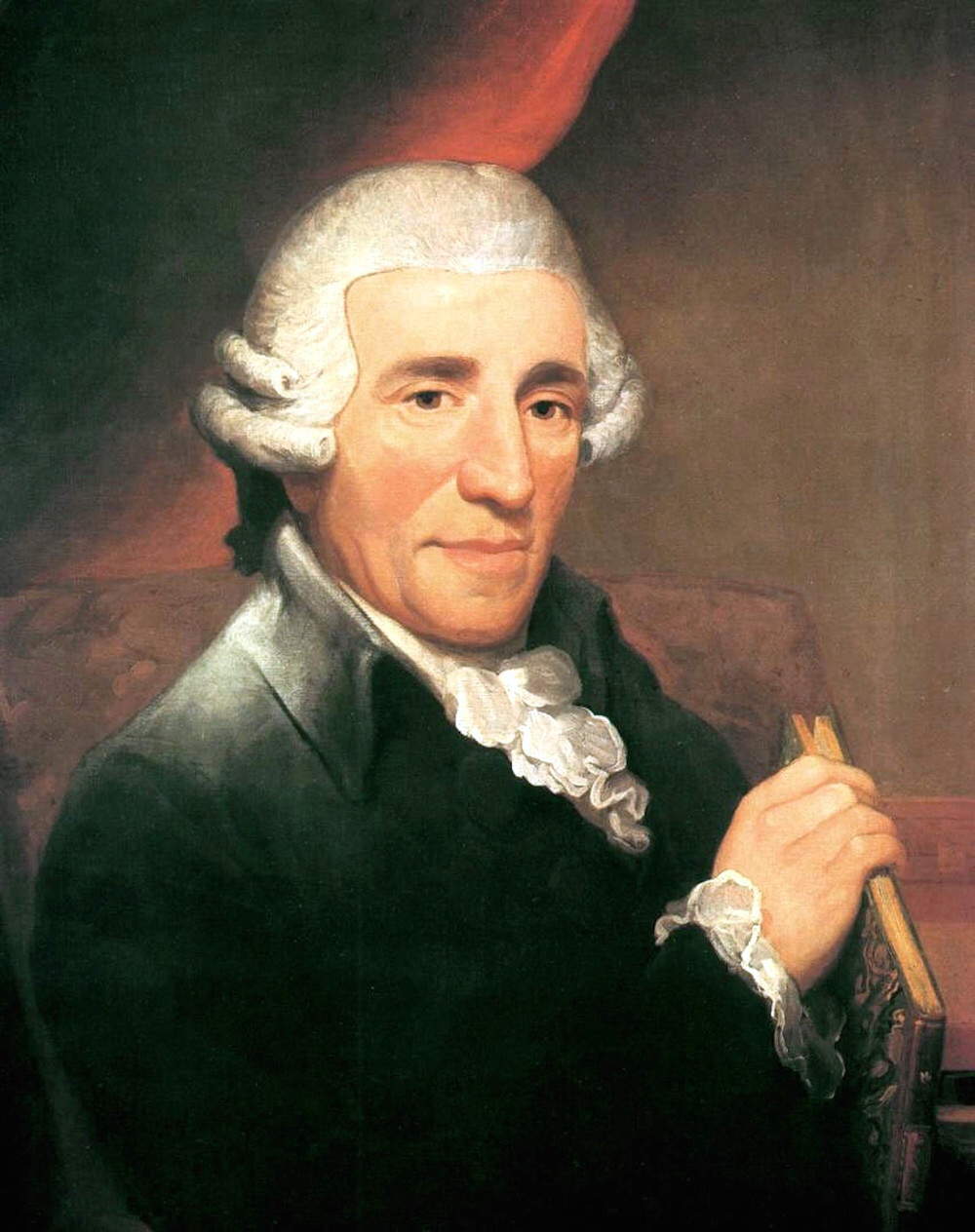

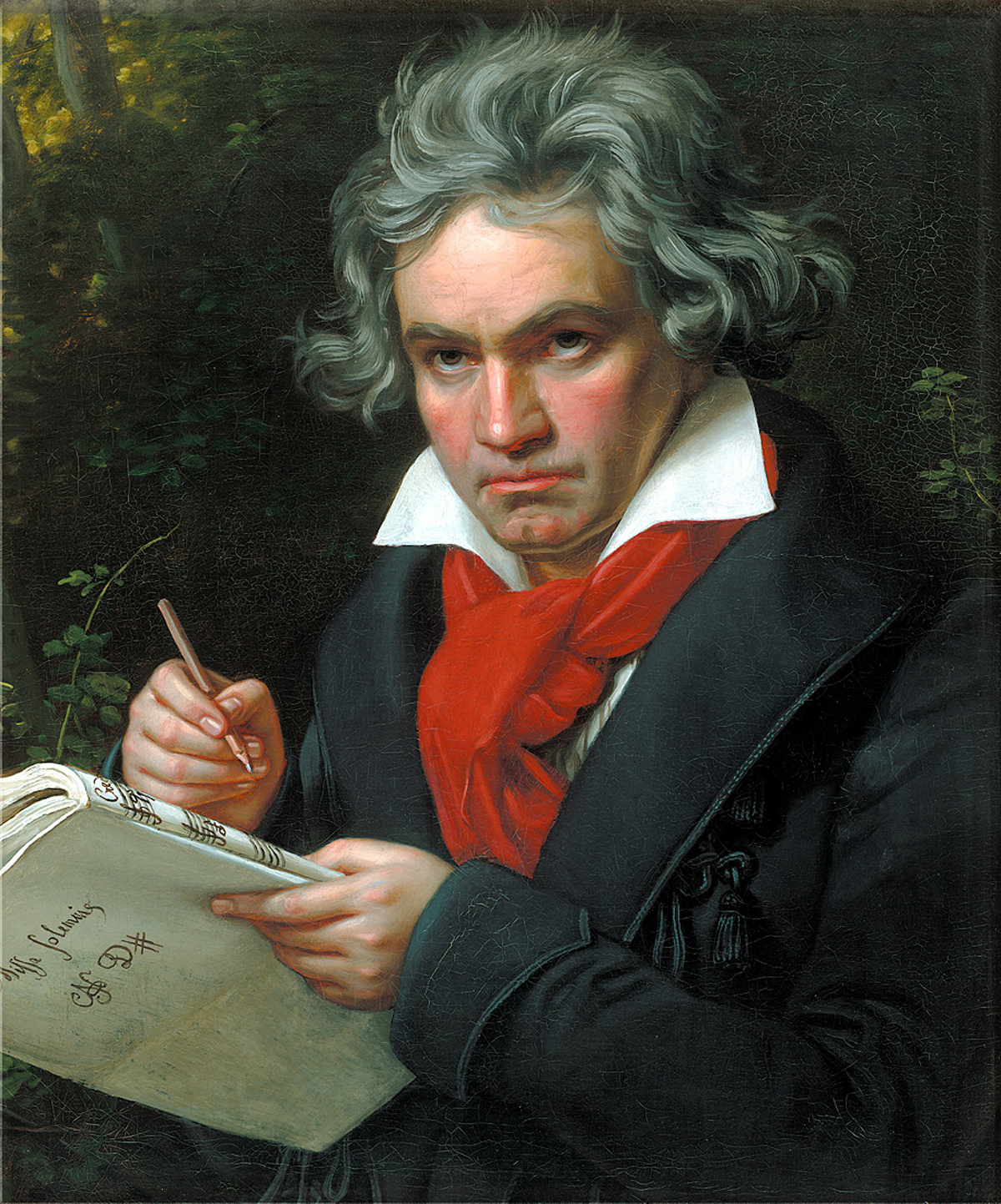 photo: joseph karl stieler · public domain ↗
Ludwig van Beethoven
On March 2, 1783, a Bonn court organist named Christian Gottlob Neefe used a Leipzig music magazine to make an extravagant bet: an eleven-year-old boy in his household orchestra, he wrote, "would surely become a second Wolfgang Amadeus Mozart were he to continue as he has begun." The boy was Ludwig van Beethoven, and Neefe had already put Bach's Well-Tempered Clavier in his hands. Nine years later, Beethoven left Bonn for Vienna carrying a farewell inscription promising he would receive "Mozart's spirit from Haydn's hands," and studied, briefly and uneasily, with both. He kept Neefe's letters, dedicated his first published sonatas to Haydn, and called himself "among the greatest admirers of Mozart" to his death — even as he pushed every form they gave him past what either man had imagined.
the sound in question
1808
Symphony No. 5 in C minor, Op. 67 (I. Allegro con brio)Ludwig van Beethoven
walk the tributaries ↓
Christian Gottlob Neefe1780s · Classical
Neefe ran Bonn's court chapel and, by his own account, put "The Well-Tempered Clavichord" of Sebastian Bach into an eleven-year-old's hands, prizing it as "the non plus ultra of our art." In March 1783 he staked his name in print — the first public sentence written about Beethoven — predicting the boy "would surely become a second Wolfgang Amadeus Mozart were he to continue as he has begun." Ten years later, from Vienna, Beethoven wrote back: "I thank you for the counsel which you gave me so often in my progress in my divine art. If I ever become a great man yours shall be a share of the credit."
listen: upstream & heresource: Beethoven-Haus Bonn — "Beethoven's Teacher ↗
1782
No known recordingChristian Gottlob Neefe
1783
Piano Sonata in E-flat major, WoO 47 No. 1 ("Kurfürstensonaten")Ludwig van Beethoven
listen forNo recording of Neefe's own keyboard music survives to compare — the audible half of this one is entirely Beethoven's. Play his Kurfürstensonate No. 1 in E-flat, WoO 47, composed at thirteen the same year Neefe arranged its publication, and listen for the poised, uncluttered give-and-take between the two hands: a boy already writing in the disciplined, Bach-schooled sonata language his teacher had drilled into him, years before he had a style of his own to push against it.
Joseph Haydn1780s · Classical
Haydn agreed to take the twenty-two-year-old on after hearing his cantatas in Bonn, and for a year drilled him in counterpoint in Vienna — an arrangement that soured fast. Beethoven, as his pupil Ferdinand Ries remembered, refused Haydn's one request, to sign his first works "Pupil of Haydn," insisting "though he had had some instruction from Haydn he had never learned anything from him." Yet when Haydn all but flunked the third of his 1795 piano trios to his face, Beethoven's fury didn't stop him dedicating his next set — the Op. 2 piano sonatas — to the man who had taught him.
listen: upstream & here
1794
Piano Sonata No. 62 in E-flat major, Hob. XVI:52Joseph Haydn
1795
Piano Sonata No. 1 in F minor, Op. 2 No. 1Ludwig van Beethoven
listen forSet Haydn's Piano Sonata in E-flat, Hob. XVI:52 — the mature four-movement keyboard language Beethoven inherited — against Beethoven's own Op. 2 No. 1, the sonata he dedicated to Haydn that same year. Listen for how closely Beethoven still writes inside Haydn's sturdy phrase-lengths and crisp cadences in the outer movements, then for the stormy, minor-key finale Haydn would never have written: the pupil's own signature already breaking through the frame he was handed.
Wolfgang Amadeus Mozart1780s · Classical / Opera
In 1787 the sixteen-year-old Beethoven made a brief trip to Vienna, where — his pupil Ferdinand Ries later wrote — "he received some instruction from Mozart, but the latter, as Beethoven lamented, never played for him." Five years on, leaving Bonn for good, he carried Count Waldstein's farewell inscription casting the move as inheritance: "you shall receive Mozart's spirit from Haydn's hands." He held the debt his whole life — "I have always reckoned myself among the greatest admirers of Mozart," he later wrote — and once, hearing Mozart's C minor concerto, could only blurt: "Cramer, Cramer! We shall never be able to compose anything like that!"
listen: upstream & here
1786
Piano Concerto No. 24 in C minor, K. 491Wolfgang Amadeus Mozart
1800
Piano Concerto No. 3 in C minor, Op. 37Ludwig van Beethoven
listen forMozart's Piano Concerto No. 24 in C minor, K. 491, is the concerto Beethoven reportedly heard and despaired of matching; his own Piano Concerto No. 3, written in the same key over a decade later, opens with the same dark orchestral tread before the piano enters. Listen for how Beethoven keeps Mozart's brooding color and scale, then pushes the piano's own entrance harder and longer — not answering Mozart's concerto so much as trying to out-shout it across a decade.