walking upstream…
Karlheinz Stockhausen
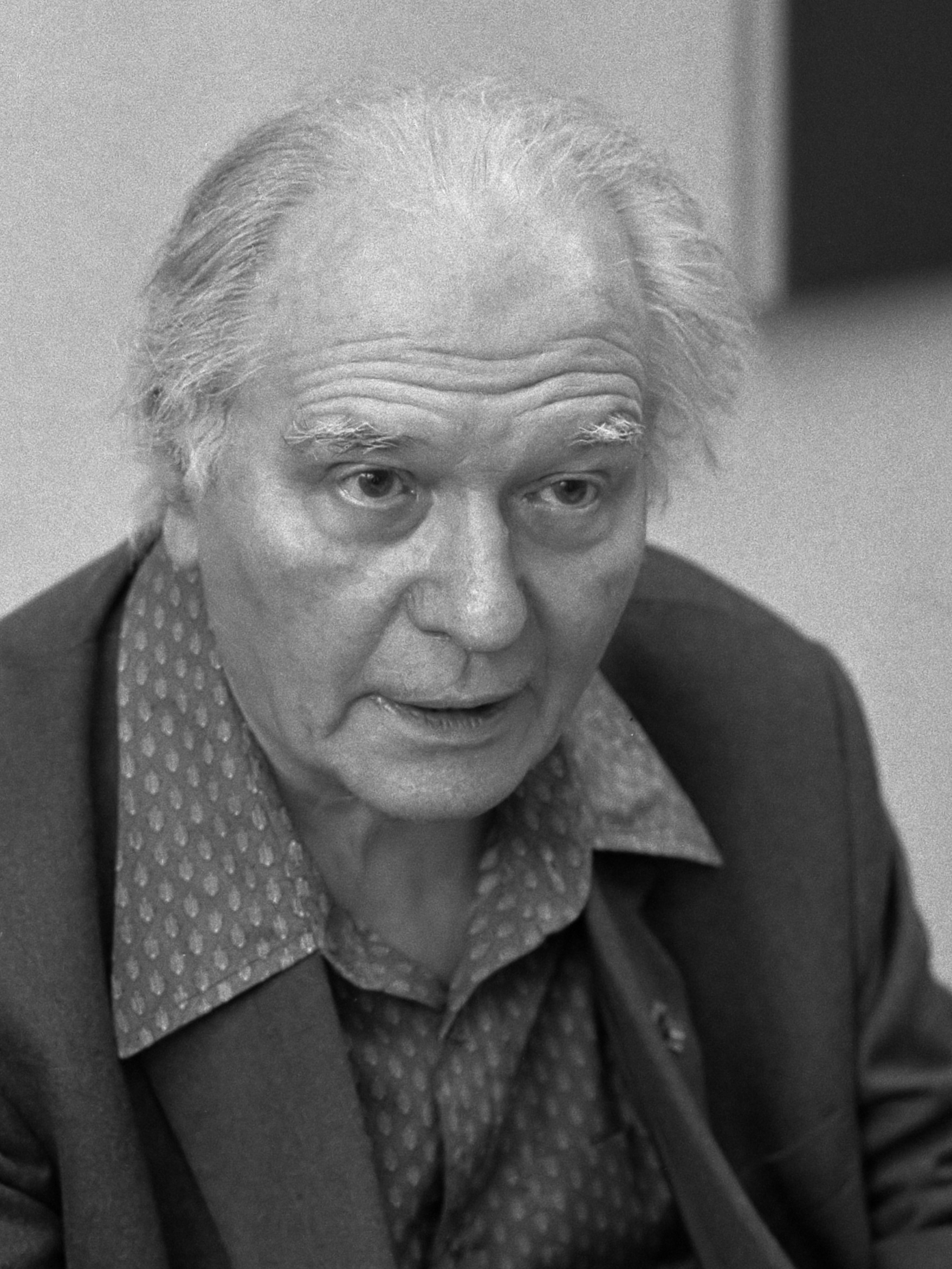
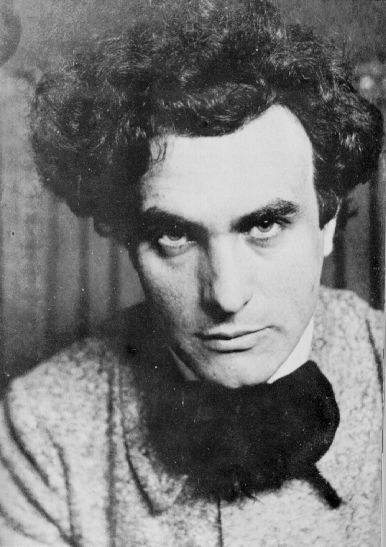
 photo: kathinka pasveer · cc by-sa 3.0 ↗
Karlheinz Stockhausen
sourcesWikipedia — Karlheinz Stockhausen (birth, Cologne/Bonn studies, 1952 Paris arrival, Cologne studio) · UNT Digital Library — Muncy thesis on Messiaen's Mode de valeurs et d'intensités (Kreuzspiel as direct model, non-Wikipedia) · Musicaficionado blog — Stockhausen's 1992 tribute quote on Messiaen (secondary compilation citing Jonathan Cott's Stockhausen · IRCAM — Karlheinz Stockhausen biography (Scherchen introducing Webern in 1951; Webernian principles of deduction and organic unity, non-Wikipedia) · Classical Music / BBC Music Magazine — Stockhausen · Wikipedia — Edgard Varèse ("organized sound," "what is music but organized noises?") · Encyclopedia.com — Edgard Varèse (Ionisation, Déserts première and tape/instrument fusion, non-Wikipedia)
Karlheinz Stockhausen got his first piano lessons at seven, from the Protestant organist at the Altenberg cathedral near Cologne. He studied piano and music pedagogy in Cologne through the late 1940s, then phonetics and acoustics at Bonn with Werner Meyer-Eppler, training that turned his ear toward the physics of sound rather than just its arrangement. In January 1952 he arrived in Paris to study with Olivier Messiaen; by 1953 he had moved into the West German radio's new Cologne studio, choosing synthetic tones over recorded ones and building what he called "point music," and eventually "total serialism" — treating duration, loudness, and timbre with the same rigor composers once reserved for pitch alone. He spent the rest of his career composing as though every parameter of sound were still up for invention.
the sound in question
1960
KontakteKarlheinz Stockhausen
walk the tributaries ↓
Olivier Messiaen1940s–60s · Contemporary classical / Avant-garde
Stockhausen did not go to Paris in 1952 for career advancement; he went because Olivier Messiaen's Trois petites liturgies had undone something in him back in Cologne, and Messiaen's Quatre Études de rythme finished the job at Darmstadt. He sat in Messiaen's classes on aesthetics and analysis for a year, absorbing a teacher who opened doors rather than dictating style. Remembering Messiaen after his 1992 death, Stockhausen reached for a single description: "there was an atmosphere in Messiaen which struck me as being new and yet very lyrical, very poetic."
listen: upstream & heresource: Wikipedia — Olivier Messiaen (teaching role; Mode de valeurs et d'intensités's influence on Boulez and Stockhausen) ↗
1949
Mode de valeurs et d'intensitésOlivier Messiaen
1951
KreuzspielKarlheinz Stockhausen
listen forMessiaen's 1949 piano piece "Mode de valeurs et d'intensités" sounds less like a melody than a table read aloud: each note arrives with its own independently fixed pitch, duration, loudness, and attack, so nothing repeats or develops in a familiar way. Listen to Stockhausen's Kreuzspiel two years later for the same idea scaled up to an ensemble — oboe, bass clarinet, piano, and percussion trade isolated points of sound that never resolve into a tune, each instrument obeying its own numbered logic instead of a shared melodic line.
Edgard Varese1920s–30s · Avant-garde / Electronic / Classical
Varèse had spent decades arguing that "what is music but organized noises?" — that any sound, filtered through structure rather than melody, could be composition. By the time Stockhausen was synthesizing tones from oscillators in the Cologne studio, Varèse had proof of concept: Déserts, premiered in Paris in December 1954 under the conductor Hermann Scherchen, wove electronic tape interpolations directly into a wind-and-percussion ensemble. Stockhausen, already building his own pieces outward from pure sine waves, treated that fusion of tape and instrument as license for the tape-and-voice work he began the following year.
listen: upstream & here
1954
DésertsEdgard Varese
1956
Gesang der JünglingeKarlheinz Stockhausen
listen forIn Déserts, three stretches of raw electronic noise — filtered, sped up, abrasive — interrupt a wind-and-percussion ensemble without warning, so the piece keeps snapping between a human orchestra and something that sounds like weather. Stockhausen's Gesang der Jünglinge fuses the two sources instead of alternating them: a boy's recorded voice, singing a text from the Book of Daniel, is spliced, layered, and blurred until it is no longer clear where the human voice ends and the electronic tone begins.
Anton Webern1920s–30s · Contemporary classical / Twelve-tone
Stockhausen arrived in Cologne still writing in Paul Hindemith's shadow; it took the conductor Hermann Scherchen, teaching at the Darmstadt Summer Courses from 1950, to put Anton Webern's scores in front of him in 1951 and reroute his ear entirely. The magazine Classical Music noted that Stockhausen joined "Boulez and other Darmstadt radicals" in extending Webern's abstraction into "total serialism," every parameter "rigorously determined by a mathematically inspired compositional process." IRCAM, the Paris institute for musical research, records that his work for decades after carried the "rigorous application of Webernian principles of deduction and organic unity."
listen: upstream & heresource: Wikipedia — Anton Webern (career facts, post-Webernism reassessment) ↗
1928
Symphony, Op. 21Anton Webern
1953
Studie IKarlheinz Stockhausen
listen forWebern's 1928 Symphony, Op. 21 packs a full orchestra into nine spare minutes, scattering melodic fragments between instruments so that no single voice carries a line for more than a few notes — clarity achieved through near-silence. Stockhausen's Studie I, built entirely from sine-tone generators in the Cologne studio, chases the identical austerity electronically: single tones appear, cut off, and vanish, each one a discrete "point" governed by its own duration and volume rather than blended into a continuous drone.