Kanan Devi


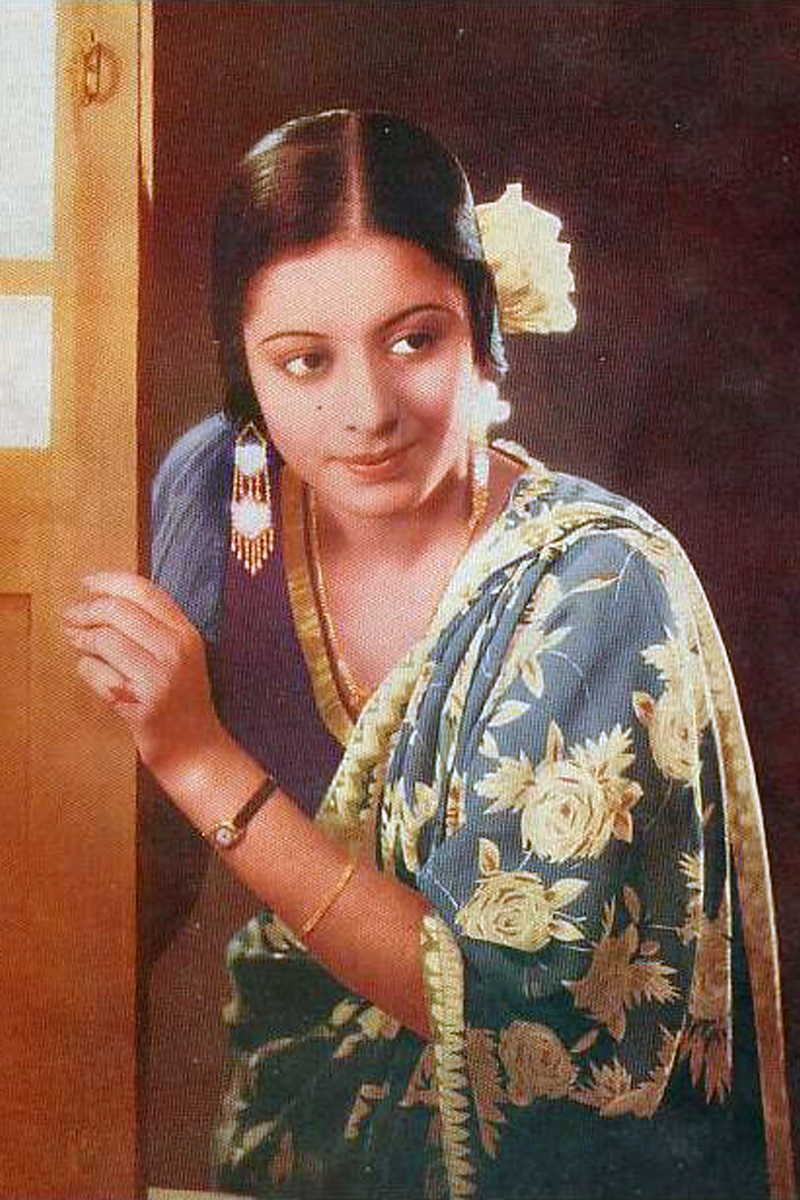 photo: kanandevi.com · public domain ↗
Kanan Devi, sometimes billed early on as Kanan Bala, was among the first great stars of Bengali cinema and one of its pioneering singing actresses, a mainstay of Calcutta's New Theatres studio in the 1930s and 1940s. Trained across Hindustani classical, Rabindra Sangeet and film idioms, she brought a light, quick, silvery voice to hits in both Bengali and Hindi before turning producer. She is often credited as the first true star of Bengali film.
Kanan Devi was schooled in Rabindra Sangeet under the tutelage of Anadi Dastidar and became renowned for her renditions of Tagore's songs; the poet-composer's flowing, speech-like melodies and devotional lyricism are woven through her non-film repertoire.
listen forPlay a Rabindra Sangeet setting like 'Ekla Cholo Re' and then Kanan Devi's 'Amar Hridoy Tomar' and hear the same gentle, undulating melodic contour that follows the natural cadence of the Bengali words.
At New Theatres, Kanan Devi worked within the musical world that Pankaj Mullick helped build, and his approach to melodic, Rabindra-Sangeet-inflected film composition shaped the songs she recorded in that era.
listen forSet Mullick's 'Piya Milan Ko Jaana' beside Kanan Devi's 'Duniya Ye Duniya Toofan Mail' and listen for the shared New Theatres blend of light classical melody and a forward-moving, almost breezy film-song rhythm.
Kanan Devi shared the New Theatres stage and screen with the blind singer-composer K. C. Dey - they appear together in Vidyapati (1937) - and his devotional, classically rooted film singing was part of the studio idiom she absorbed.
listen forAfter K. C. Dey's 'Baba Man Ki Aankhen Khol,' play Kanan Devi's 'Sakhi Ke Bole Piriti Bhalo' from Vidyapati and hear the same clear, classically shaded phrasing set to a simple, heartfelt film melody.