Julio Preciado
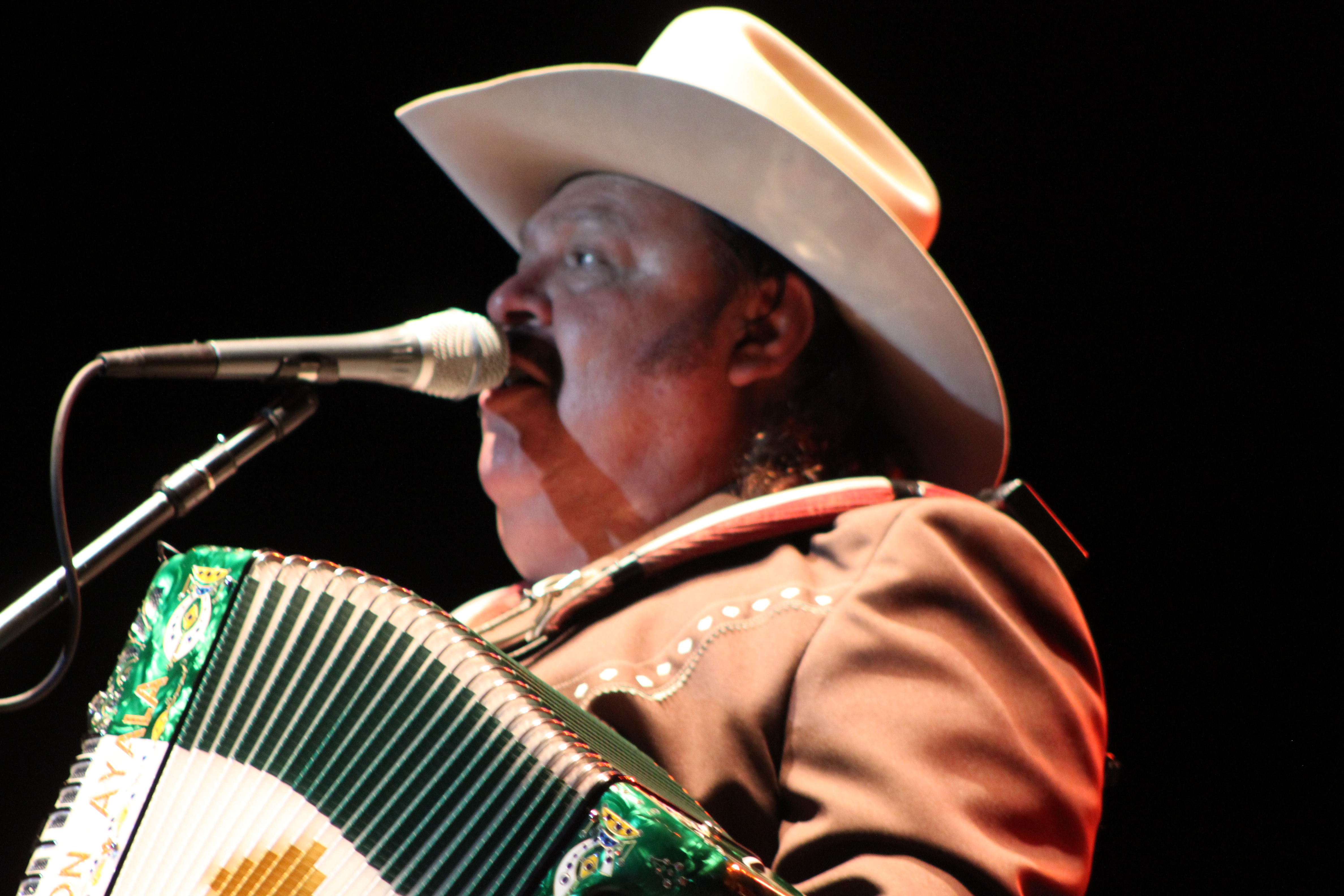

Julio César Preciado Quevedo grew up in Mazatlán, Sinaloa (b. 1966) dreaming of becoming a romantic balladeer in the style of José José, but found his way instead into the region's banda scene, singing with Banda Tiburón and La Original Banda El Limón before becoming Banda El Recodo's lead vocalist from 1991 to 1998 — a run that earned him the nickname 'El Gigante de la Banda.' He went solo in 1998 fronting his own Banda Perla del Pacífico, opening with the chart-topping 'Dos Hojas Sin Rumbo.'
Preciado has said his childhood and adolescence were 'marcadas' (marked) by his mother's Los Relámpagos del Norte records — the accordion-and-bajo-sexto duo of Ramón Ayala and Cornelio Reyna — memories deep enough that he later recorded a full tribute album, Homenaje a Ramón Ayala. The duo's clean, unhurried corrido storytelling shows up in how Preciado paces a narrative verse even inside a much bigger banda arrangement.
listen forA plainspoken, almost conversational verse that tells the story straight, no ornament, before the horn section takes over the emotional lifting a bajo sexto would have done for Ayala.
Preciado has said that as a kid he dreamed of becoming a baladista in the mold of José José — pure orchestral heartbreak balladry, long before banda entered the picture. That theatrical sense of a song's 'big moment,' the held note right at the emotional peak, carried straight into his banda phrasing once he found his real home in Sinaloan brass.
listen forA line held and pushed past where a straight corrido singer would cut it off — a balladeer's sense of the dramatic pause, reassigned to a horn section instead of an orchestra.