walking upstream…
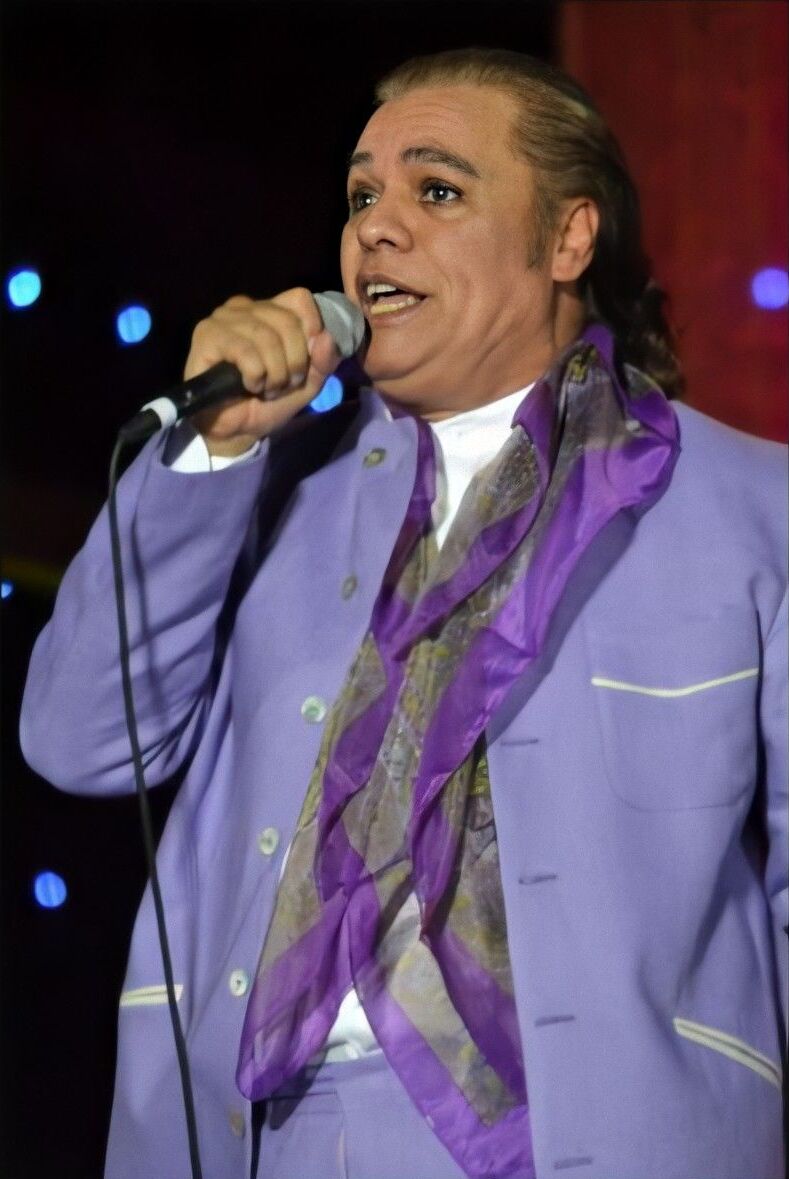
Juan Gabriel


sourcesLibrary of Congress, National Recording Preservation Board — "Amor Eterno"—Juan Gabriel (2024 essay by Noel Hernandez; bio, mother's death, live "oración de amor" dedication) · Revista Quién — Cd. Juárez, la tierra adoptiva y los inicios de Juan Gabriel (1965 TV debut singing José Alfredo Jiménez's "María la Bandida") · POSTA México — De Juan Gabriel a José Alfredo · Wikipedia — Juan Gabriel (biography grounding)
In 1965, a fifteen-year-old going by the name Adán Luna stepped onto a Ciudad Juárez television program called Noches Rancheras and sang someone else's song. Born Alberto Aguilera Valadez in 1950, he had already sold burritos with his mother on Juárez streets and passed through a reform-school dormitory before that debut. Jailed on a false robbery charge in 1971, he was freed through the ranchera singer La Prieta Linda, who walked him into RCA Victor and got him signed as Juan Gabriel. His mother's 1974 death produced "Amor Eterno," which he introduced onstage as "más que una canción... una oración de amor" — more than a song, a prayer of love. He sold over 100 million records rerouting Mexican popular song through his own confessions.
the sound in question
1990
Amor EternoJuan Gabriel
walk the tributaries ↓
José Alfredo Jiménez1950s-60s · Ranchera / Mariachi
Before he was Juan Gabriel, he was Adán Luna, the stage name a Ciudad Juárez television host gave him in 1965 the night he debuted on Noches Rancheras singing José Alfredo Jiménez's "María la Bandida." "Debutó interpretando la canción María la Bandida del gran José Alfredo Jiménez," the magazine Quién later reported. He crossed paths with Jiménez twice more in his unknown years — once in a Tijuana bar, once at the RCA Victor studios both men eventually recorded for — the same relationship critic Carlos Monsiváis later cited by name.
listen: upstream & heresource: Buenamusica.com — Biografía de Juan Gabriel (youth, Tijuana/RCA encounters with José Alfredo Jiménez, Lecumberri jailing) ↗
La Vida No Vale NadaJosé Alfredo Jiménez
1980
Yo No Nací Para AmarJuan Gabriel
listen forRadio commentator Fernando Rivera Calderón bookended Mexico's sentimental education with these two songs: "Hemos ido y venido de la vida no vale nada al yo no nací para amar" — we've gone back and forth from "life is worth nothing" to "I wasn't born to love." Jiménez's ranchera sets its fatalism against a mariachi that never softens; Juan Gabriel's 1980 answer keeps the same blunt, first-person vow aimed straight at loss, but lets the orchestration swell where Jiménez let the guitarrón stay flat.
Agustín Lara1930s–40s · Bolero / Canción romántica
When Agustín Lara's widow, Yolanda "Yiyi" Gasca, offered Juan Gabriel the Medalla Agustín Lara in 2016, he turned down Havana, then plain Veracruz. "Y mejor aún… entréguenmela en Tlacotalpan donde nació el maestro Agustín Lara," he said — better still, give it to me in Tlacotalpan, where the maestro was born. He arrived in a black suit and purple shirt, danced to "El Noa-Noa" with a jarocho band, then played nearly three hours — the kind of deference the Mexican press reads as placing him beside bolero's essential composer.
listen: upstream & heresource: Ruiz Healy Times — Juan Gabriel y el Tlacotalpan de Lara (Medalla Agustín Lara, first-hand account of the Tlacotalpan concert) ↗
1941
Solamente Una VezAgustín Lara
1990
Amor EternoJuan Gabriel
listen forLara's 1941 "Solamente Una Vez" sets its declaration of love-once-only against a swelling orchestra built for a cabaret room. Juan Gabriel's 1990 Bellas Artes recording of "Amor Eterno" works the same scale — voice pushed up against strings until both nearly break — but where Lara's arrangement stays composed and formal, Gabriel lets his voice crack and thin at the edges, trading Lara's polish for open, audible vulnerability.
Los Alegres de Terán1950s · Norteño / Corrido
Carlos Monsiváis, Mexico's foremost chronicler of popular culture, drew the line directly in his book Escenas de pudor y liviandad: "Juan Gabriel mezcla la herencia de José Alfredo y el repertorio de conjuntos norteños como los Alegres de Terán, y produce en series polkas, redovas, rancheras" — Juan Gabriel mixes José Alfredo's inheritance with the repertoire of norteño ensembles like Los Alegres de Terán, turning out strings of polkas, redovas, rancheras. The duo, accordionist Tomás Ortiz and singer Eugenio Ábrego, had spent the 1950s pulling norteño's sung corridos into the mainstream.
listen: upstream & heresource: Univision — La importancia de Juanga, según los intelectuales (Carlos Monsiváis and Fernando Rivera Calderón on José Alfredo Jiménez and Los Alegres de Terán) ↗
1953
Carta JugadaLos Alegres de Terán
2015
La FronteraJuan Gabriel
listen forOn "Carta Jugada," Ortiz's accordion and Ábrego's voice trade the melody in the close-harmony conjunto style Monsiváis had in mind. Juan Gabriel's own "La Frontera," a border-themed corrido he wrote for his 2015 duets album, sets accordion and bajo sexto up front in a formal norteño arrangement alongside Julión Álvarez y su Norteño Banda — the same conjunto instrumentation Los Alegres de Terán had defined three decades earlier.