walking upstream…
Johnny Cash


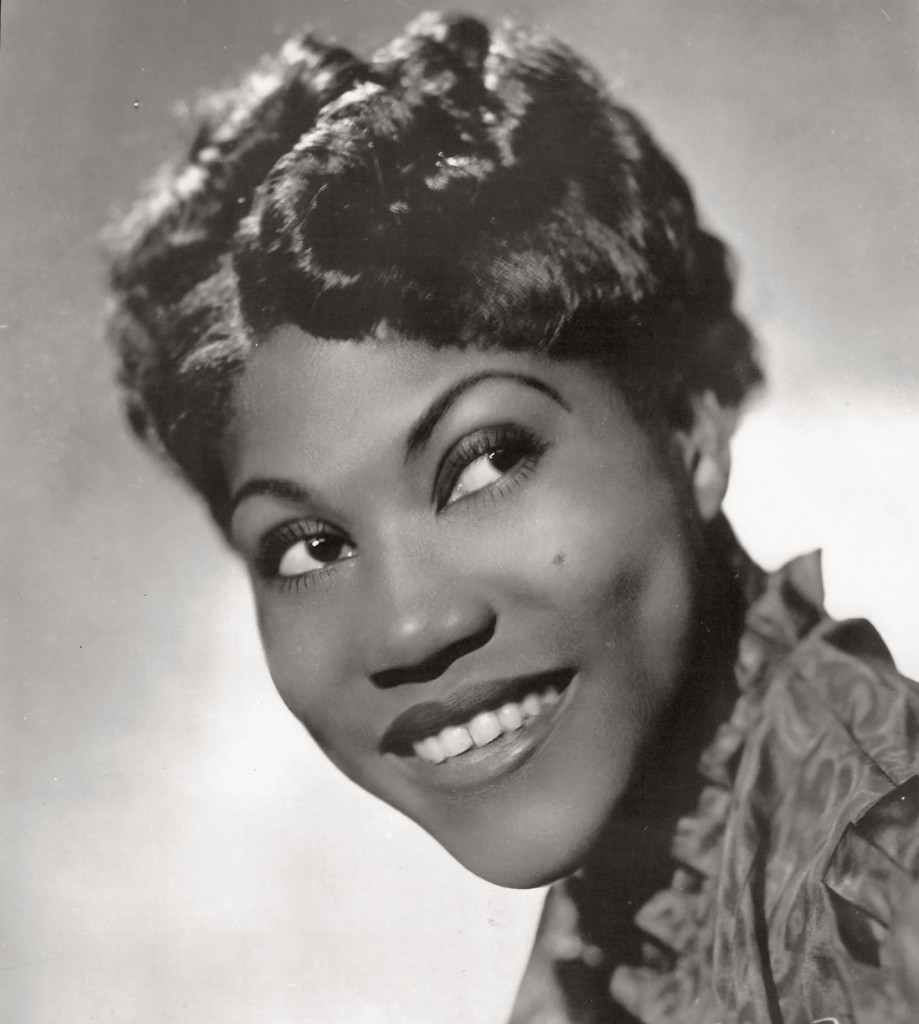
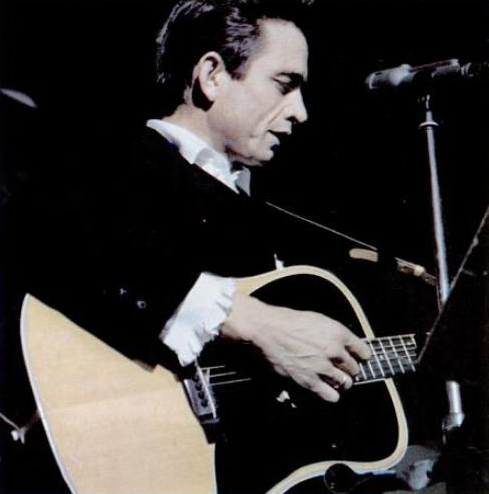 photo: columbia records · public domain ↗
Johnny Cash
sourcesNPR Fresh Air — "The 'Fresh Air' Interview" (1997 broadcast, Cash on Sun Records and his own catalog) · SecondHandSongs — "In the Jailhouse Now" performance history (confirms Cash's May 1962 studio cover of the 1928 Jimmie Rodgers original) · Tennessee Walt — "Squaring the 'Circle'" (confirms "Daddy Sang Bass" samples the Carter Family's "Can the Circle Be Unbroken" and that Cash's recording featured Maybelle Carter and her daughters on backing vocals)
On a battery-powered radio in Dyess, Arkansas, four-year-old J.R. Cash heard a Victrola crank out Jimmie Rodgers' "Hobo Bill's Last Ride" and, he said decades later, knew from that moment what he wanted to do with his life. He carried the plain-spoken storytelling of that pre-war radio dial — Rodgers, the Carter Family, gospel quartets, the blues coming through after dark — into Sam Phillips' Sun Records studio in 1955, where he and his band turned it into the flat, chugging sound of "Hey Porter" and "Folsom Prison Blues." Over five decades he widened that plainspoken voice across gospel records, prison concerts, and, in his sixties, the stripped-down American Recordings sessions with Rick Rubin — never softening the baritone, never losing the sympathy for outcasts he first heard on the records his mother let him grow up on.
the sound in question
1956
I Walk the LineJohnny Cash
walk the tributaries ↓
Jimmie Rodgers1920s–30s · Country / Old-time / Blues
Cash placed his musical awakening at four years old, in front of the family Victrola: "I was listening to an old Victrola, playing a railroad song. The song was called 'Hobo Bill's Last Ride.' ... From that day on, I wanted to sing on the radio," he told the Academy of Achievement in 1993. Rodgers' "Singing Brakeman" persona — a plain baritone narrating trains and jailhouses over spare guitar — gave the teenage Cash his whole vocabulary years before he ever sat on Sam Phillips' studio steps.
listen: upstream & heresource: Academy of Achievement — 1993 interview (Cash's own account of hearing Jimmie Rodgers' "Hobo Bill's Last Ride" at four, and naming Rodgers and the Carter Family as boyhood radio influences) ↗
1928
In the Jailhouse NowJimmie Rodgers
1962
In the Jailhouse NowJohnny Cash
listen forRodgers plays "In the Jailhouse Now" as a wry, talking-blues shuffle, breaking into a spoken aside on the punchline of every verse. Cash's 1962 studio remake, cut for The Sound of Johnny Cash, keeps Rodgers' exact structure and comic timing but strips out the yodel entirely, replacing it with his own dry monotone and his band's train-beat rhythm — the same jailhouse joke, told now in the flat delivery that became his signature.
The Carter Family1930s · Country / Old-time / Gospel
Cash located the Carter Family in the same breath as Rodgers when he listed his boyhood radio diet — "the Carter Family, which is my wife's family," he told the Academy of Achievement, noting even then that he'd heard them on the air years before he married into them. Carl Perkins built that debt directly into song: he wrote "Daddy Sang Bass" around the refrain of the Carters' "Can the Circle Be Unbroken," and it became a number-one hit for Cash.
listen: upstream & heresource: Academy of Achievement — 1993 interview (Cash's own account of hearing Jimmie Rodgers' "Hobo Bill's Last Ride" at four, and naming Rodgers and the Carter Family as boyhood radio influences) ↗
1935
Can the Circle Be Unbroken (By and By)The Carter Family
1968
Daddy Sang BassJohnny Cash
listen forThe Carter Family's "Can the Circle Be Unbroken" is a hymn built entirely around its call-and-response chorus, three-part harmony answering the lead line. Cash's "Daddy Sang Bass" lifts that exact chorus into a country-gospel singalong — and, as one historian of the song notes, his recording features Maybelle Carter and her three daughters on the same backing vocals, the debt made literally audible in whose voices are singing it.
Sister Rosetta Tharpe1940s · Gospel / Rock and roll
At his 1992 Rock and Roll Hall of Fame induction, Cash named his debts out loud: "Some of the earlier songs that I wrote were influenced by people like Sister Rosetta Tharpe and by Pink Anderson and Blind Lemon Jefferson." It's a rare moment of Cash crediting a specific songwriting influence in his own words, at a podium, rather than in retrospective biography — and it points straight at his Sun-era gospel narratives.
listen: upstream & heresource: TheBoot — Cash's 1992 Rock and Roll Hall of Fame induction speech naming Sister Rosetta Tharpe as a songwriting influence ↗
1944
Strange Things Happening Every DaySister Rosetta Tharpe
1957
BelshazzarJohnny Cash
listen forTharpe testifies over a driving boogie-woogie gospel shuffle on "Strange Things Happening Every Day," treating a spiritual warning like a rock and roll record years before the genre had a name — guitar and voice trading off like a call and response. Cash's own Old Testament narrative "Belshazzar" carries that same sermon-like urgency and driving momentum, trading her electric guitar attack for his band's chugging train-beat rhythm underneath the warning.