walking upstream…
James Blake
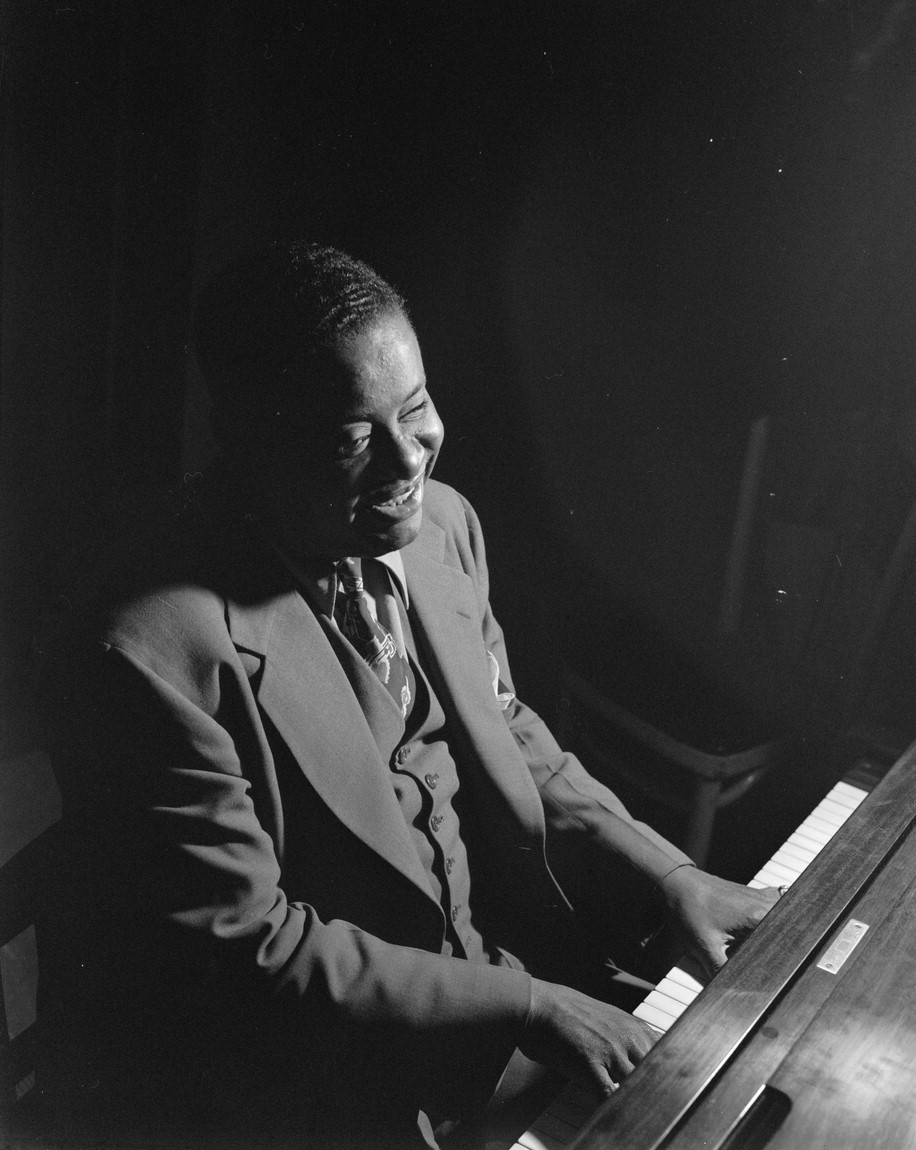

 photo: knar bedian · cc by 2.0 ↗
James Blake
James Blake Litherland grew up in Enfield, north London, the son of a working musician who never pressured him toward the trade. He studied popular music at Goldsmiths, University of London, then spent 2010 releasing three EPs — The Bells Sketch, CMYK, and Klavierwerke — that reworked dubstep's bass and space into something closer to hymn. His 2011 self-titled debut turned that vocabulary toward confessional soul singing, and Overgrown won the 2013 Mercury Prize, Britain's top album award. He has since become one of pop's most sought studio hands, producing and writing for Beyoncé, Jay-Z, and Kendrick Lamar while continuing his own increasingly song-based records. The thesis underneath all of it: strip a song to its harmonic bones, then let the silence do the singing.
the sound in question
2013
RetrogradeJames Blake
walk the tributaries ↓
James Litherland1970s · Prog rock / Jazz-rock
Blake was a toddler singing along to Otis Redding in the bath before he could talk; his father, James Litherland, put the instruments in the house and never pushed. Litherland had been a professional musician himself, guitarist and singer for the prog-rock band Colosseum, and one of his own songs, 'Where to Turn,' quietly became the blueprint for Blake's 2011 breakthrough. 'James Litherland IS my father, not a man that was produced by my father,' Blake corrected on Twitter when a rumor scrambled the credit. The chorus survived intact; everything else did not.
listen: upstream & heresource: NME — James Litherland solo album announcement (James Litherland influence, corroboration) ↗
2006
Where to TurnJames Litherland
2011
The Wilhelm ScreamJames Blake
listen forLitherland's 'Where to Turn' is a shaggy, full-band prog number — guitar, organ, a singer working comfortably within his range, nothing hidden. Blake kept only the chorus melody and the words around it, then rebuilt everything else as 'The Wilhelm Scream': one bass tone breathing under a heavily processed voice, the arrangement stripped until the song is mostly negative space. What survives the demolition is a single melodic line, still recognizable, now surfacing through completely different weather.
Art Tatum1930s–40s · Jazz / Stride piano / Swing
Blake spent five years of his teens listening almost exclusively to solo pianists, Art Tatum chief among them. 'If you listen to Art Tatum enough, you start to see through the concrète flourishes and embellishments and you arrive at a harmonic language that none of his contemporaries were using,' he told Pitchfork. 'That's something I wanted, and that's why the chords in all the music I've written are like they are.' He even cited pianist Vladimir Horowitz being frightened by Tatum's technique as the moment he stopped chasing classical respectability.
listen: upstream & heresource: Pitchfork — "James Blake" interview by Mark Pytlik (bio, Art Tatum influence) ↗
1933
Tea for TwoArt Tatum
2010
KlavierwerkeJames Blake
listen forTatum's 'Tea for Two' takes a simple pop tune and buries it in reharmonizations, chords sliding under the melody that no other stride pianist of his era was using. Blake's solo-piano title track 'Klavierwerke,' recorded during the same stretch he describes studying Tatum, works the same trick in miniature: a plain figure keeps circling while the harmony underneath it quietly refuses to resolve where the ear expects.
Wiley2000s · Grime / UK garage
Before the falsetto and the major-label deal, Blake was a bedroom producer studying eskibeat, the stripped-down strain of grime that came out of East London under Wiley. 'In terms of production, early influences for me were Wiley, Ruff Sqwad, J Sweet, and Alias,' he told GRM Daily. 'Some of the sounds being used in the Eski era of Wiley's stuff was just to me completely new... nothing touched the bravery of early grime if you ask me.' That bravery — icy synths, empty space, sub-bass doing the work of a whole band — became the chassis he later dressed in soul.
listen: upstream & heresource: GRM Daily — James Blake interview (Wiley/grime influence) ↗
2002
EskimoWiley
2010
CMYKJames Blake
listen forWiley's 'Eskimo' is built from almost nothing: a cold, glassy synth stab and a sub-bass hit, repeating with no chorus, no hook, daring the silence around it. Blake's 'CMYK' runs the same dare through pitched vocal samples instead of an MC — the track lives in the gaps between hits, not the hits themselves, the same austerity Blake named as his direct reference point.