walking upstream…
Evanescence


sourcesRevolver — "Evanescence's Amy Lee Picks Her Favorite Björk Songs" (confirms Björk's "Jóga" as the inspiration behind "Lost in Paradise") · Songfacts — "Amy Lee of Evanescence · Metal Hammer/Louder — "Amy Lee · RevolverMag.com — "Jonathan Davis, Marilyn Manson, and Amy Lee Featured on 'Nightmare Before Christmas' CD" (confirms Amy Lee's "Sally's Song" cover on Nightmare Revisited) · Louder — "The story behind Bring Me to Life" (origin of the song and the band's early years) · Blender — "Survivor!" (on the death of Lee's younger sister and its effect on her songwriting)
At nine, Amy Lee watched Amadeus and decided she had to be a composer: 'It wasn't about being in a rock band,' she has said, 'it was about making that music that made me feel so passionately.' She begged for piano lessons — then grunge arrived and split her attention, until, in her words, 'Evanescence was the product of these two extremes combining.' She and guitarist Ben Moody, who met at a church summer camp in Little Rock, Arkansas, started writing songs together as young teenagers in 1995, years before an abusive relationship and a family loss became raw material for Fallen (2003), the platinum debut built on 'Bring Me to Life.' Moody quit mid-tour that year; Lee has run the band — piano, soprano, and all — alone ever since.
the sound in question
2003
Bring Me to LifeEvanescence
walk the tributaries ↓
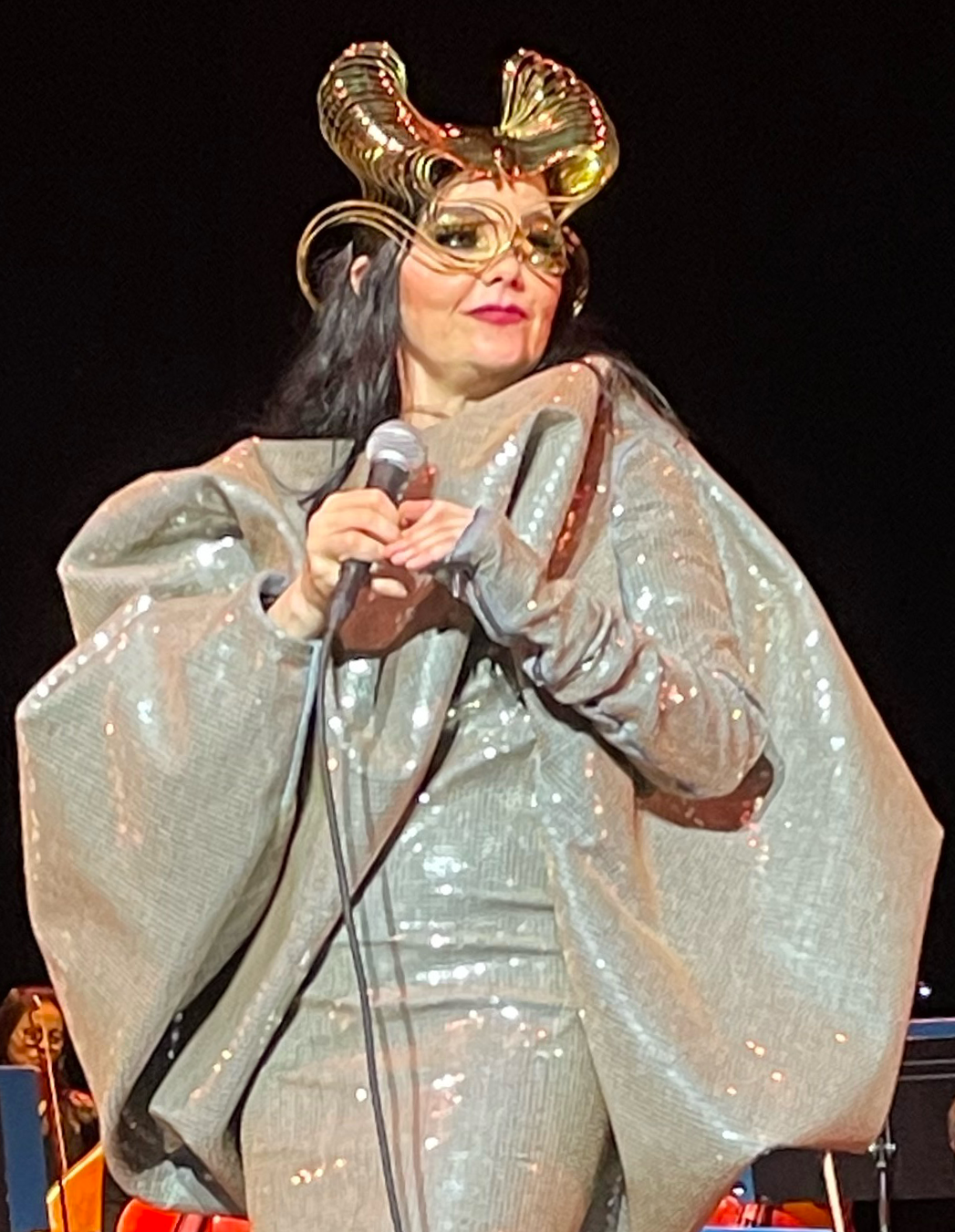
Björk1990s · Art pop / Electronica / Experimental
When a Louder interviewer pressed Amy Lee for her list of formative women in music, she didn't hedge: 'Bjork has always been my number one female artist – my favourite artist.' Five years earlier, an MTV News reporter had told her Evanescence's 'Lost in Paradise' reminded him of Björk's 'Jóga' — and Lee didn't deflect the comparison, she confirmed the source: 'That's a song that inspired me from a long, long time ago. It definitely inspired me musically ages ago.'
listen: upstream & heresource: Louder — "Evanescence ↗
1997
JógaBjörk
2011
Lost in ParadiseEvanescence
listen forPlay Björk's 'Jóga': the strings don't sit behind the song, they erupt inside it, lurching against the beat under her voice, mirroring the earthquake the song was written about. 'Lost in Paradise' borrows that same trick at rock-ballad scale — an orchestra that swells past the point where a chorus would normally settle, pressing up under Lee's voice instead of cushioning it, so the arrangement feels unstable rather than merely lush.
Danny Elfman1990s · Film score / New wave / Soundtrack
Asked in 2007 to name the composers she loved outside the classical canon, Amy Lee didn't hesitate: 'I love Danny Elfman. He's been a big influence for me. When I started creating Evanescence's music, that was a huge inspiration for me — the Tim Burton movies and all the scores that Danny Elfman had done.' The following year she made the debt literal, recording her own version of 'Sally's Song,' Elfman's ballad from The Nightmare Before Christmas, for the officially released tribute album Nightmare Revisited (2008) — on which Elfman himself also appears, bookending the record he inspired her to make.
listen: upstream & heresource: Westword — "Q&A With Evanescence's Amy Lee" (Danny Elfman named a direct influence on Evanescence's music) ↗
1993
Jack's LamentDanny Elfman
2008
Sally's SongEvanescence
listen forElfman sang the film role of Jack Skellington himself, and on 'Jack's Lament' his voice stays hushed and speech-like until the strings underneath force it upward into something closer to an aria. Lee's 'Sally's Song' cover follows the same shape: she holds back through the verses, letting the orchestration carry the weight, then opens her voice only when the arrangement demands it — the same cinematic patience Elfman brought to the character he voiced.
Tori Amos1990s · Art rock / Singer-songwriter
In the same breath that named Björk her favorite, Amy Lee kept going: 'Besides her, Tori Amos had a really big impact on me.' It's the only mention of Amos turned up in her interviews — no named song, no specific record — but it lines up with the plainest fact about several of Evanescence's biggest songs: before the guitars and choir arrive, they're just Lee and a piano, confessional in a way that traces straight back to Amos's own early records.
listen: upstream & heresource: Louder — "Evanescence ↗
1992
Silent All These YearsTori Amos
2003
My ImmortalEvanescence
listen forAmos's 'Silent All These Years' never leaves its piano-and-voice frame — the arrangement stays exposed by design, daring the vocal to carry the tension alone. Strip the strings and choir out of Evanescence's 'My Immortal,' which Lee wrote at sixteen, and the same bare shape is underneath: a plain piano figure and an unguarded voice holding up the whole song before anything else joins. No interview ties the two songs directly — the connection here is shared architecture, not a named quote.