walking upstream…
Drive Like Jehu

sourcesSan Diego Reader — band profile (backs Pitchfork lineage, Froberg's 1994 Fiz magazine quotes) · NPR — "Remembering Rick Froberg, the perfect punk vocalist" (obituary, bio/voice material) · Tony Rettman/No Idols — Rick Froberg interview, 2023 (backs Pitchfork-era DC hardcore scene background) · The Wooden Scapegoat — Froberg/Habibion interview (backs Froberg naming Pen Rollings as an influence) · Wikipedia — Drive Like Jehu ("Musical style and influences" section, citing Kreative Kontrol podcast oral history)
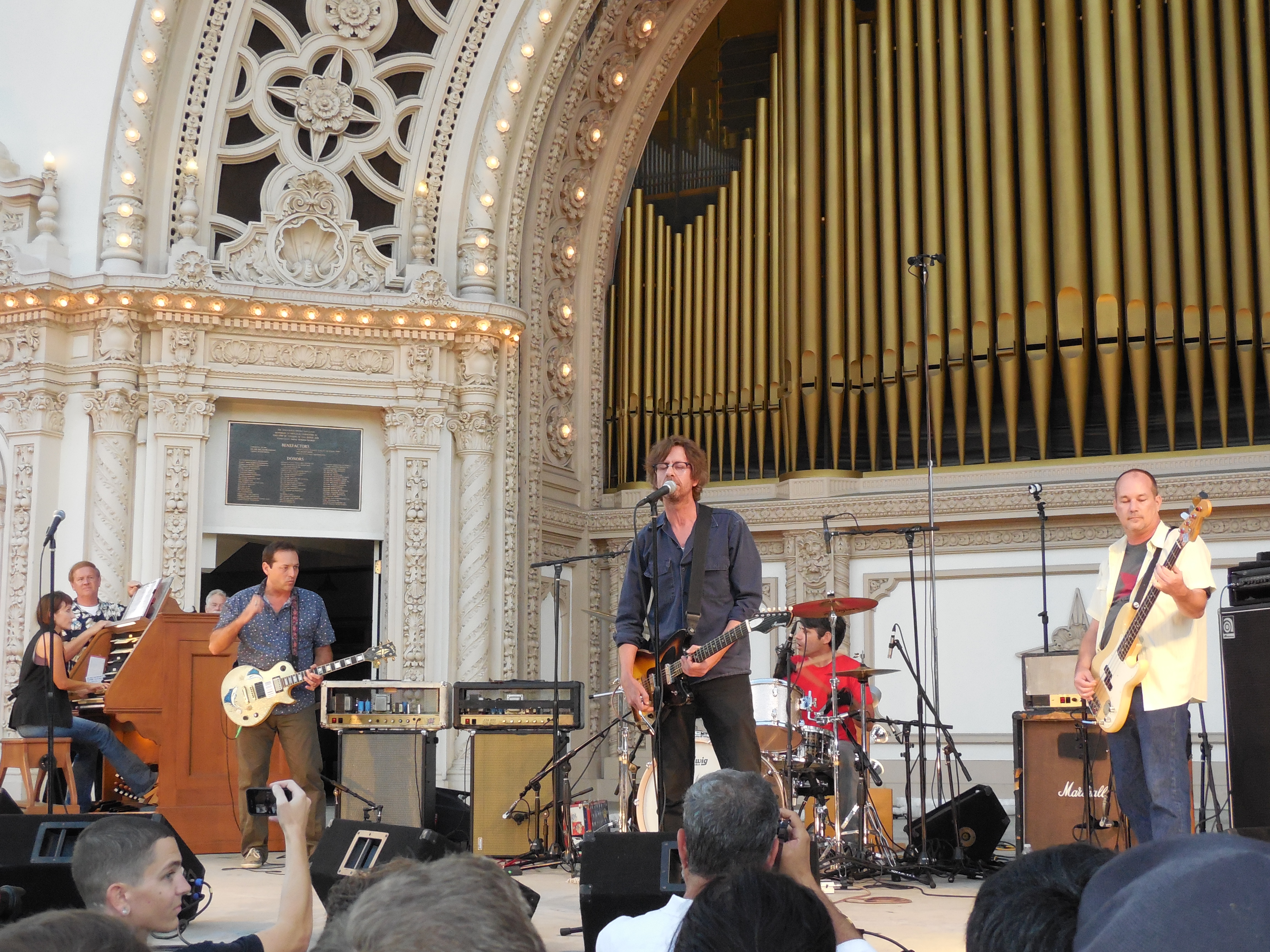
In San Diego in 1990, guitarist John Reis and singer Rick Froberg dissolved their post-hardcore band Pitchfork and, with bassist Mike Kennedy and drummer Mark Trombino, started over louder. Where Pitchfork chased a good song, Froberg said the new band chased something blunter: "we're definitely more interested in getting our rocks off." Drive Like Jehu's two albums — the 1991 debut and 1994's Yank Crime — turned hardcore's economy into long, serrated songs full of tempo shifts and two-guitar noise, then quietly stopped touring in 1995 without a breakup announcement. They reunited in 2014 for a one-off Balboa Park show that led to sporadic gigs through 2016. Froberg died in 2023; NPR remembered a voice that "always sounded like a skinny old man who smoked too many cigarettes and drank too much whiskey." Jehu's real thesis: take hardcore's velocity, strip the choruses, and let two guitars argue until something structural gives way.
the sound in question
1994
Do You ComputeDrive Like Jehu
walk the tributaries ↓
Mission of Burma1980s · Post-punk / Noise rock
Asked to name the bands that actually shaped Drive Like Jehu, not just the ones playing alongside it, Reis didn't hedge: "If you were gonna nail down Drive Like Jehu — bands that literally inspired us, where we took their music and made it our own — Mission Of Burma would be on that list for sure." The Boston band had already broken up by the time Reis was a teenager; when they reformed for one show, he bought a plane ticket rather than risk missing it, "'cause I didn't know if they were gonna come back west."
listen: upstream & heresource: The Skinny — John Reis interview, 2016 (backs Reis naming Mission of Burma and the Gories as Drive Like Jehu influences) ↗
1980
Academy Fight SongMission of Burma
1994
Do You ComputeDrive Like Jehu
listen forMission of Burma built "Academy Fight Song" on start-stop dynamics — a vocal riding on top of dense guitar noise rather than inside it, the band lurching to a near-stop before slamming back into tempo. "Do You Compute" runs the same trick at greater length: a vocal that refuses to soften for the noise underneath it, and stop-time hits that reset the song's momentum instead of resolving it.
Honor Role1980s · Post-hardcore / Post-punk
Wikipedia's own sourced account of the band, drawn from an oral-history podcast featuring all four members, calls this obscure Richmond, Virginia quartet Drive Like Jehu's "initial biggest influence," naming guitarist Pen Rollings specifically. Froberg confirmed it in his own words years later, asked which guitarists he'd looked to: "John, Sohrab, Pen Rollings, Greg Sage, too many to list. I really like people I can actually stand in front of and watch." A collector who stumbled on Honor Role's 1986 single put the debt more bluntly, recognizing a riff on the spot.
listen: upstream & heresource: DO YOU COMPUTE blog — Honor Role posts (backs the "Jank"/"Here Come the Rome Plows" guitar-line observation) ↗
1986
JankHonor Role
1991
Here Come the Rome PlowsDrive Like Jehu
listen for"Jank," the B-side that collector was talking about, spins one angular, off-kilter guitar figure until it becomes the whole song's structure — the same figure a fan swore he heard, note for note, when "Here Come the Rome Plows" opens: "fuck me that's the guitar line." Listen for how both songs let a single riff, not a chord progression, drive the arrangement.
The Gories1980s–1990s · Garage rock / Punk blues
Reis names only two bands as direct Drive Like Jehu influences in his own words — Mission of Burma, and this stripped-down Detroit trio: "The Gories were a massive influence on Rocket From The Crypt, Drive Like Jehu… Their minimalism, and how kick-ass they were, was a revelation." He credits the band's taste as much as their sound — their cover of Suicide's "Ghost Rider" was, in Reis's words, "the first version that I heard" — which reads less as a specific lick borrowed than a whole attitude toward doing more with less.
listen: upstream & heresource: The Skinny — John Reis interview, 2016 (backs Reis naming Mission of Burma and the Gories as Drive Like Jehu influences) ↗
1990
Ghost RiderThe Gories
1992
Bullet Train to VegasDrive Like Jehu
listen forThe Gories play "Ghost Rider" with no bass and barely any chords, letting a single repeating pulse carry the entire track — minimalism as the point, not a limitation. "Bullet Train to Vegas" keeps that same locked-in, hypnotic drive at its core, even with two guitars stacked on top of it; listen for the way the underlying pulse never wavers while everything else piles on around it.