walking upstream…
At the Drive-In
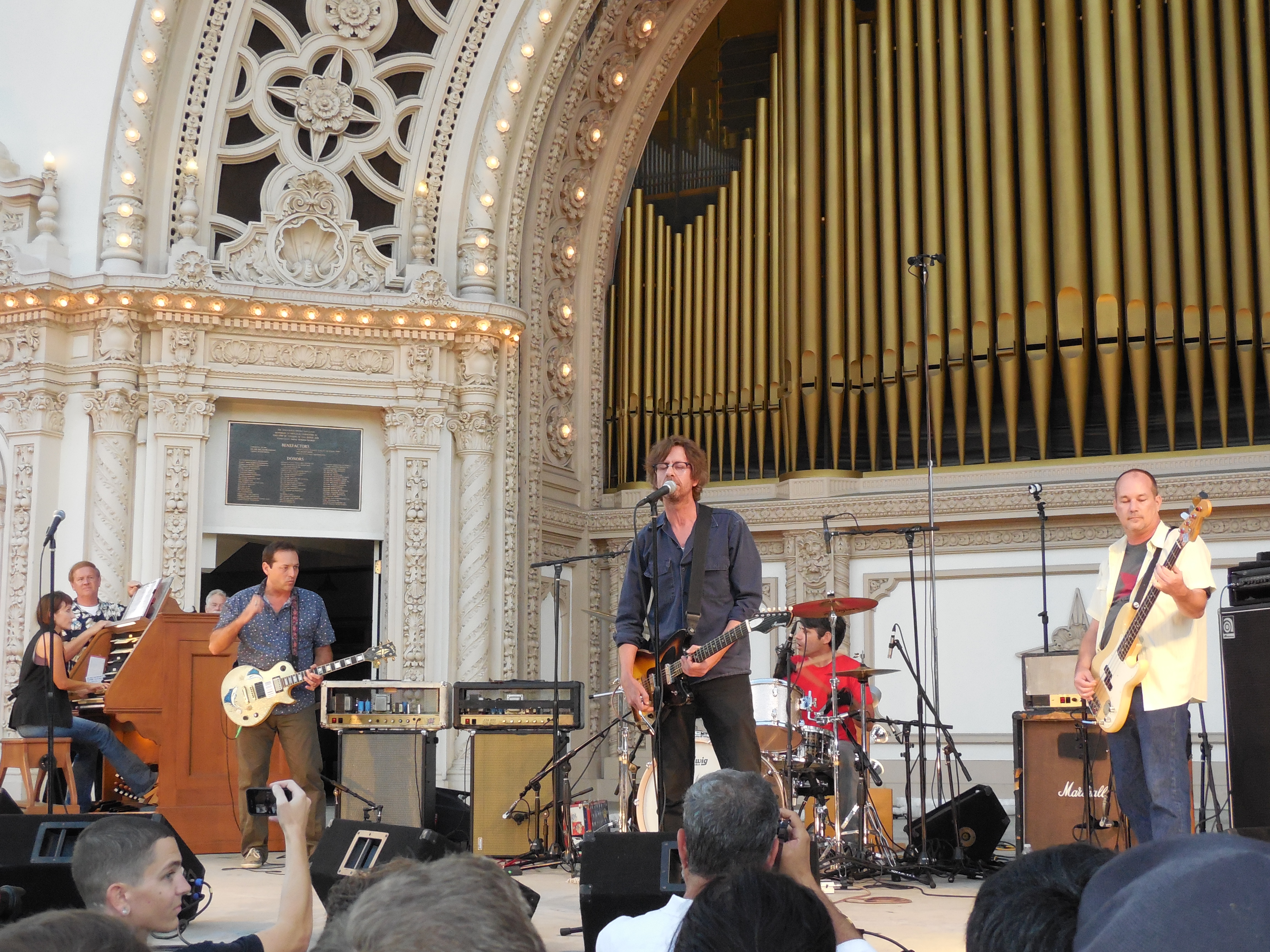

 photo: shane hirschman from hollywood, ca · cc by-sa 2.0 ↗
At the Drive-In
In a dry, shallow ditch in El Paso's Madeleine Park, two teenagers built a band out of restlessness and an acoustic guitar. "It all started in a local park in El Paso called Madeleine Park," Cedric Bixler-Zavala told Double J — him and Jim Ward constructing, as he put it, "the very first phases of At the Drive-In" in 1994. Omar Rodríguez-López joined on guitar in 1996, and the West Side band's punk hardened into something more serrated: dueling guitars, quiet-loud detonations, restless touring. Relationship of Command (2000) broke the band nationally behind "One Armed Scissor," then broke the band apart within a year, splitting into the Mars Volta and Sparta. Bixler-Zavala later distilled the whole project simply: a group "obsessed with both coasts, but we live in Texas."
the sound in question
2000
One Armed ScissorAt the Drive-In
walk the tributaries ↓
Drive Like Jehu1990s · Post-hardcore / Noise rock / Math rock
Cedric Bixler-Zavala never hedges on this one. Explaining why Relationship of Command connected across the Atlantic, he told SPIN in 2013: "I definitely knew what school we came from, and that people like Hot Snakes and Drive Like Jehu were our strongest influences, but they weren't exactly huge in Europe." San Diego's Drive Like Jehu — whose members later formed Hot Snakes — had already spent the early '90s treating two guitars as sparring partners rather than rhythm and lead, a structure At the Drive-In adopted wholesale for its own start-stop songwriting.
listen: upstream & heresource: SPIN — "Cedric Bixler-Zavala Talks At the Drive-In Reissues, His Real Mars Volta Role" (Drive Like Jehu and Built to Spill quotes) ↗
1994
Do You ComputeDrive Like Jehu
2000
One Armed ScissorAt the Drive-In
listen forOn Drive Like Jehu's "Do You Compute," the two guitars trade jagged, dissonant lines instead of settling into a lead-and-backup arrangement — one guitarist answers the other mid-phrase rather than locking into a shared riff. "One Armed Scissor" runs the same argument at higher voltage: the guitars interrupt each other through the verses before the whole band snaps into the song's sprinting chorus, the tension resolving in a single lurch rather than a build.
Built to Spill1990s · Indie rock / Slacker rock / Lo-fi / Alternative rock
This one is scoped to a single record and a single bandmate's listening habits, but Bixler-Zavala names it precisely. Asked about the atmosphere around 1996's Acrobatic Tenement, he told SPIN: "Jim had been listening to a lot of jangly indie rock, stuff like Built to Spill, and that's what that album sounds like." Built to Spill's Doug Martsch had spent 1994's There's Nothing Wrong with Love stretching simple chord changes under loose, ringing lead lines — a guitar language Jim Ward carried into the El Paso band's earliest songwriting, before Omar Rodríguez-López joined and pushed the sound elsewhere.
listen: upstream & heresource: SPIN — "Cedric Bixler-Zavala Talks At the Drive-In Reissues, His Real Mars Volta Role" (Drive Like Jehu and Built to Spill quotes) ↗
1994
Distopian Dream GirlBuilt to Spill
1996
EbroglioAt the Drive-In
listen forBuilt to Spill's "Distopian Dream Girl" hangs a wandering, chiming lead guitar over an unhurried chord bed, the guitar exploring while the song holds still underneath it. "Ebroglio," from Acrobatic Tenement, borrows that same loose-limbed ring — a clean, melodic line drifting over simple changes, still a long way from the band's later start-stop violence. It's the sound of a band that hadn't yet met Rodríguez-López or found its serrated edges.