walking upstream…
DMX
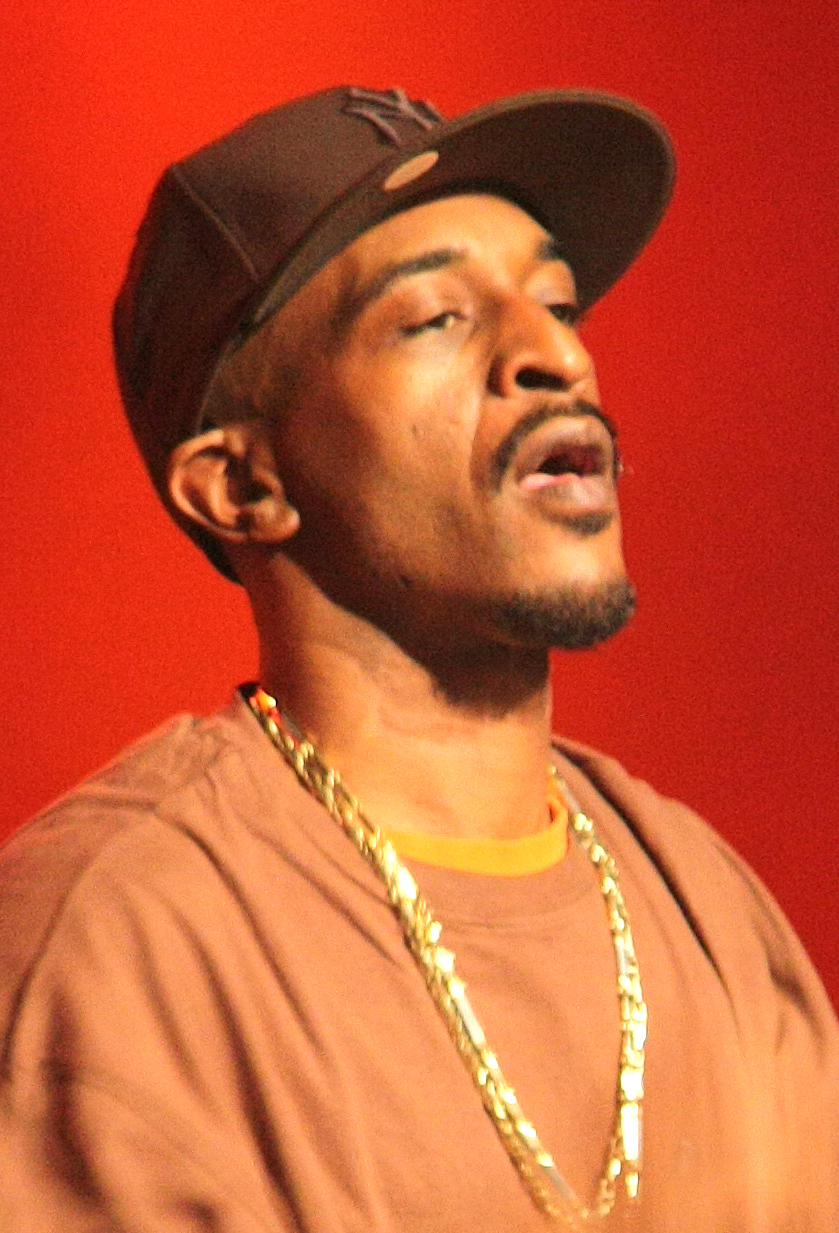



Earl Simmons grew up in the School Street housing projects of Mount Vernon and Yonkers, New York, beaten by his own mother and cycling through group homes before he found his voice — literally, beatboxing for a local rapper called Ready Ron in 1985 before he started rapping himself, taking his name from the Oberheim DMX drum machine. A deal with Columbia stalled and a Death Row contract fell through before a run of scene-stealing 1997 guest verses pulled him to Def Jam, where his 1998 debut, It's Dark and Hell Is Hot, hit No. 1 — the first of an unmatched five straight chart-topping debut albums. Where the era's hitmakers wore silk, DMX barked, growled, and prayed on record. 'The toughest guys have the biggest hearts,' he told MTV in 1999. 'You gotta be a tough guy to keep it safe.'
the sound in question
1998
Ruff Ryders' AnthemDMX
walk the tributaries ↓
Rakim1980s–90s · Hip hop / East Coast hip hop / Jazz rap
DMX and Rakim recorded together in 2013 but didn't meet face to face until two years later, when a camera crew caught the encounter for Street Heat Films. On tape, DMX settled a rivalry that had followed him since childhood: 'Growing up, there was always a conflict on who was the best rapper, it was between Big Daddy Kane and Rakim. I always went with Rakim, always.' What won him over, he explained, was Rakim's refusal to curse or pad a verse — proof a rapper could stay hard without raising his voice.
listen: upstream & heresource: VIBE — DMX meets Rakim for the first time (Rakim influence testimony) ↗
1987
Paid in FullRakim
1998
Get At Me DogDMX
listen forBoth tracks strip the beat to a hard, repeating loop and dare the MC to fill it alone — no hook, no chorus to hide behind. Rakim's breakout, 'Paid in Full,' rides that space with a laid-back, internally rhymed flow that never raises its voice. DMX's own breakout, 'Get At Me Dog,' takes the same bare architecture and detonates it — matching Rakim's command of the track but rerouting it through a barked, guttural cadence. Listen for how both open by staking a claim to the mic before the beat even settles.
Big Daddy Kane1980s · East Coast hip-hop / Golden age hip-hop
By 2003 DMX had built an empire on his own bark, but for 'Where the Hood At?' he reached back fifteen years. The song loops the same Albert King guitar line — 'I'll Play the Blues for You' — that Big Daddy Kane had already flipped for 1989's 'Young, Gifted and Black,' and DMX later said the borrowed groove was no coincidence: he was 'in love with that beat when Kane did it.' It's the one entry here where a childhood favorite shows up as literal, audible material rather than attitude alone.
listen: upstream & heresource: Wikipedia — "Where the Hood At?" (Big Daddy Kane sample connection) ↗
1989
Young, Gifted and BlackBig Daddy Kane
2003
Where the Hood At?DMX
listen forBoth tracks are built on the same Albert King horn-and-guitar loop from 'I'll Play the Blues for You,' but each MC repurposes it differently. Kane rides it smooth, dropping unhurried boasts between the horn stabs. DMX drags the same loop into something grimier — his verses bark over it in short, clipped bursts, and the hook turns the sample's laid-back groove into a taunt. Same sample, opposite temperature.
Kool G Rap1980s · Hip hop / Mafioso rap / East Coast hip hop
Asked by GQ in 2019 to name his five most influential rappers, DMX didn't hesitate: 'I don't know that they're in the order that they are influential to me. Jimmy Spicer, a.k.a. Super Rhyme. Big Daddy Kane, Rakim…Slick Rick and Kool G Rap.' He offered no further explanation for the Queens MC's place on that list, but the catalogs supply the connective tissue: Kool G Rap essentially invented the cinematic, first-person crime narrative, records that play like short films with a body count — the mode DMX's own tales of temptation, guilt, and violence never strayed far from.
listen: upstream & here
1989
Road to the RichesKool G Rap
1998
Ready to Meet HimDMX
listen for'Road to the Riches' set the template Kool G Rap spent his career refining: a rapper narrating his own criminal rise in vivid, novelistic detail, then facing the reckoning. DMX's 'Ready to Meet Him' keeps that first-person, cinematic frame but pushes the reckoning to its extreme — a street narrative that ends in a literal conversation with God. Listen for how both MCs slow the pace at the moment of consequence, letting the story's violence finally catch up with its narrator.