walking upstream…
Disclosure
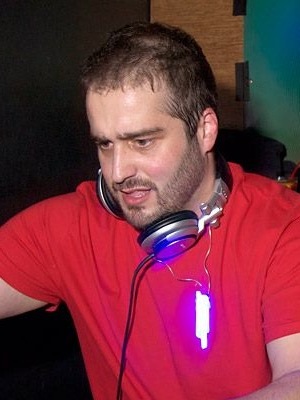

 photo: nick minieri · cc by 2.0 ↗
Disclosure
Guy and Howard Lawrence grew up above their father's Surrey auction house, copying chord changes their musician parents played them and, later, whatever Guy remembered from a rave the night before. Neither brother had DJed a gig before their first two singles landed a record deal off Myspace. Around 2008 they were chasing the post-dubstep sound of James Blake and Mount Kimbie; tracing where those artists got their own ideas sent the brothers backward into Chicago house, Detroit techno, and 1990s UK garage. That excavation became 2013's 'Settle,' which turned deep-house revivalism into a pop chart record built on guest vocalists, most famously Sam Smith on 'Latch.' "We just make songs," Howard has said — "pop-structured songs in the style of house music and garage."
the sound in question
2012
LatchDisclosure
walk the tributaries ↓
Todd Edwards1990s · UK Garage / House
The Guardian calls Todd Edwards the "undisputed godfather of garage," and the brothers met him on tour, then stayed up until nine in the morning in a hotel room "drinking beers and talking about music" while he told them, in Guy's telling, "Praise the lord for you guys, you give me so much hope." Howard later made the debt literal, daring a listener to date his own record: "I could drop our song with Eliza Doolittle... and Saved My Life by Todd Edwards and no one could name what decade they're from." That song is "You & Me," and the comparison is his, not a critic's.
listen: upstream & heresource: The Guardian — Disclosure ↗
1995
Saved My LifeTodd Edwards
2013
You & MeDisclosure
listen forEdwards built 'Saved My Life' out of vocal syllables diced so fine they function as percussion — a technique fans call his "vocal science," every hook stitched from cut-up a cappella scraps rather than sung straight through. 'You & Me' answers with the same chopped-syllable phrasing wrapped around Eliza Doolittle's vocal, proof Howard's dare wasn't a boast: play them back to back and the two-decade gap nearly disappears.
J Dilla1990s–2000s · Hip hop / Instrumental hip hop / Neo soul / Jazz rap
'Settle' is a nearly sample-free record by design — Guy Lawrence told Interview Magazine that clearing samples had become "such a hassle" the brothers preferred to play everything themselves. They made one exception. "The sample on the album is a J Dilla sample on 'Grab Her!'... because we love J Dilla and we wanted to pay tribute to him because he's such an influence and so awesome." He named Dilla's hometown outright as a wellspring for how Disclosure builds a beat: "Detroit — home of J Dilla, home of techno, and home of house music."
listen: upstream & heresource: Interview Magazine — Disclosure's Deep Cuts (J Dilla sample on Grab Her!, Chicago/Detroit influence) ↗
1999
The Look of Love, Pt. 2J Dilla
2013
Grab Her!Disclosure
listen forThe source is "The Look of Love, Pt. 2," a 1999 J-88 track Dilla produced, its loop built from an off-grid, softly swung drum break under a warped soul sample. Disclosure lift that same fragment into 'Grab Her!,' where it surfaces at the very top of the track, still carrying its loose, unquantized feel inside their tighter house rhythm — a tribute stated in the credits, not just the interview.
James Blake2010s · Electronic / Soul / UK Bass
Before Disclosure had a sound of their own, they had a photocopier. "We got into dance music in about 2008 and 2009," Guy Lawrence told NPR, "and we just basically tried to copy everything that was happening in the U.K. at that exact time. So all of our production sounded very much like James Blake, Mount Kimbie." What separates the debt from mere fandom is what came next: the brothers started asking why Blake sounded the way he did, and following his own influences backward is what led them to the Chicago and Detroit house records that would define 'Settle.'
listen: upstream & heresource: Billboard — Disclosure ↗
2010
CMYKJames Blake
2012
BoilingDisclosure
listen forBlake's 'CMYK' chops soul-vocal fragments into stuttering, pitch-bent syllables over a skittering half-tempo beat and cavernous sub-bass — the post-dubstep production language Disclosure were still learning in 2010. Their own 'Boiling,' from the same year's Face EP, runs the same trick: a vocal snippet sliced into rhythm, hollowed-out low end, and a beat that never quite resolves into a normal house pulse. Neither song is the other's ancestor by name — this is the sound of the apprenticeship itself.