walking upstream…
Common
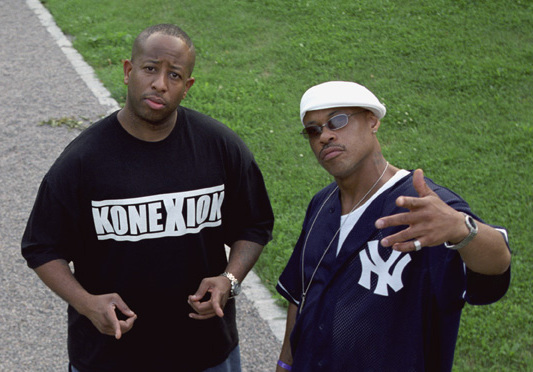
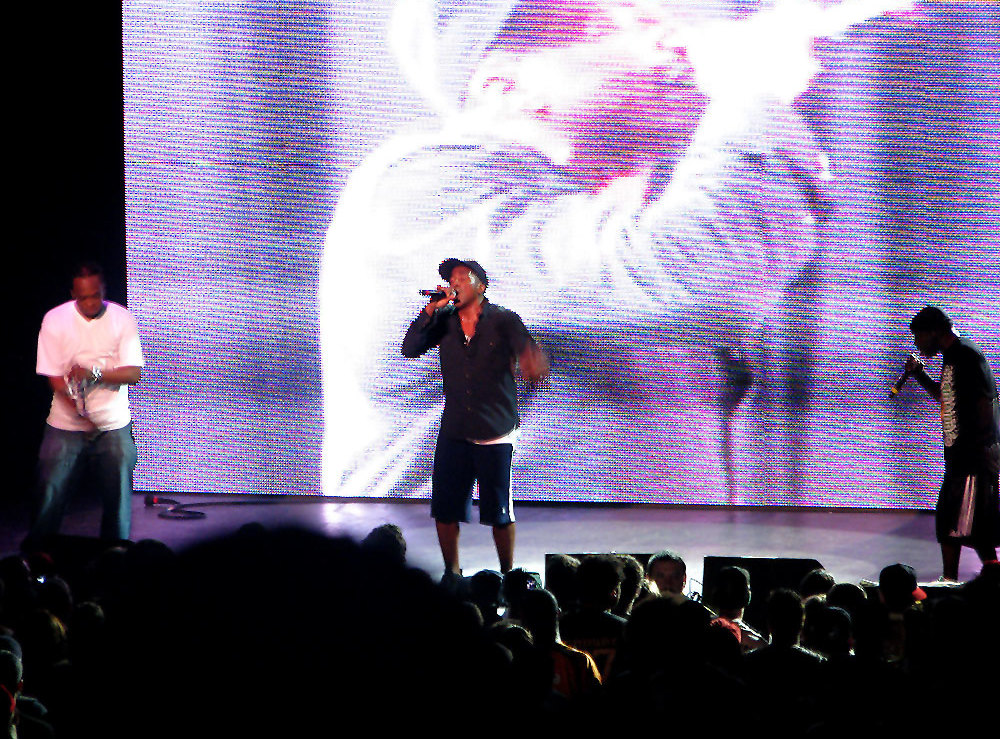


Lonnie Rashid Lynn Jr. started rapping as a teenager on Chicago's South Side, releasing his 1992 debut as Common Sense before a trademark dispute forced the shorter name. His breakthrough, 1994's 'Resurrection,' produced almost entirely by fellow Chicagoan No I.D., married dense, conversational wordplay to sample-based boom-bap and made him one of backpack-era hip-hop's defining voices, its extended-metaphor single 'I Used to Love H.E.R.' becoming a genre landmark. He loosened into jazzier, soul-inflected territory through the Soulquarians orbit on 'Like Water for Chocolate' and 'Electric Circus,' then sharpened back toward mainstream songcraft alongside Kanye West on 'Be' and 'Finding Forever.' Since, he's split time between rap, a prolific acting career, and activism, staying hip-hop's steadiest bridge between the page and the pulpit.
the sound in question
1994
I Used to Love H.E.R.Common
walk the tributaries ↓
Gang Starr1990s · Hip hop / Jazz rap / East Coast hip-hop
Describing how he built the hook for 'I Used to Love H.E.R.' with no formal songwriting background, Common told Complex: 'I grew up on Gang Starr and Pete Rock, stuff like that. That's what was on their choruses, so that's what we did' — then had his own chanted vocal scratched into the hook, echoing how DJ Premier built Gang Starr's choruses out of Guru's own chopped-up bars.
listen: upstream & here
1992
Take It PersonalGang Starr
1994
I Used to Love H.E.R.Common
listen forCompare 'Take It Personal' with 'I Used to Love H.E.R.' — both swap a sung hook for the rapper's own voice sliced and scratched back into the chorus, the DJ turning the MC's bars into the song's refrain.
A Tribe Called Quest1990s · Hip hop / Jazz rap / Alternative hip hop
Recalling the making of 'Resurrection' for Complex, Common described staring at the cover of A Tribe Called Quest's 1993 'Midnight Marauders' as a teenager, envious he hadn't been invited into that crew photo of young MCs, and named the album, alongside De La Soul's 'Buhloone Mindstate,' as one of two records that 'really had a big influence on me.' Tribe's loose, jazz-sample-driven, conversational flow pulled Common away from stiffer, more rigid boom-bap phrasing toward something warmer and more relaxed.
listen: upstream & here
1993
Award TourA Tribe Called Quest
2000
Nag Champa (Afrodisiac For The World)Common
listen forPair 'Award Tour' with 'Nag Champa (Afrodisiac for the World)' — both ride an unhurried, warm jazz-loop groove where the rapping sits back in the pocket rather than pushing against the beat, closer to conversation than confrontation.
De La Soul1980s–90s · Hip hop / Alternative hip hop / Jazz rap
In that same Complex oral history, Common singled out De La Soul's 1993 'Buhloone Mindstate' by name as one of the two albums that most shaped 'Resurrection,' and pointed to De La's Posdnuos specifically as a peer whose praise validated his writing. Buhloone Mindstate's density — internal rhyme and layered, personal digression crowding out a simple hook-verse-hook shape — surfaces in Common's own most autobiographical verses.
listen: upstream & here
1993
I Am I BeDe La Soul
1997
Retrospect for LifeCommon
listen forSet 'I Am I Be' against 'Retrospect for Life' — both abandon a tidy chorus for long, unbroken verses that spiral through personal history and contradiction, letting the song's shape follow the thought rather than a beat-driven structure.