walking upstream…
Cocteau Twins


sourcesCocteau Twins official site — Introduction & Robin Guthrie bio (formation, Peel session, Spector/Birthday Party quotes) · Melody Maker (reprint) — Robin Guthrie, "My Favourite Records" (Spector and Birthday Party testimony) · Electronic Sound — "Under the Influence · Alternative Press (reprint) — "Embracing Otherness" (Fraser's punk background and tattoos) · Wikipedia — Cocteau Twins (carrier of 1982 Sounds/NME review wording)
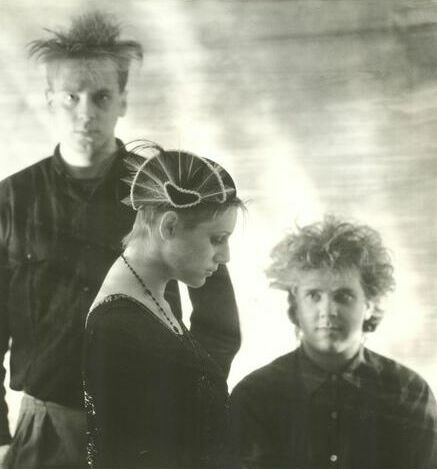
In 1981, Robin Guthrie was DJing a club night in Grangemouth, a small Scottish industrial town, when 17-year-old Elizabeth Fraser walked in; he invited her to sing over the two-year-old bedroom project he ran with bassist Will Heggie, and Cocteau Twins gained the voice that would define them. None of the three had formal training; the band's own account calls the original trio "young, shy, self-effacing, awkward." A BBC session for John Peel in June 1982 brought fast attention, and the debut LP Garlands followed weeks later on the 4AD label. Heggie left after a 1983 Hamburg gig, replaced by Simon Raymonde, and across the rest of the decade the group dissolved Fraser's voice into pure texture over Guthrie's reverb-soaked guitar, a wordless sound that helped define dream pop before the band split in 1997.
the sound in question
1990
Heaven or Las VegasCocteau Twins
walk the tributaries ↓
Phil Spector1960s · Pop / Rock and roll / Girl group
Guthrie has told the same story for decades. In a 1993 Melody Maker survey of his favourite records, he picked The Ronettes' "Be My Baby" and admitted, "I've been an obsessive collector of Phil Spector's stuff, I've got loads and loads on vinyl... Nice tunes, big sounds—yeah, it was an obvious influence." The band's own biography ties that admiration to their method directly, describing the goal as punk's energy "but more finesse and beauty, and that shiny, Phil Spector sound" — the reverb-stacked wall Guthrie built beneath Fraser's voice.
listen: upstream & here
1963
Be My BabyPhil Spector
1990
Cherry-Coloured FunkCocteau Twins
listen forCue Spector's "Be My Baby" and its famous drum pattern buried under cavernous echo, then play "Cherry-Coloured Funk." The drums are gone, but the trick survives: guitar layered on guitar until the individual strums disappear into a single reverberant mass, the way Spector once dissolved a small girl group into orchestral scale. Where Spector piled strings and voices, Guthrie piles chorus and delay pedals — same architecture, built from different bricks.
The Birthday Party1980s · Post-punk / Gothic rock / Noise rock
Guthrie's other formative record was blunter. Recalling The Birthday Party in that same 1993 piece, he wrote, "I just remember listening to The Birthday Party on the radio thinking, 'Fucking Hell!' We'd be down the front at every gig, follow them around everywhere." The band's own biography credits guitarist Rowland S. Howard by name as a source of Guthrie's playing, one of the "guitarists who made beautiful noise" — the scraping, distorted textures audible on Garlands, before the sound smoothed into shimmer.
listen: upstream & here
1980
The Friend CatcherThe Birthday Party
1982
Wax and WaneCocteau Twins
listen forPlay "The Friend Catcher," the Birthday Party single Guthrie named a formative favourite: guitar scraped and detuned against a driving, insistent rhythm section, closer to noise than melody. Then cue "Wax and Wane," the track that opened Cocteau Twins' Peel session that same year — the same raw, effects-heavy guitar attack is there, not yet smoothed into the chorus-pedal wash the band would settle into within a year or two.
Siouxsie and the Banshees1980s · Post-punk / Gothic rock / Alternative rock
No interview has Guthrie or Fraser naming Siouxsie and the Banshees outright — the case rests on what surrounded them. When Garlands appeared in 1982, Sounds described the band's style as "mixing strong Siouxsie and the Banshees and Joy Division influences," and Fraser carried a version of that lineage on her skin: a 1996 profile found her arms marked with "fading homages to Siouxsie and The Banshees, Sid Vicious and Johnny Rotten," left from a teenage punk who called herself, self-deprecatingly, "the sweetest punk rocker you've ever met."
listen: upstream & here
1981
SpellboundSiouxsie and the Banshees
1982
Blood BitchCocteau Twins
listen forPlay "Spellbound" — Siouxsie Sioux's voice riding high and imperious over tribal toms and chorus-drenched guitar — against "Blood Bitch," the opening track of Garlands: the same clipped, chiming guitar figure and driving, near-tribal drums sit under Fraser's voice, still closer to a conventional lead than it would become. It is the sound the UK music press heard and named the moment the record appeared.