walking upstream…
Chicago



Chicago came together on February 15, 1967, when seven Chicago musicians — keyboardist Robert Lamm, guitarist Terry Kath, bassist Peter Cetera, drummer Danny Seraphine, and a horn section of Walter Parazaider, Lee Loughnane, and James Pankow, several trained as jazz and classical players at DePaul University — resolved to build a rock band with a full horn section as a load-bearing part of the arrangement rather than pasted-on decoration. Their sprawling 1969 debut, released as Chicago Transit Authority before the real transit agency's lawsuit threat forced a shorter name, fused rock, jazz, R&B, and orchestral touches into a sound the founders described wanting as 'the Beatles only with brass.' Through the early-to-mid 1970s the band became an albums-chart juggernaut on that horn-rock identity, then pivoted, after Kath's 1978 death, toward the polished soft-rock ballads that carried them through the 1980s.
the sound in question
1970
25 or 6 to 4Chicago
walk the tributaries ↓
The Beatles1960s · Rock / Pop / Rock and roll
The band's own retrospective account traces its concept partly to 1966's 'Revolver,' when, as the group put it, 'the Beatles turned around and brought horns back' into rock arrangements — evidence that a pop band could absorb orchestral color and studio experimentation without losing its hooks. Founding members have said they wanted Chicago to sound like 'the Beatles only with brass,' which shows up less as a Merseybeat sound than as a willingness to stretch a rock song's structure — extended forms, tape and studio effects, unconventional endings — inside an otherwise commercial record.
listen: upstream & heresource: Chicago (official band site) ↗
1966
Tomorrow Never KnowsThe Beatles
1969
Does Anybody Really Know What Time It Is?Chicago
listen forSet 'Tomorrow Never Knows' beside 'Does Anybody Really Know What Time It Is?' — both abandon a plain verse-chorus shape for a droning, exploratory studio piece that rides a hypnotic bed and horn/tape texture rather than building to a hook-driven chorus.
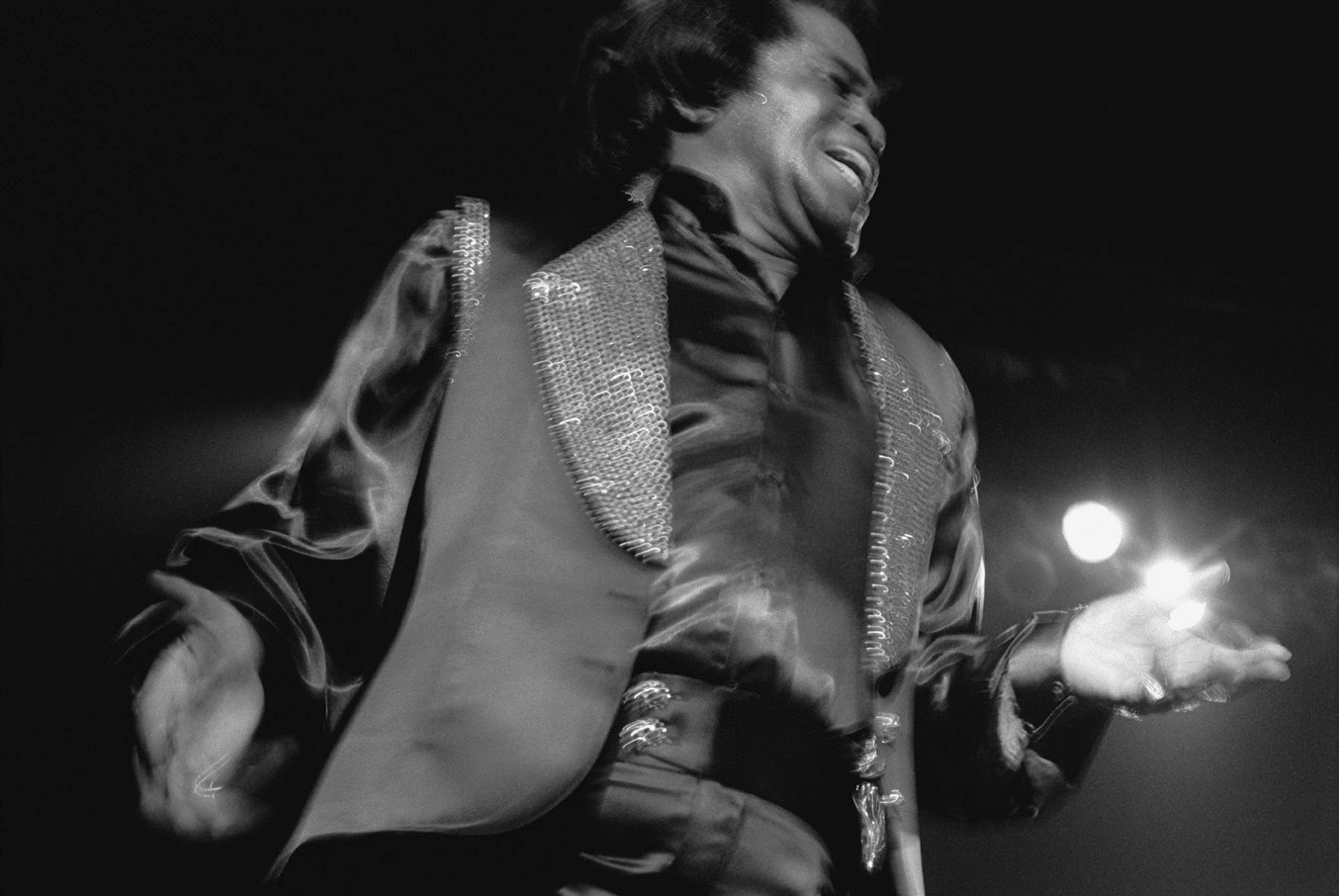
James Brown1960s–70s · Funk / Soul / Rhythm and blues
Trombonist James Pankow has explained that the band's original concept grew out of noticing 'the only people with horn sections that were really making any noise were the soul acts' like James Brown, and that the group 'kind of became a soul band doing James Brown...stuff' before folding that groove into a rock format. It surfaces in Chicago's horn writing as tight, syncopated punches locked to the rhythm section rather than decorative fanfare, plus an appetite for loose, extended funk vamps.
listen: upstream & heresource: Chicago (official band site) ↗
1967
Cold SweatJames Brown
1969
I'm a ManChicago
listen forLine up 'Cold Sweat' with 'I'm a Man' — both ride a stripped-down, syncopated groove built from percussive horn stabs over an extended instrumental vamp that keeps mutating rather than resolving to a chorus.
Jimi Hendrix1960s · Rock / Blues rock / Psychedelic rock
Terry Kath's guitar playing on Chicago's early records leaned on Hendrix's vocabulary — wah-wah, fuzz, and feedback used with the same improvisational freedom — and the respect reportedly ran both ways: after the two acts crossed paths in the late 1960s, Hendrix is widely quoted as calling Kath's playing better than his own. That mutual regard anchors Chicago's identity as a genuine rock band underneath its horn charts, with Kath's extended, effects-laden solos giving the arrangements a hard-rock backbone.
listen: upstream & heresource: ClassicRockHistory ↗
1967
Purple HazeJimi Hendrix
1970
25 or 6 to 4Chicago
listen forCompare 'Purple Haze' with '25 or 6 to 4' — both ride a fuzzed, wah-inflected guitar tone into an extended instrumental break that pushes past straightforward riffing into noisy, exploratory soloing.