walking upstream…
Captain Beefheart

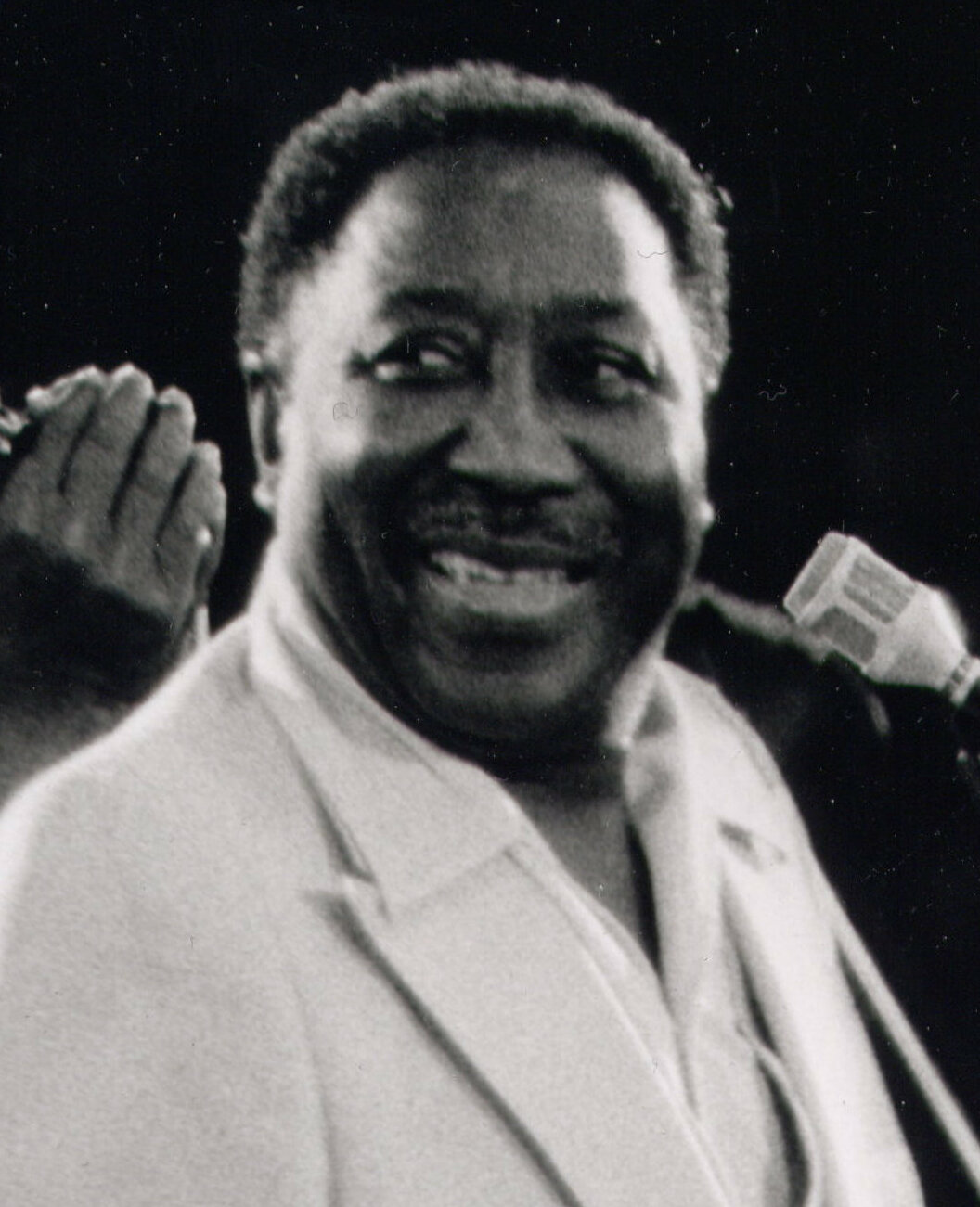

 photo: jean-luc · cc by-sa 2.0 ↗
Captain Beefheart
sourcesWikipedia — Captain Beefheart (biography overview, blues and free-jazz influence framing) · donlope.net — Frank Zappa, The Real Frank Zappa Book (1989) excerpt (teenage R&B listening sessions with Van Vliet) · It's Psychedelic Baby Magazine — John French interview (band house listening diet, Coleman vs. Coltrane preference) · Perfect Sound Forever — Mike Barnes, Trout Mask Replica biography excerpt (Spoonful/Gimme Dat Harp Boy riff lineage) · In Review Online — Joe Biglin, "Captain Beefheart and His Magic Band — Safe as Milk" (Sure 'Nuff 'N Yes I Do blues sourcing)
Don Glen Vliet grew up in Glendale, California, then in Lancaster, a Mojave Desert aerospace town his family moved to when he was 13. There he became inseparable from a classmate named Frank Zappa, who later called him "an R&B fiend" who brought stacks of 45s over so the two could spend afternoons on Howlin' Wolf, Muddy Waters, and Sonny Boy Williamson records. As Captain Beefheart, fronting a revolving lineup called the Magic Band, Van Vliet spent that blues education, twisted through free-jazz dissonance and surrealist lyrics, across a dozen albums between 1967 and 1982, none stranger or more enduring than 1969's Trout Mask Replica. He was also a documented myth-maker about his own biography, so the account here leans on people who were actually in the room with him.
the sound in question
1969
Moonlight on VermontCaptain Beefheart
walk the tributaries ↓
Howlin' Wolf1950s–60s · Chicago blues / Electric blues / Delta blues
As a teenager, Van Vliet cut an unreleased demo with Zappa's group the Soots — a Little Richard cover, "Slippin' and Slidin'," but sung in Howlin' Wolf's voice. A label rejected it outright: the guitar was too distorted. Years later the debt resurfaced on record. Biographer Mike Barnes writes that "Van Vliet's own take on the 'Spoonful' riff was 'Gimme Dat Harp Boy,'" where he "eschewed any blues-rock guitar fireworks for a neo-urban blues approach that echoed Howlin' Wolf" — the same growl he'd been chasing since that rejected demo.
listen: upstream & here
1960
SpoonfulHowlin' Wolf
1968
Gimme Dat Harp BoyCaptain Beefheart
listen forWolf's 1960 "Spoonful" rides one low, circling guitar riff under a voice that barely rises above a menacing rasp — Willie Dixon's blues distilled to its rawest urban form. Beefheart's 1968 "Gimme Dat Harp Boy" keeps that same coiled, unhurried riff but strips away Wolf's Chicago-studio polish, running his own voice through a harsher, more ragged growl and letting the harmonica needle in and out like it's arguing with him.
Muddy Waters1950s · Chicago blues / Electric blues / Delta blues
Drummer John French, who lived in the band's shared house, remembered the daily listening diet plainly: "there was always the blues. The biggies being: Howlin' Wolf, John Lee Hooker, Muddy Waters, Son House..." Beefheart's debut single put that debt on tape. Critic Joe Biglin writes that on "Sure 'Nuff 'N Yes I Do," the album opener, Beefheart is "aping Howlin' Wolf... and interpolating Muddy Waters" in the same three minutes — Ry Cooder's slide guitar carrying the Waters half of the bargain.
listen: upstream & here
1950
Rollin' and Tumblin'Muddy Waters
1967
Sure 'Nuff 'N Yes I DoCaptain Beefheart
listen forWaters's 1950 "Rollin' and Tumblin'" turns on a rolling, tumbling guitar cadence that never quite resolves, urgent and unhurried at once. Beefheart's 1967 "Sure 'Nuff 'N Yes I Do" opens on that same rolling pulse, now carried by Ry Cooder's slide guitar, before Van Vliet's cracked baritone barges in over it — the Chess-era riff intact underneath a vocal that refuses to sit still on top of it.
Ornette Coleman1960s · Free jazz / Avant-garde jazz
Van Vliet rarely named influences at all, but in a rare candid 1972 Crawdaddy interview, reproduced by critic Carl Wilson, he made an exception for Ornette Coleman: "I'm not trying to put my name beside Ornette Coleman, because you can't put your name beside Ornette Coleman... I think he's one of the greatest artists today." Bandmate John French corroborated it firsthand, calling Coleman "probably more his favorite than Coltrane."
listen: upstream & heresource: Slate — Carl Wilson, "Ornette Coleman's influence on punk, rock, and hip-hop" (1972 Crawdaddy quote, Coleman devotion) ↗
1961
Free Jazz: A Collective ImprovisationOrnette Coleman
1969
Hair Pie: Bake 1Captain Beefheart
listen forColeman's 1961 "Free Jazz" sets two quartets playing independent, non-resolving lines at once, with no single soloist fully in charge. No source ties a specific Beefheart track to it directly, but "Hair Pie: Bake 1," recorded live in the band's yard, chases the same idea with rock instrumentation instead of horns — guitars, bass, and harmonica each holding a separate tempo and key, refusing to lock into one groove, the closest Beefheart gets to Coleman's collective improvisation on tape.