walking upstream…
Bryan Adams
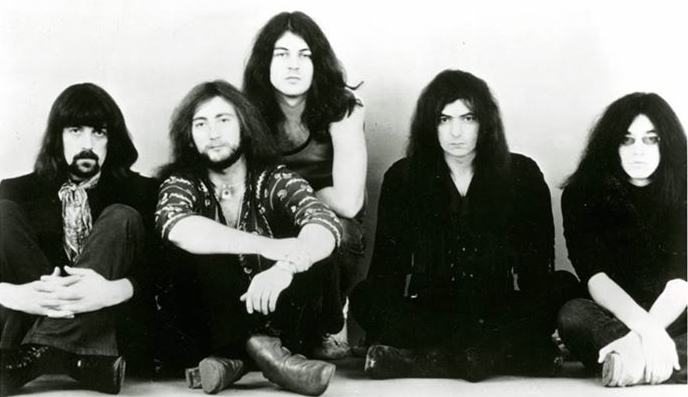


 photo: raph_ph · cc by 2.0 ↗
Bryan Adams
sourcesThe Globe and Mail — Tracking Bryan Adams's years of influences in his new album (Machine Head as reason he picked up guitar; Down on the Corner covered) · NPR — Bryan Adams Celebrates The Classics On New Covers Album (Smoke On The Water and Whole Lotta Love named 'untouchable') · Chicago Sun-Times — Bryan Adams 'Tracks' classic hits that influenced his music (Down on the Corner as the one song that was genuinely his) · Guitar.com — Bryan Adams on vintage guitars (his Ritchie Blackmore signature Stratocaster) · Clash Magazine — Keep Writing Songs And Everything Else Will Follow (seeing Deep Purple and Led Zeppelin live as a young fan) · Wikipedia — Bryan Adams (lead/biographical overview)
Bryan Adams was born in Kingston, Ontario in 1959 to English parents; his father's postings as a UN peacekeeper and diplomat carried the family through Vienna, Lisbon, and Tel Aviv before his parents split and he landed, at twelve, in Vancouver. Mail-order records and pored-over album sleeves were his only lifeline to rock and roll abroad, and by eighteen he had found songwriting partner Jim Vallance in a local record shop; the two spent twelve-hour days trading ideas in Vallance's basement. Early albums sold steadily in Canada but stalled everywhere else, until 1983's platinum Cuts Like a Knife and 1984's six-hit Reckless turned him into an arena-filling, plainspoken rock star built on records he still calls untouchable — hard rock from the early '70s he loved too much to ever cover.
the sound in question
1985
Summer of '69Bryan Adams
walk the tributaries ↓
Deep Purple1970s · Hard rock / Heavy metal / Progressive rock
Adams was a kid poring over borrowed album sleeves in Portugal when Deep Purple's Machine Head found him — the inner gatefold showed the band mid-session, guitars and amps laid bare. "There are many reasons why I wanted to pick up a guitar," he said, "one of them was the album Machine Head, by Ritchie Blackmore and Deep Purple." He got his first-ever guitar, an imitation Stratocaster modeled on Blackmore's; a signature scalloped-fretboard Blackmore model remains in his collection, a gift from his longtime guitarist Keith Scott.
listen: upstream & heresource: Louder (Classic Rock) — Life Of Bryan (bio; Deep Purple's Machine Head; Columbia Record Club/CCR discovery) ↗
1972
Smoke on the WaterDeep Purple
1983
Cuts Like a KnifeBryan Adams
listen forCue Deep Purple's four-note guitar riff on "Smoke on the Water" — a hook so total it swallows the whole song before a word is sung — then play the grinding, single-riff figure that opens Adams's "Cuts Like a Knife." Adams told NPR he couldn't cover "Smoke On The Water" itself for his covers album because it was "untouchable"; the tribute shows up instead in a riff built the same unadorned way, guitar first, everything else stacked around it.
Led Zeppelin1970s · Hard rock / Blues rock
Adams names one afternoon as a hinge point: at a friend's house whose father owned a drum kit and a copy of Led Zeppelin II, he heard something that rearranged what he thought rock could sound like. "A pivotal moment for me was going over to my friend's house, who had a drum set," he said. "His father had Led Zeppelin II — I'd never heard anything so powerful and exciting since I'd first heard The Beatles!" It joined a short, self-described list of teenage records so formative he still won't touch them on a covers album.
listen: upstream & heresource: The Hollywood Reporter India — Bryan Adams Interview (Led Zeppelin II as a 'pivotal moment') ↗
1969
Whole Lotta LoveLed Zeppelin
1983
This TimeBryan Adams
listen forPlay the opening stomp of "Whole Lotta Love" — a single riff dragged out into something feral over a crashing backbeat — then put on Adams's "This Time," which rides its own chugging riff into a raw, pushed vocal. Adams told NPR he "couldn't do Led Zeppelin's Whole Lotta Love" on his 2014 covers album because it was "untouchable" — the tribute instead is a decade-earlier song built the same riff-first way, guitar before voice.
Creedence Clearwater Revival1960s–70s · Roots rock / Swamp rock / Blues rock
Stationed in Portugal as a child, Adams found music the only way he could: through his father's Columbia Record Club catalogue, choosing free albums for their cover art alone. "I always chose the records with the hairiest bastards on the front cover," he said. "It's how I discovered Creedence Clearwater and Janis Joplin. My record collection started with those catalogues." Decades later, asked which song on his 2014 covers album Tracks of My Years had actually been his own favorite rather than a radio memory, he named just one: Creedence's "Down on the Corner" — then went and recorded it.
listen: upstream & here
1969
Down on the CornerCreedence Clearwater Revival
2014
Down on the CornerBryan Adams
listen forPut Creedence frontman John Fogerty's loose, front-porch shuffle on "Down on the Corner" next to Adams's 2014 cover of the same song — same chugging rhythm-guitar economy, but Adams strips the horns for something drier, closer to his own bar-band roots. He told the Chicago Sun-Times this was "the only song on the album that would have been on my turntable" — not a song he learned to imitate, but one he'd actually worn out.