walking upstream…
Beck


sourcesWikipedia · Micro-Chop
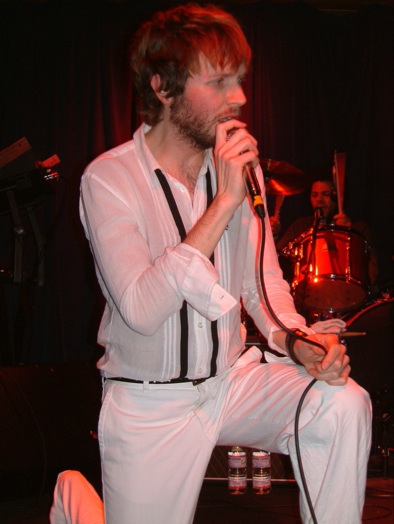
Beck Hansen grew up in a Los Angeles household steeped in art and outsider culture — his grandfather was Fluxus artist Al Hansen, his mother part of Andy Warhol's Factory scene — and dropped out of school as a teenager to busk folk and blues on city buses, discovering Mississippi John Hurt's fingerpicking and Grandmaster Flash's turntable science almost side by side. The freak 1994 hit 'Loser' cast him as a reluctant slacker-rap novelty act, but 'Odelay' (1996), built with the Dust Brothers out of scavenged samples and country-blues licks, proved his collage method was a genuine style rather than a gimmick. He has spent three decades whipsawing between that maximalist junk-shop aesthetic and hushed, plainspoken songwriting — 'Mutations,' 'Sea Change,' 'Morning Phase' — without ever fully setting either mode aside.
the sound in question
1993
LoserBeck
walk the tributaries ↓
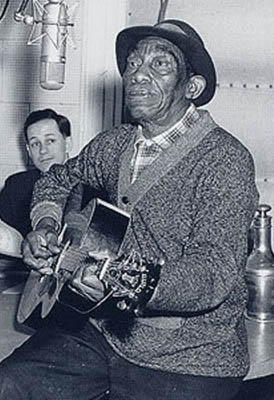
Mississippi John Hurt1960s · Country blues / Folk blues / Songster
At 17, Beck heard a Mississippi John Hurt record at a friend's house and, by his own account, spent hours teaching himself Hurt's fingerpicking on a found guitar, then took the repertoire onto city buses: 'I'd get on the bus and start playing Mississippi John Hurt with totally improvised lyrics,' he told Rolling Stone. That apprenticeship — alternating-bass fingerpicking laid under a plain, unhurried voice — became the bedrock acoustic mode Beck returns to whenever his records strip back down to just guitar and voice.
listen: upstream & heresource: Rolling Stone ↗
1928
Avalon BluesMississippi John Hurt
1996
RamshackleBeck
listen forPut 'Avalon Blues' next to 'Ramshackle': both ride a steady, rolling thumb-and-finger pattern that never rushes, with a warm, conversational vocal sitting just on top of the guitar rather than fighting it for space.
Grandmaster Flash and the Furious Five1980s · hip hop / old-school hip hop / electro
Beck has said the first contemporary music that truly connected with him was hip hop, heard first on early-1980s Grandmaster Flash records — his introduction to the idea that a record could be built entirely from other records. That turntablist premise resurfaces directly on 'Where It's At,' whose 'two turntables and a microphone' hook is a plain nod to the old-school DJ setup Grandmaster Flash pioneered, rebuilt with the Dust Brothers' crate-dug samples standing in for the breakbeats.
listen: upstream & here
1981
The Adventures of Grandmaster Flash on the Wheels of SteelGrandmaster Flash and the Furious Five
1996
Where It's AtBeck
listen forLine up 'The Adventures of Grandmaster Flash on the Wheels of Steel' with 'Where It's At': both are constructed as a rapid collage of other people's records, cut and looped into a new groove, with the DJ's hands-on-the-mixer craft foregrounded as the whole point of the track.
Sonic Youth1980s–90s · Noise rock / Alternative rock / Experimental rock / No wave
Critic Mark Kemp described the young Beck in Rolling Stone as 'a subversive folkie, inspired equally by Sonic Youth and Mississippi John Hurt,' and other contemporary coverage noted he'd been 'weaned on records by Sonic Youth' alongside noise-rockers Pussy Galore. That side of his listening surfaces as a tolerance — even an appetite — for detuned, distorted guitar noise breaking into otherwise plainspoken songs, treating dissonance as just another texture in the collage.
listen: upstream & heresource: uDiscoverMusic ↗
1988
Teen Age RiotSonic Youth
1994
Fuckin' with My Head (Mountain Dew Rock)Beck
listen forCompare 'Teen Age Riot' with 'Fuckin' with My Head (Mountain Dew Rock)': both let squalling, out-of-tune guitar noise crash in and out of a song that's still recognizably verse-chorus, the distortion arriving as mood rather than as a genre switch.