walking upstream…
Arnold Schoenberg
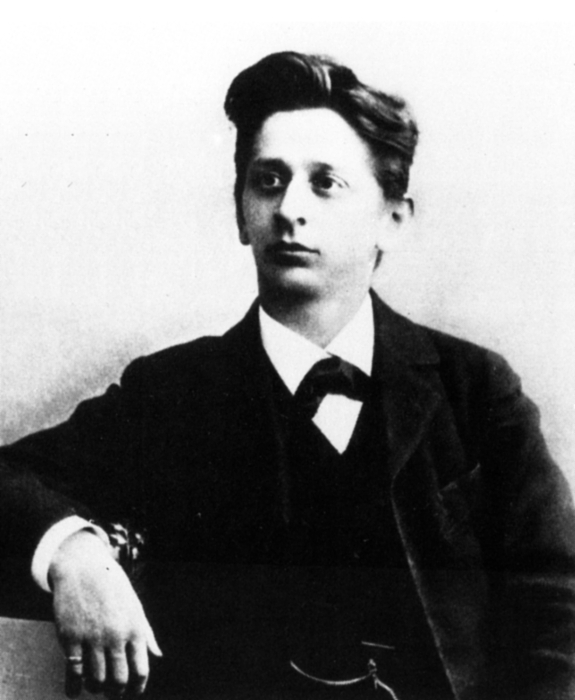
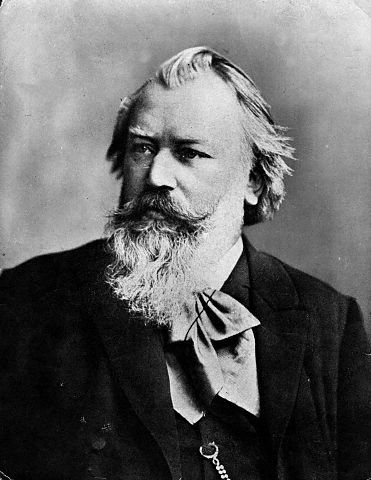
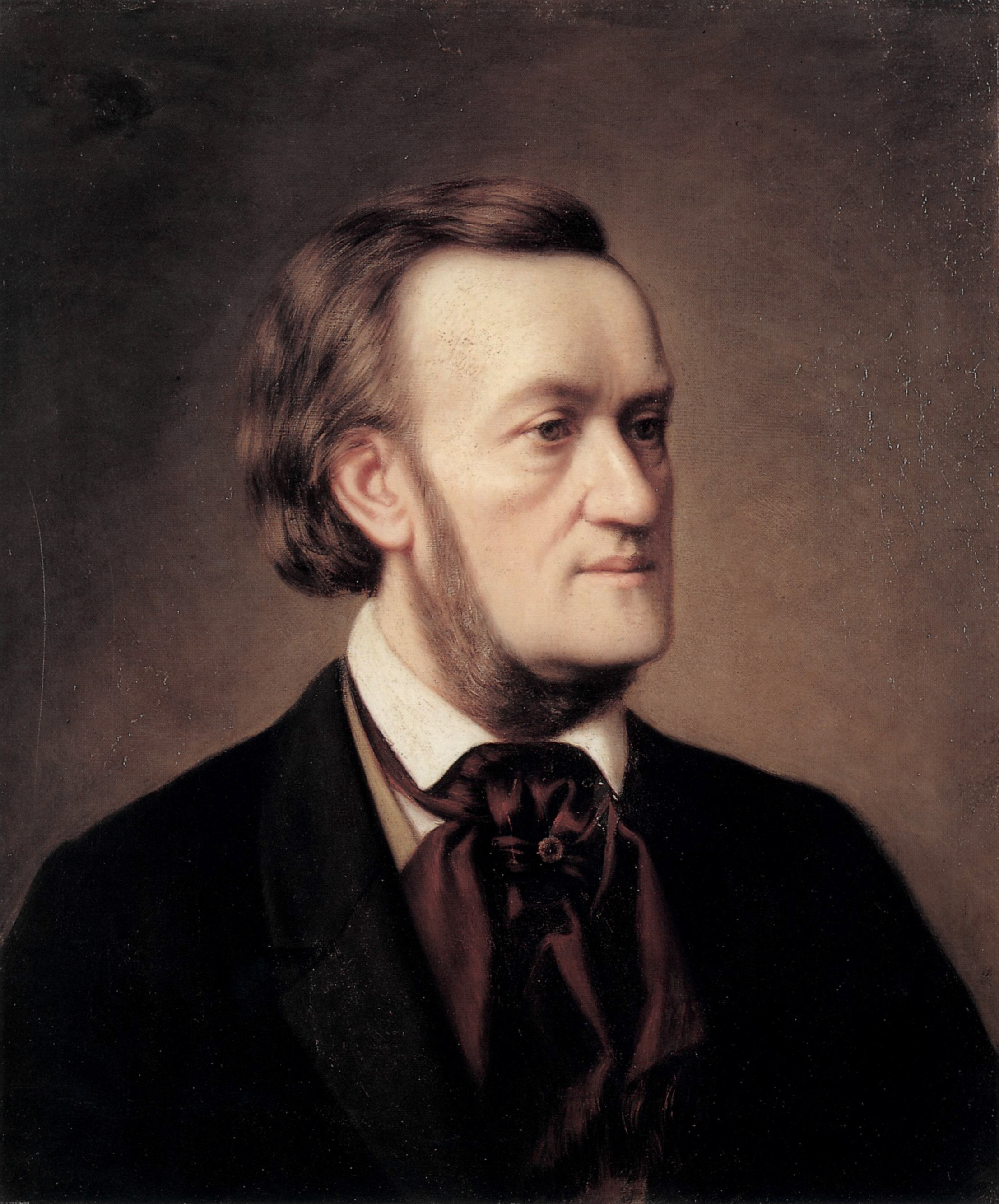
 photo: florence homolka · attribution ↗
Arnold Schoenberg
sourcesWikipedia — Arnold Schoenberg (biographical orientation) · Wikipedia — Pierrot Lunaire (representative work) · Arnold Schönberg Center — "My Evolution" (Schoenberg's 1949 UCLA lecture transcript; primary source for the Zemlinsky, Brahms, and Wagner influence claims) · VAN Magazine — "One Night's Chord" (Zemlinsky's contemporaneous reaction to Verklärte Nacht's Wagnerian debt) · Australian National Academy of Music — "Schoenberg on Brahms" (summary of "Brahms the Progressive" and developing variation, with Schoenberg's own quoted definition) · The New York Review of Books — "The Atonal Genie" (Gurrelieder's post-Wagnerian character; Zemlinsky/Brahms/Wagner biographical corroboration) · earsense — Zemlinsky, String Quartet No. 1 in A major, Op. 4 (composition date and stylistic character of the demonstrating work)
At eight, Arnold Schoenberg picked up a violin; "almost immediately," he told a 1949 UCLA lecture audience, he had started composing too, years before anyone taught him theory. Self-taught and conservatory-less, he absorbed whatever military-band arrangements and violin duets reached him until three teenage friends filled the gap — one of them the composer Alexander von Zemlinsky. (His own scores print the name "Schönberg"; English usage simplified it after his 1933 emigration to the United States.) He broke tonality open in the 1910s and, by the early 1920s, replaced it with his own strict twelve-tone method; his 1912 song cycle Pierrot Lunaire, half-sung in eerie Sprechstimme, remains one of modernism's founding shocks. Exiled by the Nazis, he taught in Los Angeles until his death in 1951 — a life spent pushing the language he inherited exactly as far as it would go.
the sound in question
1912
Pierrot Lunaire, Op. 21: I. MondestrunkenArnold Schoenberg
walk the tributaries ↓
Alexander von Zemlinsky1900s · Opera / Romantic
Schoenberg had no conservatory training; his entire musical education, by his own account, came down to three friends he made as a teenager in 1890s Vienna. Of the last and most consequential he told a 1949 UCLA lecture: "The third friend is the one to whom I owe most of my knowledge of the technique and the problems of composing: Alexander von Zemlinsky, a great opera composer." He had arrived a strict devotee of Brahms alone; Zemlinsky's own taste ran to Brahms and Wagner together, and within a season Schoenberg's did too.
listen: upstream & here
1896
String Quartet No. 1 in A major, Op. 4Alexander von Zemlinsky
1899
Verklärte Nacht, Op. 4Arnold Schoenberg
listen forZemlinsky's String Quartet No. 1 was begun the same year he started teaching Schoenberg and premiered that December, late-Romantic chamber music one commentator calls "a musical bridge" between Brahms's generation and the modernism his own student was about to make. Schoenberg never pointed to this quartet as his model, but Verklärte Nacht, finished three years later, pushes the same rich string writing into far stranger territory: listen for how far its harmony strays from a home key of D minor before either piece lets the tension resolve.
Johannes Brahms1870s–90s · Classical / Romantic
Before Zemlinsky arrived, Schoenberg's taste had one name in it. "I had been a 'Brahmsian' when I met him," he admitted decades later — and the debt outlasted the fashion. In a later essay, "Brahms the Progressive," he named a technique he'd found buried in Brahms's own scores and adopted as his own: "whatever happens in a piece of music," he wrote, "is nothing but the endless reshaping of a basic shape." He called the technique developing variation, and used that same term to describe the thematic construction of his own Verklärte Nacht.
listen: upstream & here
1896
Vier ernste Gesänge, Op. 121: No. 3, "O Tod, wie bitter bist du"Johannes Brahms
1905
String Quartet No. 1 in D minor, Op. 7Arnold Schoenberg
listen forSchoenberg's own touchstone for the technique was Brahms's "O Tod, wie bitter bist du," where, he said, a single interval — a third — keeps recombining into new shapes rather than announcing fresh material outright. He never named a specific quartet of his own as the technique's destination — this pairing is inference, not his testimony — but his First String Quartet applies the same continuous-development habit across a far longer span: listen for how its themes keep reappearing altered in rhythm and register rather than simply recurring.
Richard Wagner1850s–70s · Opera / Romantic
Verklärte Nacht scandalized its first listeners, and no one was harder on it than family. Zemlinsky — Schoenberg's teacher and, within a few years, his brother-in-law — reportedly heard the piece's harmony and told him it sounded "as though you have taken a still-wet version of the 'Tristan' score and smeared it." Schoenberg didn't deny it. Decades later he confirmed, in his own words, that the instrumentation and sonority of Verklärte Nacht were "strictly Wagnerian," inherited wholesale from the opera Zemlinsky meant.
listen: upstream & here
1859
Tristan und Isolde, WWV 90: Act I PreludeRichard Wagner
1911
GurreliederArnold Schoenberg
listen forFor a comparison not tied to the one piece Zemlinsky was mocking, play Gurrelieder, the choral-orchestral drama Schoenberg began the year after finishing Verklärte Nacht and worked on for a decade; one critic later summed it up as "post-Wagnerian" for its own doomed-lovers plot and overloaded orchestra. Cue Tristan's prelude first and listen for the shared trick: a chord that refuses its expected resolution, held out well past comfort before either composer lets it land.