walking upstream…
Andraé Crouch
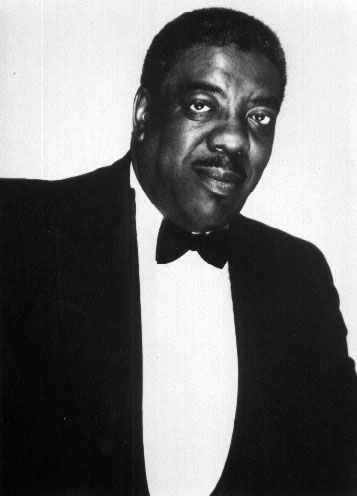

 photo: eirik voss · cc by-sa 3.0 ↗
Andraé Crouch
sourcesThe Guardian — Andraé Crouch obituary (bio, career arc) · Los Angeles Times — Andraé Crouch obituary (bio, philosophy quote) · Hymnology Archive — "The Blood Will Never Lose Its Power" (Cleveland's copyright and placement with the Caravans) · Hymnology Archive — Andraé Crouch artist biography (career timeline) · Religion News Service (via The Roys Report) — Stephen Michael Newby on "Perfect Peace" and the Sly/Earth, Wind & Fire comparison
Andrae Crouch grew up in Pacoima, California, the stuttering, dyslexic son of a Church of God in Christ pastor who, when Crouch was eleven, called him to the piano and asked whether he'd use whatever gift God gave him. Two weeks later, mid-hymn, the keys suddenly made sense. He wrote his first song as a teenager, watched it get placed and copyrighted years before he recorded it himself, and by 1965 was fronting a vocal group, the Disciples, whose horns and walking basslines scandalized gospel purists even as they filled Carnegie Hall by 1973. Crouch became connective tissue between the Black church and the pop mainstream, arranging vocals for Michael Jackson's "Man in the Mirror" and working with Madonna, Elton John, and Quincy Jones, insisting "it would be selfish to believe all the best music is played in the church." He died in 2015, called the father of modern gospel.
the sound in question
1976
Soon and Very SoonAndraé Crouch
walk the tributaries ↓
James Cleveland1960s–70s · Gospel
At fourteen, Crouch was at a choir barbecue thrown by James Cleveland, the gospel bandleader whose community choir he and his twin sister had sung in since childhood. Watching the sauce go over the ribs, he thought of Calvary: "I saw His blood," he recalled. "I then turned to my friend Billy Preston, also a pianist, and said, 'Play these chords.' And I began to sing, 'The blood that Jesus shed for me...' That was the writing of my first song, 'The Blood Will Never Lose Its Power.'" Cleveland later copyrighted it and placed it with the vocal group the Caravans, six years before Crouch recorded it himself.
listen: upstream & heresource: Flower Pentecostal Heritage Center / AG News — Crouch on James Cleveland and the barbecue that produced his first song ↗
1963
Peace Be StillJames Cleveland
1968
The Blood Will Never Lose Its PowerAndraé Crouch
listen forCleveland's 1963 "Peace Be Still" opens on one restrained verse before the Angelic Choir swells in behind it until the recording is nearly all voices and horns. Crouch's own recording of "The Blood Will Never Lose Its Power" — built from that teenage barbecue melody — uses the same architecture in miniature: a plain, almost spoken verse that keeps gathering voices until the refrain arrives at full choir volume. Listen for the moment each track hands the line from a single voice to the group.
Sly and the Family Stone1960s-70s · Funk / Soul / Psychedelic rock / R&B
By his mid-1970s peak, Crouch had pushed gospel decisively toward funk, and it's a turn his biographers hear most plainly on "Perfect Peace." "It's a funk groove," Stephen Michael Newby, co-author of the 2025 biography Soon and Very Soon, told Religion News Service. "You hear the popping on two and four. You hear the horn lines... it sounds like Sly and the Family Stone, it sounds like Earth, Wind & Fire." Crouch never publicly credited Sly Stone by name, but the timeline fits: the band's biggest hits predate Crouch's 1976 album by several years.
listen: upstream & here
1970
Thank You (Falettinme Be Mice Elf Agin)Sly and the Family Stone
1976
Perfect PeaceAndraé Crouch
listen forSly and the Family Stone's "Thank You (Falettinme Be Mice Elf Agin)" locks its groove around hard, syncopated hits landing off the beat under a chanted party lyric. Crouch's "Perfect Peace" takes the same clipped, popping rhythm and horn stabs and sets them under a scripture-quoting testimony instead — the pocket first heard on a funk radio hit repurposed to carry a hymn. Listen for how each track lets the rhythm section, not the melody, do the driving.