Ali Farka Touré


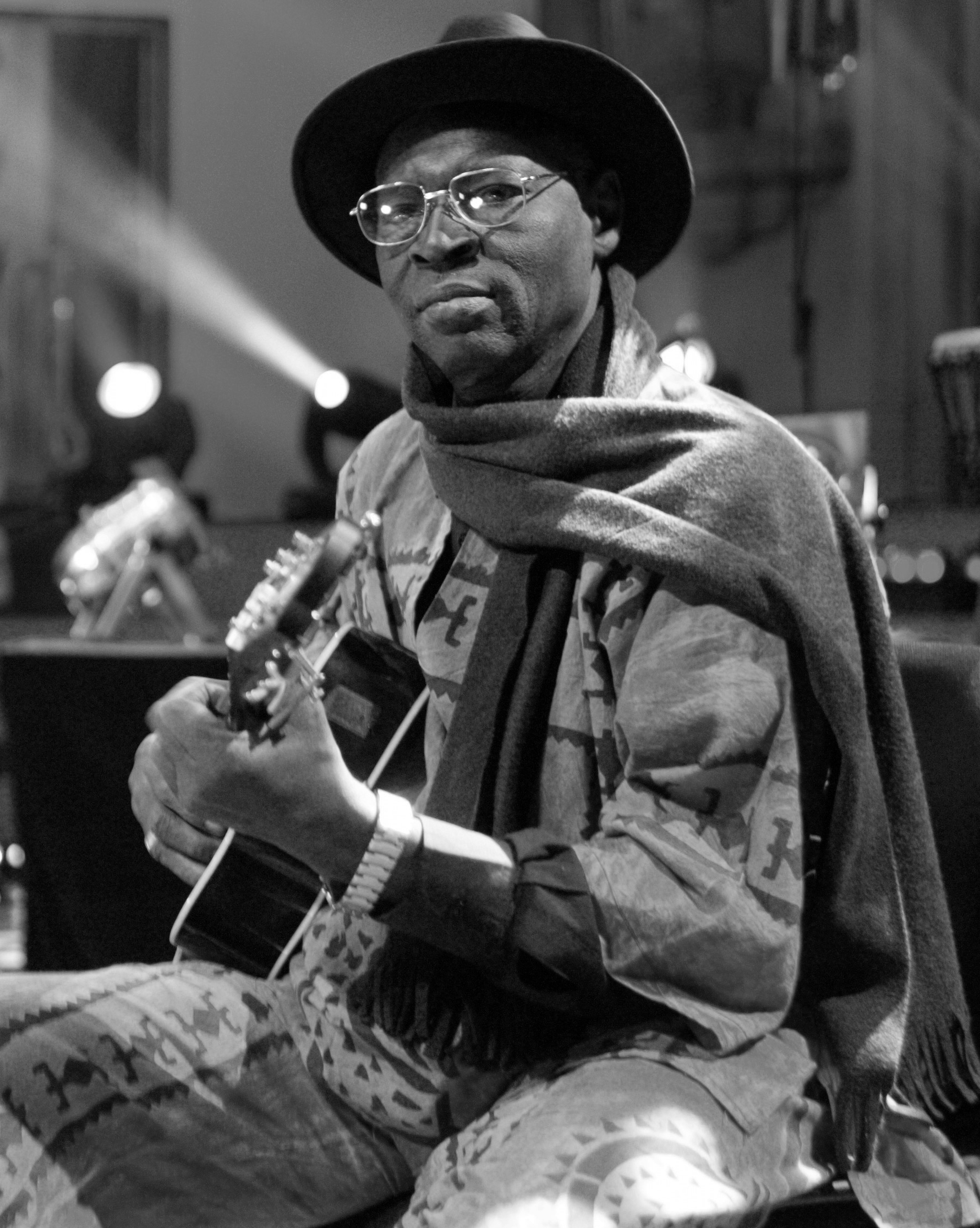 photo: tagles · public domain ↗
Ali Farka Touré was a Malian guitarist and singer from Niafunké whose hypnotic, droning style—rooted in the one-string gurkel and njarka fiddle traditions of his Songhai and Fula heritage—became known to the wider world as "desert blues." Entirely self-taught, he transposed techniques from those traditional instruments onto guitar and insisted the deep kinship listeners heard between Sahelian music and American blues ran from Mali outward, not the reverse. His Grammy-winning late-career collaborations with Ry Cooder and Toumani Diabaté carried that argument to a global audience before his death in 2006.
Touré traced his entire guitar career to a single 1956 concert in Bamako by Fodéba's ensemble: seeing a guitar carry the sung, narrative weight of griot-style performance convinced him on the spot that the instrument could do what the gurkel and njarka already did in his own tradition, and he decided then and there to become a guitarist.
listen forListen for how Fodéba's ensemble arrangements let a single guitar carry a sung, story-driven line over hand percussion — the same call-and-response, narrative phrasing you can hear translated onto electric guitar throughout Touré's own recordings.
Touré said hearing Hooker's records in 1978 felt like recognition rather than discovery — "I instantly recognized the music: I knew where it had come from, even if he didn't" — and he leaned further into the shared one-chord, hypnotic guitar groove already present in his own style, even while rejecting the "blues" label for his own music.
listen forListen for the droning, single-chord vamp and half-sung, half-spoken vocal delivery — the same trance-inducing repetition Hooker builds from a boogie bassline, Touré builds from looping guitar figures drawn from Songhai and Fula song form.