walking upstream…
Yeat
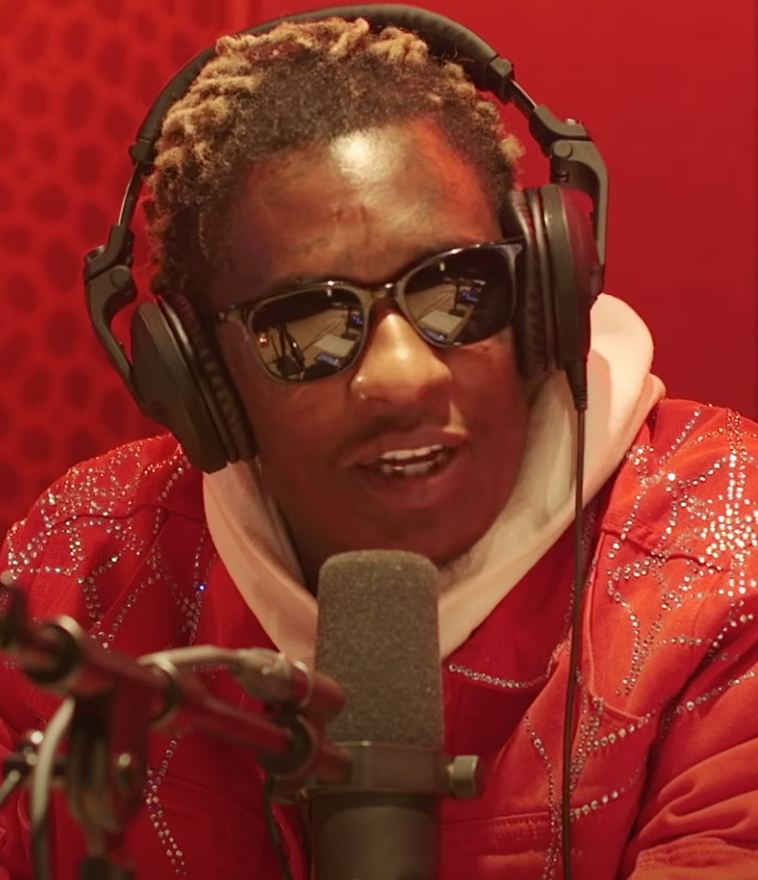



sourcesWikipedia · Our Generation Music
Noah Olivier Smith grew up between Fullerton and Irvine, California, the son of a mother partial to glossy Top 40 radio and a father who kept guitars and pianos scattered around the house from his own rock-band days. He uploaded music as a teenager under the name Lil Yeat before resurfacing in mid-2018 with a stranger, more warped persona, cutting his teeth in the online rap collective Slayworld alongside a wave of similarly restless peers. Mixtapes piled up largely unnoticed until 2021, when "Sorry Bout That" and "Gët Busy" caught fire on TikTok and turned Yeat, almost overnight, into one of rap's defining new stylists. Producing much of his own catalog, he built a signature sound out of pitch-bent ad-libs, glassy Auto-Tune, and bass-warped 808s, spawning a visible generation of imitators across the genre soon nicknamed "rage rap."
the sound in question
2021
Money So BigYeat
walk the tributaries ↓
Young Thug2010s · Trap / Atlanta hip hop
Yeat has pointed to Young Thug as a foundational reference for his own refusal to settle into one flow, telling Complex "I feel like my style isn't really set on one thing" while crediting close study of Thug's catalog for that vocal restlessness. The two later worked together directly, with Thug appearing on Yeat's "My Wrist" and "Outsidë," and the pair have stayed in touch through Thug's incarceration.
listen: upstream & heresource: Complex ↗
2014
StonerYoung Thug
2021
Sorry Bout ThatYeat
listen forSet Thug's "Stoner" against Yeat's "Sorry Bout That": both let the ad-libs and background chants carry as much melodic weight as the main vocal, with pitch bending the words until the hook is closer to a texture than a lyric.
Future2010s · Trap / Hip hop
Alongside Young Thug, Yeat has named Future as one of the artists he moved toward as he got older and drifted from the Top 40 his mother played toward trap; Complex's profile of him singles out Future as a key influence on his sonic flexibility. It surfaces as a melodic, half-sung, half-mumbled delivery draped over dark, spacious production, more atmosphere than clean bars.
listen: upstream & heresource: Complex ↗
2012
Turn On the LightsFuture
2021
Gët BusyYeat
listen forPlay "Turn On the Lights" next to "Gët Busy": both bury a woozy, Auto-Tuned melody inside a hypnotic, minimal loop, the vocal drifting in and out of focus rather than sitting cleanly on the beat.
T-Pain2000s · R&B / Hip hop
Yeat's mother played T-Pain around the house when he was a kid, and he's since called T-Pain "really the GOAT of Auto-Tune," telling interviewers that early exposure is where his own instinct to sing rather than strictly rap came from. It shows up as a willingness to run his voice through heavy pitch correction until the effect itself becomes the hook, not just a vocal aid.
listen: upstream & heresource: Complex ↗
2007
Buy U a Drank (Shawty Snappin')T-Pain
2022
Rich MinionYeat
listen forCompare "Buy U a Drank (Shawty Snappin')" to "Rich Minion": both push an unmistakably Auto-Tuned voice to the front of the mix, treating the processed croon as the song's main melodic instrument rather than something to hide.