walking upstream…
Tom Odell
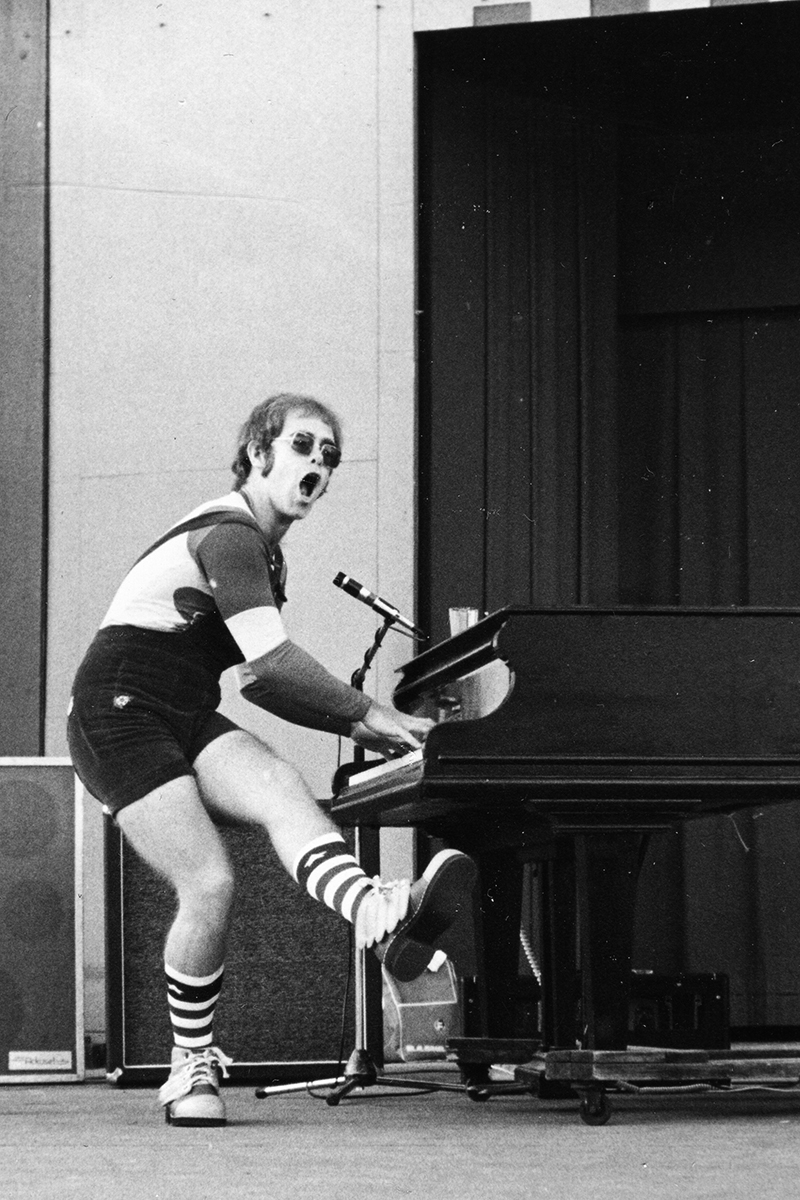


 photo: krists luhaers · cc by 2.0 ↗
Tom Odell
sourcesInterview Magazine — Tom Odell's Honest Verse (bio, early piano lessons) · PopCrush — Tom Odell Discusses Meeting His Idol Elton John (Elton John, Jeff Buckley) · musicOMH — Q&A · UK Music Reviews — Interview · Essentially Pop — Tom Odell Is The Piano Man In More Ways Than One (Billy Joel comparison) · PopMatters — Tom Odell Channels His Inner Elton John on 'Jubilee Road' (Elton John/Son of an Only Child)
In a nearly empty London pub called the Queen of Hoxton, a classically trained pianist from Chichester was spotted mid-set by the singer Lily Allen, who signed him to the label she had just started. Tom Odell had been playing piano since his grandmother sat him at hers around age six; by 22 he had won the BRIT Awards' Critics' Choice for his debut EP and topped the UK chart with his first album, Long Way Down (2013), which carried his enduring hit "Another Love." The records since — Wrong Crowd, Jubilee Road, Monsters — keep the same formula: plainspoken heartbreak sung over a piano he calls unquenchable, his voice tipping from murmur to full cry. "I can feel all this confusion," he has said of sitting down to play, "but then... suddenly there is just utter calm."
the sound in question
2012
Another LoveTom Odell
walk the tributaries ↓
Elton John1970s · Pop / Rock / Piano rock
Odell's father handed him Goodbye Yellow Brick Road when he was eleven, and by his own account it rewired what he thought a song could do: "I discovered what could be achieved with it, and the power of it as well," he told PopCrush in 2013, "...it was that album that opened that up for me." The two later became friends — a dressing-room visit at a festival, lunch at John's house — and the imprint runs straight through to 2018's "Son of an Only Child," which folds two of John's own songs directly into its lyric at the emotional peak.
listen: upstream & heresource: Glamour UK — Music ↗
1972
Rocket ManElton John
2018
Son of an Only ChildTom Odell
listen forPlay "Rocket Man" and then "Son of an Only Child": both build from a plain, murmured verse into a chorus where the voice suddenly opens up and climbs, the piano thickening underneath rather than stepping back. Odell's own lyric flags the debt outright — "I'm a rocket man," he sings, quoting John by name — but the real inheritance is the payoff itself: the vocal pitch rising to a crescendo it doesn't apologize for, the same trick John used to turn a plainspoken verse into a chorus that fills a room.
Billy Joel1970s–80s · Pop rock / Soft rock / Piano rock
Odell has named one Joel record specifically as a formative listen while writing Jubilee Road (2018) — "there's this album by Billy Joel called Turnstiles — that really influenced me," he told The Line of Best Fit — and the friendship turned literal soon after, when Joel invited him out of nowhere to open for him at Madison Square Garden, where Odell says he got to sit with him and take advice. Critics zeroed in on a different, more famous Joel record for the specific device: Essentially Pop called Jubilee Road Odell's answer to The Stranger, an album that opens by setting a scene rather than a mood.
listen: upstream & heresource: The Line of Best Fit — Tom Odell's telling stories (Elton John, Billy Joel, Jeff Buckley) ↗
1977
Movin' Out (Anthony's Song)Billy Joel
2018
Jubilee RoadTom Odell
listen forPlay "Movin' Out (Anthony's Song)" into "Jubilee Road": both are table-setting opening tracks that introduce a whole cast through a named or implied character rather than the singer's own feelings, the piano driving a narrative verse instead of an emotional one. It's the same entry point into a song cycle — Joel's The Stranger, Odell's Jubilee Road — where a neighborhood, not the narrator, is the ostensible subject.
Jeff Buckley1990s · Alternative rock / Folk rock / Blues
Buckley arrived almost by accident, on a pirated live EP the teenage Odell found while trawling LimeWire for anything he could get his hands on. The record that mattered was Buckley's 1994 album Grace: "Grace is an incredible album," he told musicOMH in 2013, and when interviewers keep drawing the comparison he doesn't deflect it — "I'm a huge Jeff Buckley fan," he told Glamour, "but Jeff Buckley was Jeff Buckley." Odell says the pull is chiefly lyrical, but critics have long heard it in the voice too — a fragile tenor he lets crack into a full, straining cry.
listen: upstream & heresource: Glamour UK — Music ↗
1994
GraceJeff Buckley
2013
Can't PretendTom Odell
listen forCue "Grace" next to "Can't Pretend": both start close and unguarded, the voice sitting just above a whisper, before each lets the note tip past control into something rawer — Buckley's falsetto fraying at the edges, Odell's rising into a near-shout. This isn't a quotation the way the Elton John pairing is; it's a shared instinct for how far a voice can be pushed before a piano ballad stops being polite, which is the specific thing Odell says he took from Buckley's record.