walking upstream…
Stevie Ray Vaughan

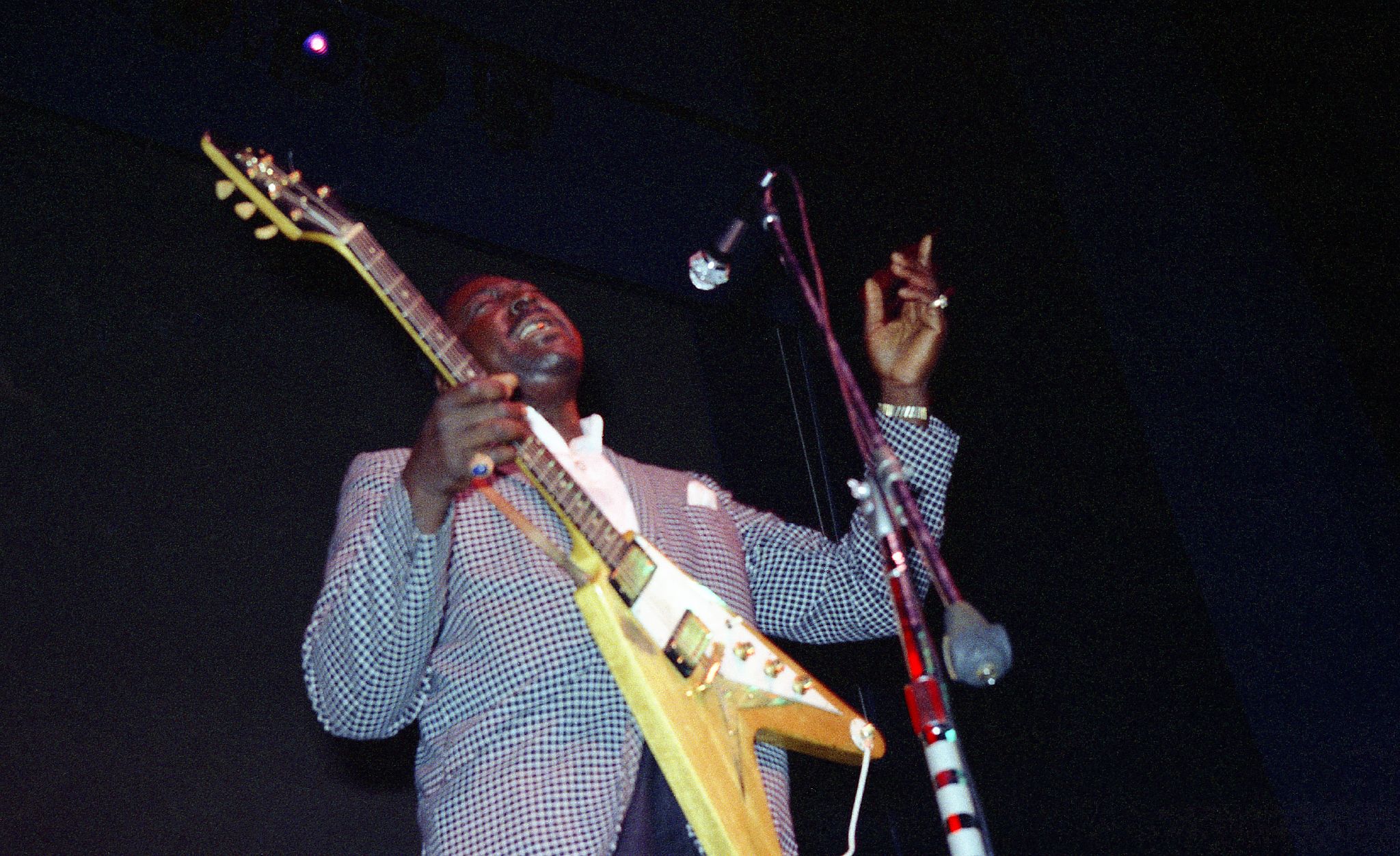
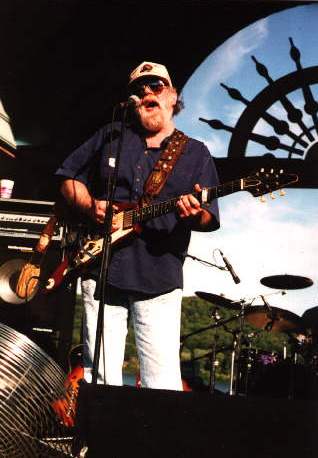
 photo: bbadventure · cc by-sa 4.0 ↗
Stevie Ray Vaughan
sourcesWikipedia · Louder — How Stevie Ray Vaughan took Jimi Hendrix's Little Wing to spectacular new heights (the 1984 Guitar World quote, cover details) · The Official Stevie Ray Vaughan Site — When Stevie Ray Vaughan First Met Albert King (Jimmie Vaughan's Antone's account) · Rock and Roll Garage — 10 musicians that Stevie Ray Vaughan listed as influences (first-album and King quotes, compilation-sourced) · Louder — Stevie Ray Vaughan
On August 26, 1990, in East Troy, Wisconsin, Stevie Ray Vaughan closed the night with an all-star jam on Robert Johnson's "Sweet Home Chicago" alongside Eric Clapton, Buddy Guy, and his brother Jimmie — the same brother who, in their Dallas bedroom two decades earlier, kept handing him guitars. "Eventually he got an electric guitar and I got the one that he'd had," Vaughan recalled. "Soon after I was playing gigs around." Minutes after that final show, the helicopter carrying him to Chicago crashed, killing him at 35. By then he had already pulled blues guitar back into the mainstream: an unbilled sit-in at the 1982 Montreux Jazz Festival won him a guest slot on David Bowie's "Let's Dance," and, months later, his own debut, "Texas Flood." What he built there was pure Texas shuffle wired to arena-sized ambition — blues, briefly, as a headline act again.
the sound in question
1983
Pride and JoyStevie Ray Vaughan
walk the tributaries ↓
Jimi Hendrix1960s · Rock / Blues rock / Psychedelic rock
Vaughan was still a kid in Dallas when his brother Jimmie found a record thrown out in a trash bin behind a club and brought it home. "It really knocked my socks off," Vaughan remembered of that first spin — the first time he'd heard the name Jimi Hendrix. He spent the rest of his career playing his hero's songs "note-for-note," as one interviewer put it, cutting studio and live versions of "Voodoo Child (Slight Return)," "Little Wing," and "Third Stone from the Sun" until the tribute became indistinguishable from his own voice on the instrument.
listen: upstream & heresource: Jas Obrecht — Stevie Ray Vaughan ↗
1967
Little WingJimi Hendrix
1984
Little WingStevie Ray Vaughan
listen forHendrix's "Little Wing" is two and a half minutes of unhurried, chiming chords under a plainspoken vocal. Vaughan's instrumental version, recorded in 1984 and later a Grammy winner, strips the words and stretches the same chord shapes past six minutes, turning the song's quiet middle section into a slow-building solo. "I'm trying to expand on his stuff," Vaughan said of the record. "Not that I can expand on it a whole bunch. But I try."
Albert King1960s · blues / electric blues / blues rock
Vaughan was nineteen when the Austin blues club Antone's talked its headliner, Albert King, into letting "this kid" sit in. "Stevie commenced doing Albert King licks," his brother Jimmie recalled. "There was silence at first... but Albert loved it. He put his arm around him." The friendship became a real recording eight years later: in December 1983, with King still ribbing him about all the King licks he'd played on David Bowie's "Let's Dance," the two taped two hours of joint performances for a Canadian TV program, trading verses and solos on King's own songbook as equals.
listen: upstream & heresource: Guitar Player — Stevie Ray Vaughan on his left-handed whammy bar and Albert King (the In Session emery-board story) ↗
1967
Born Under a Bad SignAlbert King
1983
Born Under a Bad SignStevie Ray Vaughan
listen forKing's 1967 "Born Under a Bad Sign" rides his sneering, string-bending Flying V solos over a stiff horn-band groove. On the 1983 "In Session" recording, cut with Vaughan sitting in as his equal, the same riff turns slower and meaner, and Vaughan answers every one of King's lines with a lick borrowed straight from him — the very habit King had teased him about days earlier: "I heard you doin' all my shit on there."
Lonnie Mack1960s · Rock and roll / Blues rock / Instrumental rock
"It was the first album that I ever bought," Vaughan said of Lonnie Mack's 1963 instrumental record "The Wham of that Memphis Man!," which his brother Jimmie had turned him on to. He called learning it "one of the first things that I ever really tried to learn" on guitar. The two later became real collaborators — Vaughan co-produced and played guitar on Mack's 1985 album "Strike Like Lightning" — and in 1987 Vaughan named Mack first, ahead of Hendrix and King, among the guitarists he'd listened to since childhood.
listen: upstream & heresource: Guitar World — Stevie Ray Vaughan and Lonnie Mack Play 'Oreo Cookie Blues' and 'Wham!' in 1986 (the Lonnie Mack collaboration and quotes) ↗
1963
Wham!Lonnie Mack
1991
Wham!Stevie Ray Vaughan
listen forMack's 1963 "Wham!" is a blur of breakneck picking over a stomping backbeat. Vaughan's own studio version, cut for 1991's posthumous "The Sky Is Crying," keeps that same runaway attack note-for-note while pushing the tone dirtier and the drums harder — the same quick-fingered runs Vaughan meant when he said, "I got a lot of the fast things I do from Lonnie."