walking upstream…
Roddy Ricch


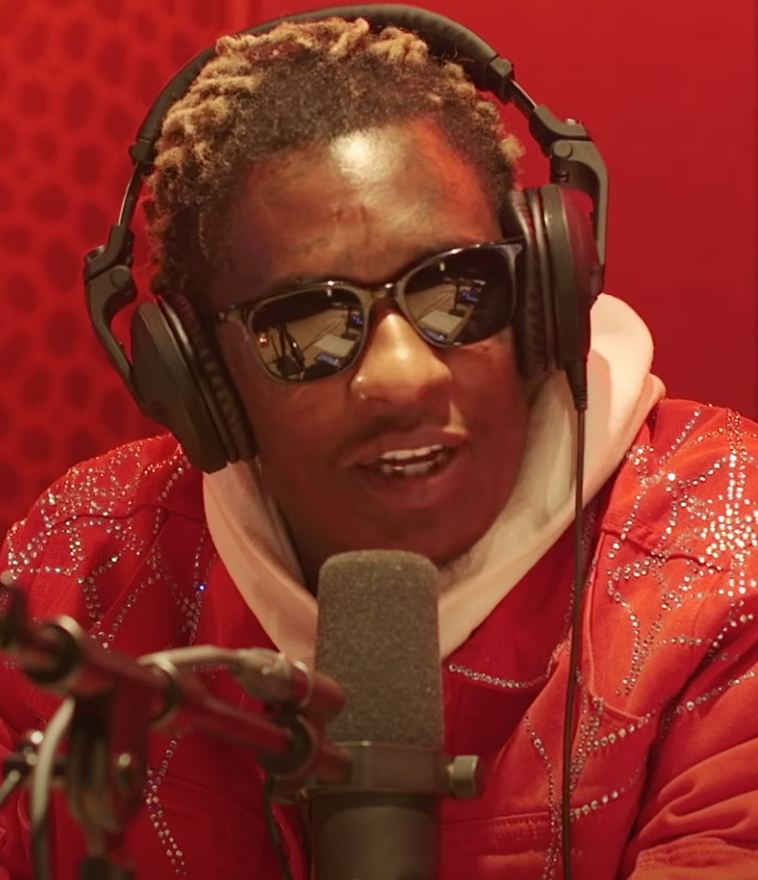

sourcesRolling Stone "Musicians on Musicians" — Roddy on listening to Future and Young Thug at 16 · The FADER — Roddy on growing up listening to Speaker Knockerz, Future, Young Thug, and Lil Wayne, and Meek Mill's mentorship · Wikipedia — biography, Compton upbringing, Nipsey Hussle mentorship · Billboard — "The Box" debuts at No. 1 on the Hot 100
Rodrick Wayne Moore Jr. grew up in Compton, California, and turned a run of self-released mixtapes into an overnight phenomenon when "The Box" rode its wheezing ad-lib to eleven weeks atop the Billboard Hot 100 in early 2020. His debut album Please Excuse Me for Being Antisocial folded warbled, Auto-Tuned melody over hard West Coast drums, staying personal even at arena scale, with mentor Nipsey Hussle's push into the industry — and Hussle's murder just as the album neared release — as its emotional backbone.
the sound in question
2019
The BoxRoddy Ricch
walk the tributaries ↓
Lil Wayne2000s–10s · Southern hip hop / Trap / Pop rap
Roddy has said directly that what he took from Wayne was "the double entendre, the bars" — the dense, stacked wordplay that turns a simple line into two or three readings at once, a habit that surfaces throughout his verses even inside otherwise melodic songs.
listen: upstream & heresource: Billboard interview — Roddy on Lil Wayne's "double entendre," Future's "visual" lifestyle narration, and Young Thug's "melodies" ↗
2008
A MilliLil Wayne
2019
Ballin' (with Mustard)Roddy Ricch
listen forLine up Wayne's freestyle-over-a-beat "A Milli" against Roddy's "Ballin'" — both pile clause after clause of interlocking wordplay onto a stripped-down beat, daring you to catch every double meaning on a single listen.
Future2010s · Trap / Hip hop
Roddy pointed to Future's ability to narrate a hard lifestyle "in such a way where you can just see it — it was just visual," and that cinematic, first-person street reporting underlies Roddy's own verses about coming up in Compton.
listen: upstream & heresource: Billboard interview — Roddy on Lil Wayne's "double entendre," Future's "visual" lifestyle narration, and Young Thug's "melodies" ↗
2017
Mask OffFuture
2018
Every SeasonRoddy Ricch
listen forCompare Future's "Mask Off" — a plainspoken, matter-of-fact account of a comeup wrapped around a flute loop — to Roddy's "Every Season," which narrates a similar rags-to-riches arc with the same unhurried, visual specificity.
Young Thug2010s · Trap / Atlanta hip hop
Asked what he absorbed from Thug, Roddy said simply, "it was his melodies and how he attacked his music" — the warped, half-sung cadences and unpredictable phrasing that let a rapper's voice work like another instrument, which shows up in Roddy's own elastic, melody-first delivery.
listen: upstream & heresource: Billboard interview — Roddy on Lil Wayne's "double entendre," Future's "visual" lifestyle narration, and Young Thug's "melodies" ↗
2015
Best FriendYoung Thug
2019
War BabyRoddy Ricch
listen forSet Thug's "Best Friend" against Roddy's "War Baby": both stretch a hook into something closer to a melodic moan than a plainly sung line, treating pitch and ad-libs as more important than the words themselves.