walking upstream…
Reba McEntire



sourcesRolling Stone — Reba McEntire's Song 'Fancy' Inspires New Musical (backs Bobbie Gentry's authorship and 'Fancy' as signature song) · Yahoo/Entertainment Weekly (Madison Vain) — Reba McEntire remembers Merle Haggard (backs the Pake/Haggard vs. Reba/Loretta-Dolly family-repertoire distinction) · Horatio Alger Association — Reba McEntire profile (backs the family-car harmony training and biographical arc) · Wikipedia — Starting Over (Reba McEntire album) (backs the 1995 tribute-album framing for the Parton cover) · Wikipedia — Reba McEntire (general biographical facts)
Born in 1955 on a cattle ranch in Chockie, Oklahoma, Reba McEntire grew up singing harmony with her siblings Pake and Susie as the Singing McEntires, trained, by her own account, because the family car had no radio. Rodeo work put her in front of the singer Red Steagall in 1974, and by 1975 she had a Mercury Records contract. Her traditionalist Mercury-era debut gave way by the mid-1980s to a neotraditional run of CMA awards, then in the 1990s to the pop-country crossover that made her a Grammy winner, a Broadway lead, and a sitcom star. Through every phase she returned to the same handful of records she'd loved as a girl, cutting them as her own at three different points in her career — proof the Queen of Country's sound was built less by a genre than by a private record collection.
the sound in question
1990
FancyReba McEntire
walk the tributaries ↓
Dolly Parton1970s–80s · Country / Country pop / Bluegrass
McEntire dates her discovery to a specific night: at a 1974 hotel 'guitar pull,' a rodeo cowboy named Everett Shaw called out a request, and she answered with 'Joshua' — 'that was one of my favorite Dolly Parton songs, so I did,' she told CMT. Red Steagall was passing his own guitar around that same room, and within the year he'd gotten her a deal at Mercury Records. In the family act that came before, her brother Pake claimed Merle Haggard's songbook; McEntire, by her own account, 'sang Loretta and Dolly songs.' Two decades on, she cut a Parton tribute outright.
listen: upstream & heresource: CMT — Reba Reminisces About Her Early Years (backs the 1974 Dolly Parton 'Joshua' discovery anecdote and the Bobbie Gentry 'Fancy' account) ↗
1980
Starting Over AgainDolly Parton
1995
Starting Over AgainReba McEntire
listen forParton's 1980 original rides a brisk, string-driven pop tempo — the sound of shrugging off heartbreak and dancing straight past it. McEntire's 1995 version, cut for an album she built as a tribute to the songs she loved before she had a career, slows the tempo and roughens the vocal into something closer to plainspoken country testimony than a pop kiss-off. Melody and lyric are identical start to finish; what changes is how each woman decides to sell the recovery — one at a sprint, one at a walk.
Bobbie Gentry1960s–70s · Country / Pop / Folk
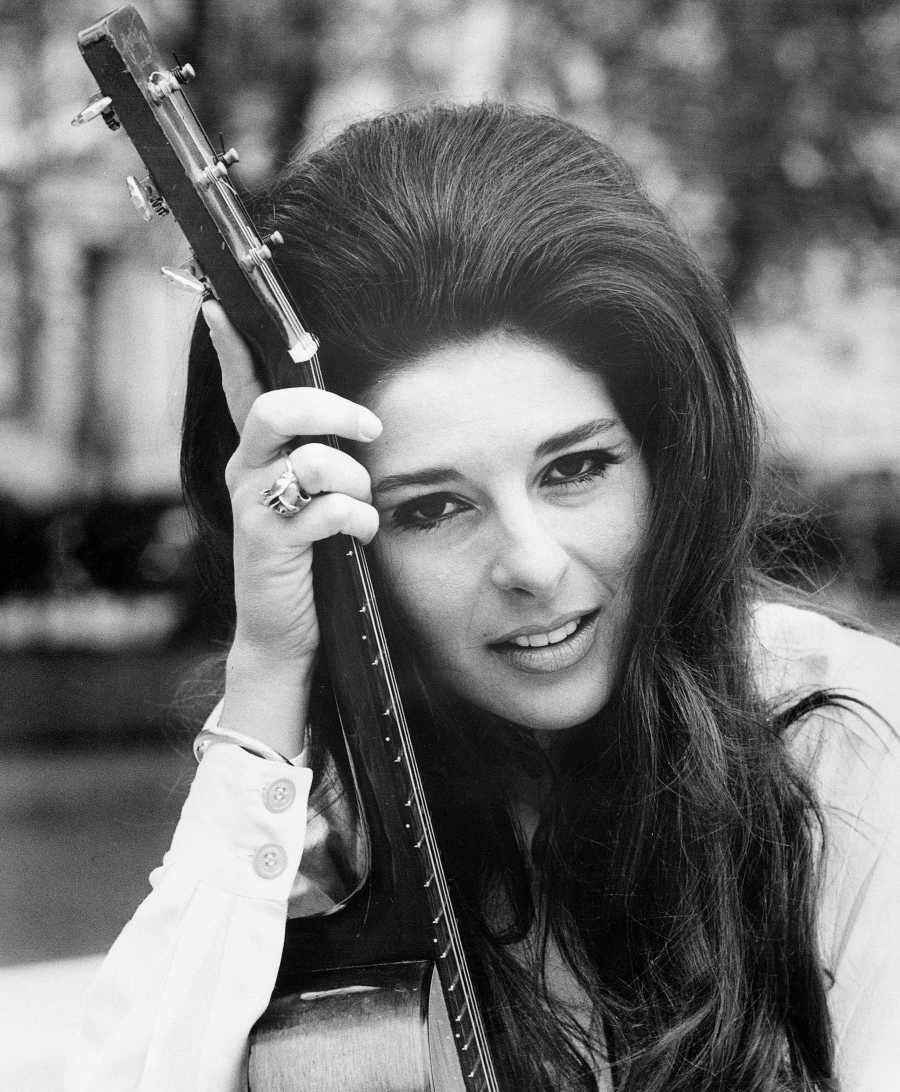
McEntire wanted to record 'Fancy' for over a decade before anyone let her. 'I have loved "Fancy" ever since Bobbie Gentry had it out,' she told CMT — she'd sing it in Oklahoma dancehalls where people complained you couldn't dance to it, and producer Jimmy Bowen turned her down flat: 'You don't need to be singing about a prostitute.' It took a new producer, Tony Brown, and a new decade — 1990, after the birth of her son — before she finally cut it. It became her signature song, the one she's still best known for.
listen: upstream & heresource: CMT — Reba Reminisces About Her Early Years (backs the 1974 Dolly Parton 'Joshua' discovery anecdote and the Bobbie Gentry 'Fancy' account) ↗
1969
FancyBobbie Gentry
1990
FancyReba McEntire
listen forGentry's 1969 original is spare and cinematic — a fingerpicked guitar riff, hushed verses, and a narrator almost whispering her own hustle. McEntire's 1990 version blows the same story open: horns and a full band arrangement turn Gentry's murmur into a belted, triumphant march, especially on the closing verses where the girl in the red dress is revealed to have won. It's the same rags-to-riches lyric Gentry wrote, sung by a woman announcing rather than confessing it — and it's the recording most listeners now think of simply as "Reba's song," though the words are Gentry's.
Patsy Cline1960s · Country / Nashville sound / Traditional pop
'"Sweet Dreams" was a song I recorded because I was such a huge fan of Patsy Cline,' McEntire said of the closing track on her second album, Out of a Dream — a cover that became her first solo Top 20 hit in 1979. She kept ending shows with an a cappella version of it for years, retiring it only after the 1991 plane crash that killed seven members of her band and her tour manager, then reviving it in 2020 for a Country Music Hall of Fame benefit.
listen: upstream & heresource: American Songwriter — The Story Behind How Reba McEntire Turned One of Patsy Cline's Final Recordings Into a Sweet Tribute (backs the Sweet Dreams cover and quote) ↗
1963
Sweet DreamsPatsy Cline
1979
Sweet DreamsReba McEntire
listen forCline's original leans on producer Owen Bradley's smooth 'Nashville Sound' strings, her voice held back behind the beat in that famous, almost-crying legato. McEntire's 1979 cut, from early in her career at Mercury, keeps the melody but trades the string section for a leaner, twangier band — you can hear a 24-year-old still finding the bigger, brassier belt that would define her later hits, not yet the crossover polish Cline had already mastered nearly two decades earlier.