Pilgrim Travelers
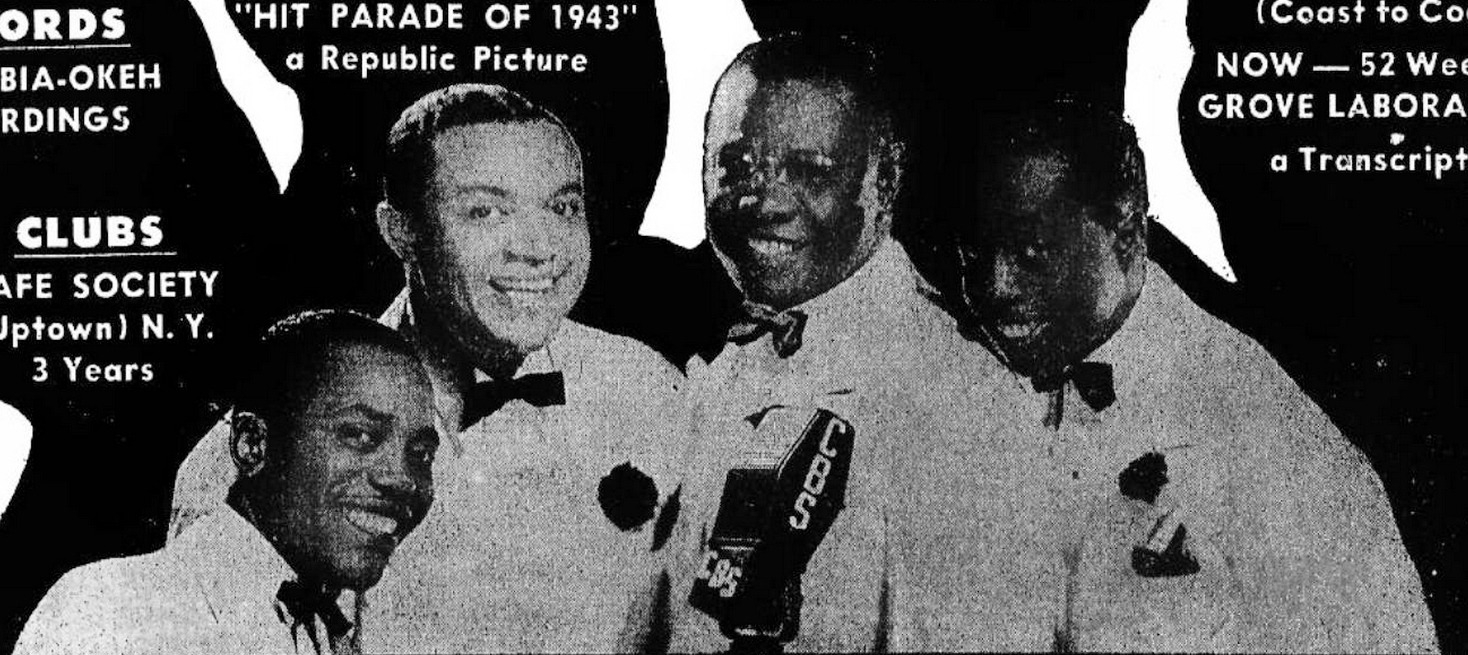
In 1944, after winning a local quartet contest, a gospel group from Houston's Pleasant Grove Baptist Church won an unusual prize: forty-two weeks on the road opening for R.H. Harris and the Soul Stirrers. The Pilgrim Travelers took the education and ran with it. Relocated to Los Angeles by the mid-1940s, they found a manager in J.W. Alexander, who turned their stage show into something closer to a revival — singers sprinting up the aisles, in his words, "to pull the sisters out of their seats." On record, Specialty Records began miking the group's own percussive foot-tapping and marketed it as "walking rhythm," the engine behind hits like "Thank You, Jesus" and "Mother Bowed." The group disbanded in 1959, its sound permanently split between two teachers: a founding a cappella harmony and a hard-gospel road apprenticeship.
In 1944, after winning a local quartet contest, the Travelers received an apprenticeship no rehearsal could match: forty-two weeks on the road opening for R.H. Harris and the Soul Stirrers, whose hard-driving, trading leads were rewriting what a gospel quartet could sound like. The Travelers built their own act on the same device, splitting the lead between two singers, and Kylo Turner came off that tour singing in the note-bending, near-crooning falsetto that became his signature — a direct descendant of a season spent watching Harris work a room.
listen forThe Soul Stirrers' 1946 "The Lord Will Make a Way" is built around R.H. Harris pushing his lead vocal into ad-libbed, conversational turns while the rest of the group holds steady harmony underneath — one voice breaking from the pack. On the Pilgrim Travelers' 1949 "Jesus Met the Woman at the Well," Kylo Turner does the same thing: a loose, storytelling lead riding on fixed group harmony, the same two-part trade-off the Travelers spent forty-two weeks on the road learning firsthand.
Before Alexander's choreography and Specialty's foot-mic'd "walking rhythm," the Travelers were simply an a cappella jubilee group, and their model was plain to hear. Reviewing a reissue of their earliest sides, gospel historian Bob Marovich called the group "a musical chameleon" that "started by emulating the a cappella rhythmic harmonies of the Golden Gate Quartet" — the vocal group whose train-song chugging had already made voice-as-rhythm-section a jubilee-quartet standard. Only later, competing against piano- and organ-led acts, did the Travelers add instruments of their own.
listen forOn the Golden Gate Quartet's 1937 "Golden Gate Gospel Train," four voices build an entire locomotive with no instruments at all — the chugging rhythm is sung, not played. The Pilgrim Travelers' 1948 "Mother Bowed" keeps that same engine but relocates it: a foot-tap, caught by the studio microphone, drives the beat instead of vocal chatter. Specialty called it "walking rhythm" and sold it as new, but the underlying idea — turning the body itself into the band — is the Golden Gate Quartet's a cappella trick, just moved from mouth to foot.