walking upstream…
Pharoah Sanders

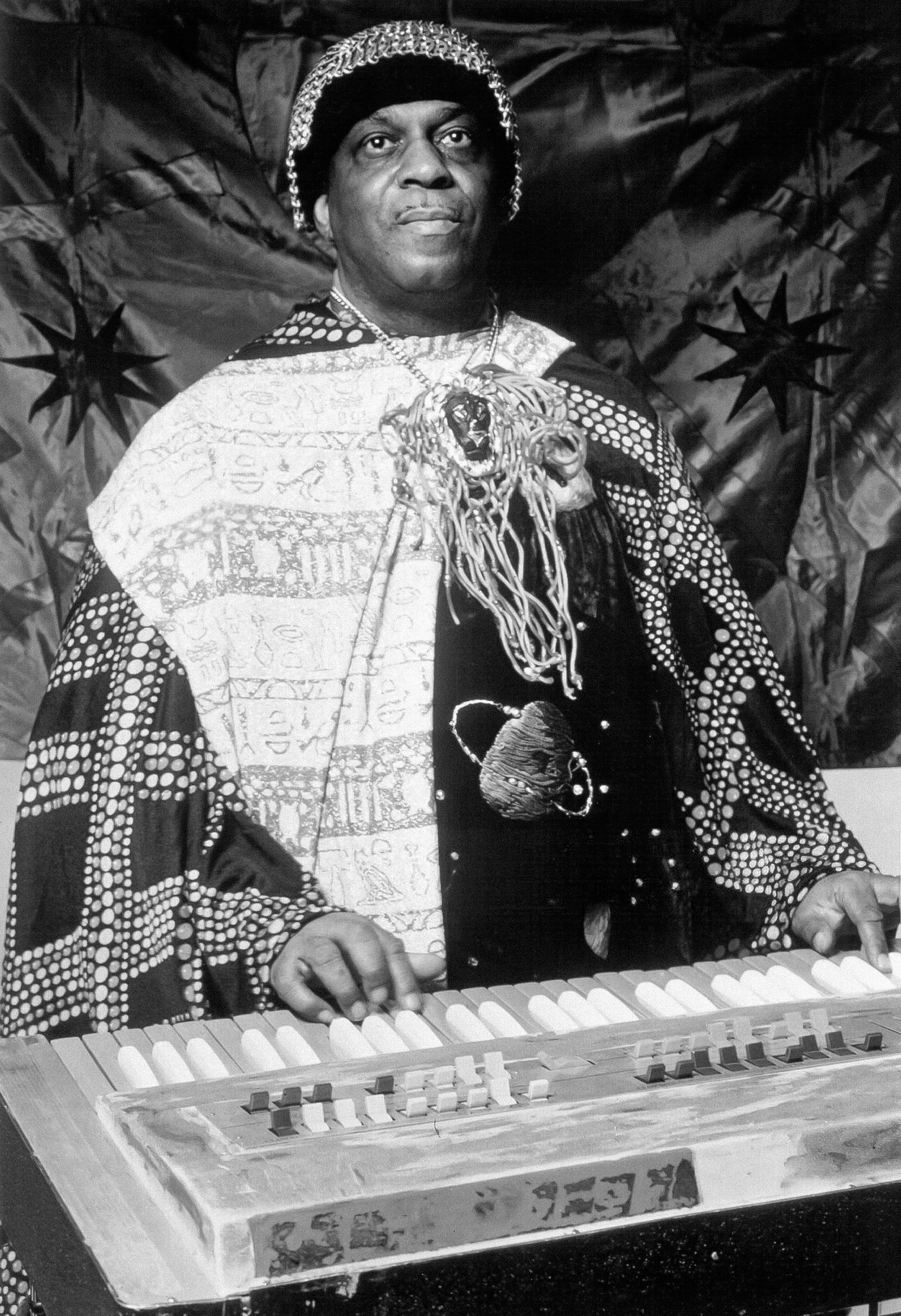

 photo: dmitry scherbie new york · cc by-sa 2.0 ↗
Pharoah Sanders
sourcesWikipedia · Jerry Jazz Musician
Pharoah Sanders arrived in New York in 1961, sometimes homeless, and found shelter and a stage name from bandleader Sun Ra before working his way into the orbit of John Coltrane, whom he joined onstage and in the studio for the free-jazz explorations of Ascension and Meditations. After Coltrane's death in 1967, Sanders channeled that intensity into a catalog of his own — Karma (1969) and Thembi (1971) chief among them — built on incantatory vamps, overblown multiphonics, and a searching, devotional sound that came to define spiritual jazz for the generation after Coltrane.
the sound in question
1969
The Creator Has a Master PlanPharoah Sanders
walk the tributaries ↓
John Coltrane1960s · Jazz / Modal jazz / Spiritual jazz
Sanders joined Coltrane's group in 1965, appearing on Ascension and Meditations, and Coltrane's late-period embrace of extended technique, non-Western modes, and unbroken spiritual intensity became the direct foundation Sanders built his own solo career on after Coltrane's death in 1967.
listen: upstream & here
1965
A Love Supreme, Pt. I – AcknowledgementJohn Coltrane
1967
Upper Egypt & Lower EgyptPharoah Sanders
listen forPlay Coltrane's “A Love Supreme, Pt. I – Acknowledgement” next to Sanders' “Upper Egypt & Lower Egypt” — both stretch a chant-like, almost liturgical repetition across a side of an album, treating the saxophone as an instrument of testimony.
Sun Ra1970s · Free jazz / Avant-garde jazz / Jazz
A homeless, unknown Sanders rehearsed daily with Sun Ra's Arkestra after arriving in New York in 1961; Sun Ra gave him food, shelter, and the stage name “Pharoah,” folding him into the Arkestra's communal household on Manhattan's Lower East Side, and the bandleader's chant-driven, cosmic arrangements shaped the ecstatic, ritualistic feel Sanders brought to his own spiritual-jazz records later in the decade.
listen: upstream & here
1959
EnlightenmentSun Ra
1971
Astral TravelingPharoah Sanders
listen forListen to Sun Ra's “Enlightenment,” with its chanted vocals riding a simmering vamp, next to Sanders' “Astral Traveling” — both trade tight song structure for a floating, incantatory groove.
Albert Ayler1960s · Free jazz / Avant-garde jazz / Jazz
Ayler arrived in New York's free-jazz scene alongside Sanders in the early-to-mid 1960s, and critics and musicians alike have long linked their raw, overblown tenor techniques — Ayler himself summed it up as “Trane was the Father, Pharoah was the Son, I am the Holy Ghost” — with Sanders absorbing Ayler's harsh, vocalized multiphonics into his own more accessible strain of free jazz.
listen: upstream & here
1964
GhostsAlbert Ayler
1969
ColorsPharoah Sanders
listen forCue Ayler's shrieking, hymn-simple “Ghosts” and then Sanders' “Colors” — both push the saxophone into raw, cry-like overtones far outside a conventional tone.