walking upstream…
Nando Boom

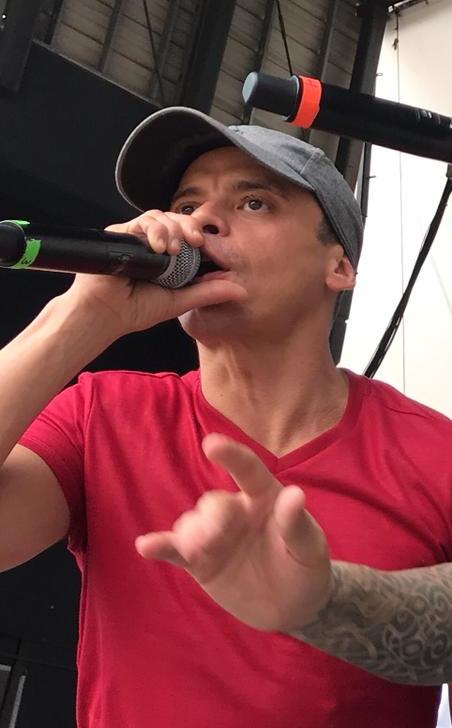
 photo: feherlandxz · cc by-sa 3.0 ↗
Nando Boom
sourcesRed Bull Music Academy Daily — Dembow · Remezcla — Tu Pum Pum · Afropop Worldwide — Old-School Panamanian Reggae Run-Down (Ellos Benia's role introducing the dem bow to reggae en español) · Wayne Marshall — Translation and Transnation in Reggaeton, Lied und populäre Kultur 53 (2008) (peer-reviewed account of the Ellos Benia recording and its role in reggaeton's prehistory)
In 1991, at a Long Island studio, engineer Dennis "The Menace" Thompson built a rhythm track to back one specific song: Nando Boom's Spanish-language cover of Jamaican dancehall star Shabba Ranks's "Dem Bow." The track outlived the song it was built for — looped and passed hand to hand until it became reggaeton's rhythmic chassis, the beat producers still call "the dembow." Born Fernando Orlando Brown in Panama City in 1970, he had sung since childhood, formalized the Nando Boom name by the mid-1980s, and drew his brother-in-law, the future star El General, back into music. Thirty-five years on, a 2026 Premio Lo Nuestro for a "Dem Bow" remix with Natti Natasha confirmed what he had long argued: reggaeton's Puerto Rican triumph carries a Panamanian seed, planted in a canal-zone migrant neighborhood decades before the genre had a name.
the sound in question
1991
Ellos Benia (Dem Bow)Nando Boom
walk the tributaries ↓
Shabba Ranks1990s · Dancehall / Reggae
Nando Boom's version wasn't a loose homage, it was close enough to count as translation. His manager, Ramón "Pucho" Bustamante, pushed engineer Dennis "The Menace" Thompson to rebuild the backing track at Long Island's HC&F studio, adding — as Red Bull Music Academy's Wayne Marshall documents — "digital timbales and other touches for extra sabor" atop Steely & Clevie's riddim. Built to serve one Spanish cover, that instrumental got a second life on the b-side of a New York single, then spread through Puerto Rico's underground parties — reggaeton historians now simply call it "the dembow."
listen: upstream & here
1990
Dem BowShabba Ranks
1991
Ellos Benia (Dem Bow)Nando Boom
listen forShabba's original rides a stripped, clattering riddim built for the deejay to chat freely over — his baritone floating on top, never locked to the drum hits. Nando Boom's cover keeps the same skeletal groove but with Dennis Thompson's added digital timbale accents filling the gaps, a small production choice that gave the track its distinct clave feel. Listen for that timbale pattern: it's the specific texture later reggaeton producers looped wholesale, the audible hinge between one dancehall single and an entire genre's backbone.
Vico C1990s · Hip-hop / Reggaeton / Christian hip-hop
Asked in 2026 who first showed him the sound he'd spend a career building, Nando Boom didn't name a Jamaican deejay. "La primera persona que escuché cantar dancehall en español fue a Vico C con 'Bomba para Afincar,'" he told the wire service EFE — the first person I heard sing dancehall in Spanish was Vico C. The two men's own timelines don't quite line up: Nando Boom had cut records years before Vico C's 1991 album. He may simply be misremembering after decades, but the testimony still names the record that made the idea click for him.
listen: upstream & heresource: EFE (via Infobae) — Nando Boom, padre del reggae en español (2026 interview ↗
1991
Bomba para AfincarVico C
1992
A DanzarNando Boom
listen for"Bomba para Afincar" pairs Vico C's rapid, syllable-packed Spanish flow with a dancehall riddim underneath — singing the dancehall cadence more than chanting it. "A Danzar," recorded the following year, takes that same dancehall pulse and pushes it toward the dancefloor: a steadier, more danceable groove built for parties rather than verses. Compare the vocal delivery on each — one still closer to rapping, the other already reaching for the singalong hook reggaeton would later chase.