walking upstream…
Morat


sourcesWikipedia · New York Times · Miami New Times · La Chicuela · Billboard Colombia
Morat formed in Bogotá in 2011, when childhood friends Juan Pablo Isaza and Juan Pablo Villamil, along with brothers Simón and Martín Vargas — who had known one another since age five — turned after-school jam sessions into a band, naming it for La Morat, the farmhouse where they first played together. Their signature texture arrived almost by accident: during a 2014 studio session, Villamil borrowed a banjo a friend had brought back from Spain and, with no banjo teachers to find in Colombia, taught himself the instrument mainly from YouTube. That self-taught banjo became the hook of 2015's breakout "Cómo Te Atreves," launching a run of nostalgic, country-tinged folk-pop albums — from "Sobre el amor y sus efectos secundarios" through "Si ayer fuera hoy" — that turned Morat into one of the biggest Spanish-language touring acts of their generation.
the sound in question
2015
Cómo Te AtrevesMorat
walk the tributaries ↓
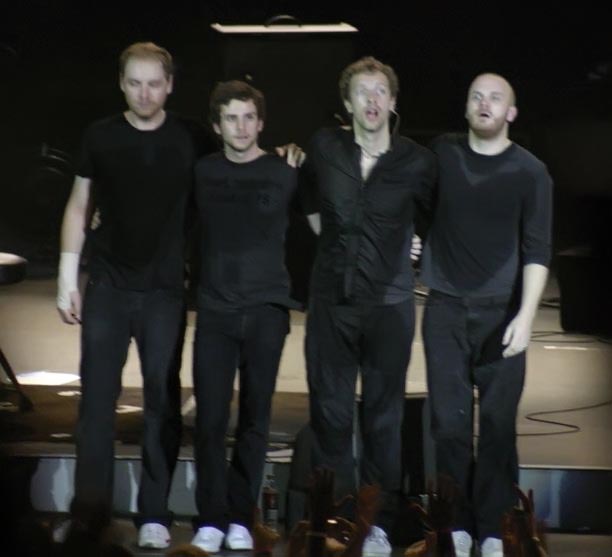
Coldplay2000s · Alternative rock / Pop rock / Post-Britpop
Per Morat's own account of their formation, their listening expanded from Colombian music toward artists including Joaquín Sabina, Bacilos, and Coldplay. It surfaces less as pastiche than as posture: a fondness for a handful of simple, repeated chords under a plainspoken vocal, with the arrangement filling in gradually so the emotional lift comes from what's added underneath rather than a change in melody.
listen: upstream & here
2002
The ScientistColdplay
2015
Cuánto Me DueleMorat
listen forSet "The Scientist" against "Cuánto Me Duele" — both are built from a short, circling chord progression at a patient tempo, letting a wounded, conversational vocal carry the song until the arrangement finally swells around it.
Carlos Vives1990s · Vallenato / Latin pop / Tropi-pop
Vives's 1990s albums, above all 'La Tierra del Olvido,' set the template Colombian pop bands of Morat's generation grew up inside: vallenato's accordion-driven, story-telling core rebuilt with rock and pop production so it could travel past its home region. Morat came up in that same Bogotá scene, and decades later put the connection in plain sight, inviting vallenato star Silvestre Dangond onto 'Lo Poco Que Yo Quiero' as what its own release described as a meeting point between the band's pop-rock and vallenato's narrative intensity.
listen: upstream & here
1995
La Tierra del OlvidoCarlos Vives
2026
Lo Poco Que Yo QuieroMorat
listen forCompare 'La Tierra del Olvido' with 'Lo Poco Que Yo Quiero' — both foreground a rolling, accordion-adjacent rhythm and a plainly-told love story delivered in a warm, unhurried voice, tropical roots dressed in glossier, radio-ready production.
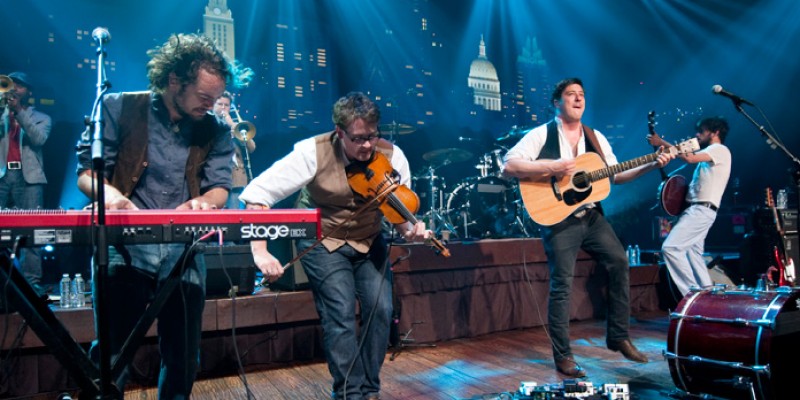
Mumford & Sons2000s–10s · Folk rock / Indie folk / Bluegrass
No interview has Morat naming Mumford & Sons directly, but the timing and texture make the resemblance hard to miss: Villamil picked up his banjo in 2014, three years into a run where Mumford & Sons had carried banjo-driven folk-rock onto pop radio worldwide, and Morat's breakout sound leans on the same instrument to do similar work — a percussive, fingerpicked pulse pushed to the front of a pop song rather than tucked into the background.
listen: upstream & here
2009
Little Lion ManMumford & Sons
2017
Besos en GuerraMorat
listen forLine up 'Little Lion Man' with 'Besos en Guerra' — both open on a bright, insistent banjo figure that drives the rhythm section rather than decorating it, giving otherwise conventional pop-rock songs their most identifiable hook.