walking upstream…
Mamie Smith

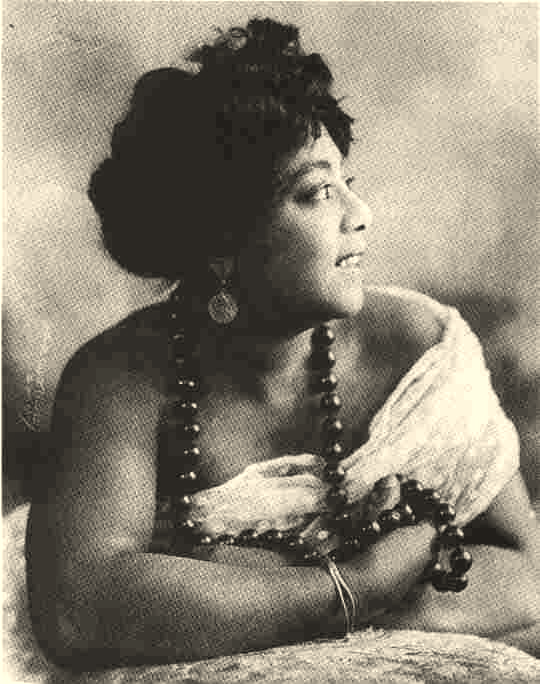
sourcesWikipedia — Mamie Smith biography (lead facts, birth/death dates) · Library of Congress National Recording Registry — essay on "Crazy Blues" (1920, industry impact) · Jas Obrecht Music Archive — "Mamie Smith · African American Registry — "Cincinnati's own, Mamie Smith!" (Sophie Tucker substitution, biography) · Red Hot Jazz Archive — Mamie Smith biography (Smart Set touring years, OKeh deal)
In 1918, Perry Bradford put Mamie Smith on stage at Harlem's Lincoln Theater to sing his song "Harlem Blues" — and two years later, retitled "Crazy Blues," it made her, at 37, the first African American to make a vocal blues recording. Born Mamie Robinson in Cincinnati in 1883, she'd already spent decades in vaudeville: dancing at ten with a touring act called the Four Dancing Mitchells, then years in a Black musical-comedy troupe before Harlem cabarets brought her to Bradford's attention. OKeh's Fred Hager took the session despite threatened boycotts over recording a Black singer at all; the record sold a million copies within months and proved a mass Black audience existed for recorded music, launching the "race records" industry that carried blues and jazz outward. Smith herself was never much of a blues singer — she was a full-throated vaudeville belter who happened to get there first.
the sound in question
1920
Crazy BluesMamie Smith
walk the tributaries ↓
Perry Bradford1910s–20s · Vaudeville / Blues / Songwriting
Bradford wrote the songs that got Smith into a studio, then spent months talking labels into recording her at all, earning the nickname "Mule" for the pestering. When OKeh's Fred Hager wavered over handing two of Bradford's songs to a Black singer, Bradford pushed back with the pitch he later put in his memoir: Smith, he promised, "will do more with those songs than a monkey can do with a peanut; she sings jazz songs with more soulful feeling than any other girls, for it's natural for us." Hager relented, and Bradford's own "Harlem Blues" — restaged and retitled — became her "Crazy Blues."
listen: upstream & here
1918
Harlem BluesPerry Bradford
1920
Crazy BluesMamie Smith
listen forThere's no separate recording of Bradford's stage number to compare against — "Harlem Blues" became "Crazy Blues" when Bradford renamed it for the session, so the two are literally the same song. Listen instead for the structure he built into it: three verses of straight 12-bar blues shot through with three of slicker, chromatic Tin Pan Alley changes, the vaudeville songwriter's craft still audible underneath Smith's belted, theatrical reading of his lyric.
Sophie Tucker1910s–20s · Vaudeville / Cabaret
When Bradford brought OKeh's Fred Hager two new songs, Hager's first choice to sing them was Sophie Tucker, the white "coon shouter" who'd already built a career belting exactly this kind of big theatrical number. Accounts differ on the mechanics — one has Hager talked out of it by Bradford, another has Tucker booked and then falling ill — but they agree Smith got the songs, and the session, only because Tucker didn't. She cut "That Thing Called Love" and "You Can't Keep a Good Man Down" that February in Tucker's place.
listen: upstream & heresource: NPR — "Mamie Smith and the Birth of the Blues Market" (Sophie Tucker substitution, Bradford's pitch to OKeh) ↗
1911
Some of These DaysSophie Tucker
1920
That Thing Called LoveMamie Smith
listen forThere's no direct cover here — Tucker never recorded the songs Smith inherited. But set her 1911 signature "Some of These Days" beside Smith's own take on "That Thing Called Love" and the kinship is in the delivery: both singers plant themselves at the center of a small hot band and shout a melody straight at the back row, prioritizing volume and theatrical swagger over the rawer blues phrasing Bessie Smith would bring three years later.