walking upstream…
Limp Bizkit


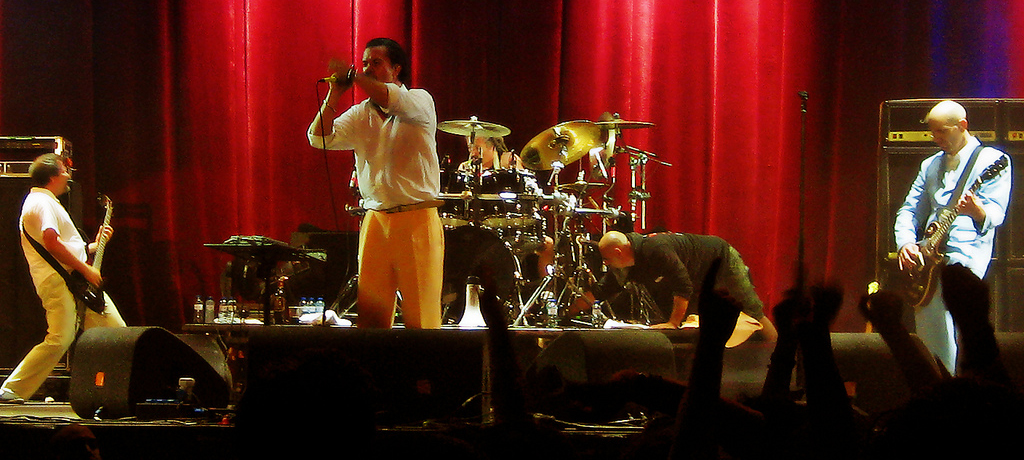
 photo: quintin soloviev · cc by 4.0 ↗
Limp Bizkit
Limp Bizkit formed in Jacksonville, Florida in 1994 around Fred Durst's rap cadence and Wes Borland's genre-hopping guitar theatrics, welding hip-hop bravado to detuned metal riffing into one of nu metal's most commercially explosive acts. Championed early by Korn, who put the then-unsigned band on tour, Limp Bizkit rode singles like "Nookie," "Break Stuff," and "Rollin'" to multi-platinum success and became the genre's biggest lightning rod, as beloved by MTV-era audiences as it was scorned by the very bands it drew from.
the sound in question
2000
Rollin' (Air Raid Vehicle)Limp Bizkit
walk the tributaries ↓
Korn1990s · Nu metal / Alternative metal / Funk metal
Fred Durst has said Korn brought "the heavier element I'd been missing" and that Jonathan Davis's dark, bullied-kid catharsis was something he related to directly; Korn's Fieldy and Jonathan Davis championed the then-unsigned band, adding them to two tours and helping broker the deal that became Three Dollar Bill, Y'all.
listen: upstream & heresource: Louder / Fred Durst classic interview — on Korn's heaviness, Rage Against the Machine, and Urban Dance Squad ↗
1994
BlindKorn
1997
CounterfeitLimp Bizkit
listen forListen for the same seven-string, drop-tuned guitar sludge and the whisper-to-scream vocal arc that telegraphs private hurt before it detonates — "Blind"'s bass-heavy crawl is the direct template for the bounce and menace in Limp Bizkit's own early riffing.
Rage Against the Machine1990s · Rap metal / Alternative metal / Funk metal
Rolling Stone reported Durst named Rage Against the Machine among his two biggest influences, and in his own account of the pre-Bizkit rap-metal landscape he singled them out (with Urban Dance Squad) as the bands "mixing it" that he was chasing before Korn "brought the heavier element."
listen: upstream & heresource: Louder / Fred Durst classic interview — on Korn's heaviness, Rage Against the Machine, and Urban Dance Squad ↗
1992
Killing in the NameRage Against the Machine
1999
Break StuffLimp Bizkit
listen forListen for a tight, palm-muted riff sitting under a rapped verse before it detonates into a shouted hook — that's the "Killing in the Name" formula, and "Break Stuff" runs the identical build-and-explode structure, just swapping de la Rocha's protest fury for a nakedly personal tantrum.
Faith No More1990s · Alternative metal / Funk metal / Experimental rock
The same Rolling Stone piece names Faith No More as Durst's other "biggest influence" alongside Rage Against the Machine, and Limp Bizkit opened Faith No More's 1997 Album of the Year tour — a bill critics later pointed to as passing the genre-blending torch straight into nu metal, though Faith No More's own fans gave the young band a famously hostile reception.
listen: upstream & heresource: Rolling Stone (2015) — "Durst cited both bands as two of his biggest influences" (RATM and Faith No More) ↗
1989
EpicFaith No More
1999
NookieLimp Bizkit
listen forListen for the whiplash between a crooned, almost tender verse and a barked or rapped hook — "Epic"'s pivot from Mike Patton's melodic verse into its snarled chorus is the same trick Durst runs on "Nookie," swinging from a wounded falsetto hook to spat-out verses.