walking upstream…
Lauren Daigle


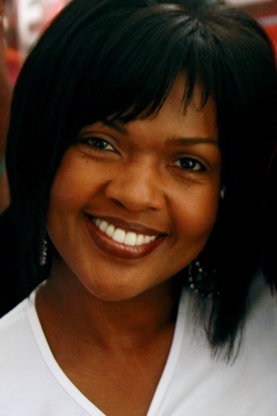
 photo: justin higuchi · cc by 2.0 ↗
Lauren Daigle
sourcesWikipedia · Stereogum · Christian Post
Lauren Daigle grew up in Lafayette, Louisiana, in a household her mother called 'the music box' for how constantly she sang, steeped early in the region's zydeco, blues, and Cajun textures alongside the church choir she would later lead as a student at LSU. A bout with cytomegalovirus at fifteen kept her out of school for two years and pushed her toward voice lessons, the start of a serious vocal education that had nothing to do with a career plan. Signed to Centricity Music in 2013, she broke through with 2015's 'How Can It Be' before 2018's 'Look Up Child' turned her into contemporary Christian music's most successful crossover artist in a generation, its lead single 'You Say' climbing the pop charts on the strength of a smoky, powerhouse alto critics reflexively compared to Adele's.
the sound in question
2018
You SayLauren Daigle
walk the tributaries ↓
Adele2010s · Pop / Soul / Pop soul
Daigle has said hearing Adele for the first time was a turning point in accepting her own voice: 'I remember when I heard Adele for the first time I was like, Wow, wait, this is someone who has a husky register. It was something I could grab a hold of.' Critics picked up the same thread when 'Look Up Child' arrived — Stereogum's review noted 'Still Rolling Stones' plays like a direct answer to 'Rolling in the Deep,' both songs building from a hushed, confessional verse into a stomping, gospel-tinged belt.
listen: upstream & heresource: 1079ishot.com ↗
2010
Rolling in the DeepAdele
2018
Still Rolling StonesLauren Daigle
listen forPlay 'Rolling in the Deep' against 'Still Rolling Stones' back to back — both escalate from a low, husky verse into a driving, percussive chorus that turns private reckoning into a full-throated, rhythmically insistent release.
Amy Grant1980s · Contemporary Christian / Pop rock / Soft rock / Gospel
Grant is the genre's founding crossover figure — her 1991 single 'Baby, Baby' made her the first CCM artist to top the pop Hot 100 — and by the 2010s she had become something closer to a mentor to Daigle, the two appearing together in the documentary 'The Jesus Music' and Grant later presenting Daigle with the Gospel Music Association's Global Impact Honor, explicitly framed as passing the torch to the genre's next trailblazer. The influence Daigle inherits isn't a vocal mannerism but a business template: prove a plainly personal, faith-rooted song can be produced and promoted like mainstream adult-contemporary pop without losing the church audience that built the career.
listen: upstream & heresource: Gospel Music Association ↗
1991
Baby, BabyAmy Grant
2015
How Can It BeLauren Daigle
listen forSet 'Baby, Baby' next to 'How Can It Be' — both wrap a direct, almost conversational lyric in glossy, radio-built adult-contemporary production, the arrangement doing the work of making a personal statement sound like a hit single rather than a hymn.
CeCe Winans1990s · Gospel / Contemporary Christian music / R&B
Winans, the most-awarded female gospel vocalist in Grammy history, has been named among the gospel and R&B singers Daigle grew up admiring, and the two have since become genuine collaborators and friends — recording a duet version of 'Believe for It,' trading performances at the K-LOVE Fan Awards, and appearing together to talk about calling and ministry. Describing the sound generically rather than crediting a specific technique to a specific record: what carries over is the church tradition itself, a verse held back and plain before it opens into full-voiced, melisma-heavy runs that read as testimony rather than vocal display.
listen: upstream & heresource: Premier ↗
1999
Alabaster BoxCeCe Winans
2015
O'LordLauren Daigle
listen forCompare Winans's 'Alabaster Box' with Daigle's 'O'Lord' — both build from a restrained, almost spoken verse into an extended, ad-libbed vocal climax, the kind of unhurried release more associated with a church service than a pop bridge.