walking upstream…
Jimmy Dorsey
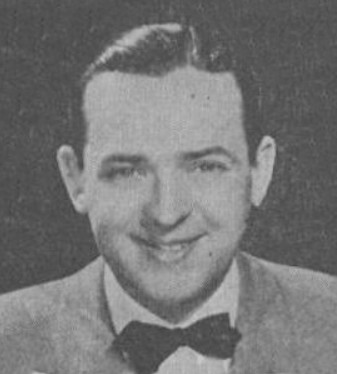 photo: public domain ↗
Jimmy Dorsey
sourcesWikipedia — Jimmy Dorsey (lead/overview) · AllMusic — Jimmy Dorsey biography, by William Ruhlmann (bio, father's teaching, Whiteman/Goldkette years) · Pennsylvania Center for the Book — Jimmy Dorsey, by Nicole DeCicco (bio, father's instruction, 1935 split) · The Syncopated Times — Jimmy Dorsey · CerraJazz Substack — Jimmy Dorsey in the Jazz Literature, by Steven Cerra, quoting Gunther Schuller's The Swing Era and Richard Sudhalter's Lost Chords (Wiedoeft and Dodds/Bigard/Simeon debts) · The Pop of Yestercentury — Jimmy Dorsey Tells His Story, by AJS, quoting Sudhalter's Lost Chords (Wiedoeft influence on Dorsey's alto style)
Jimmy Dorsey was born on Leap Day 1904 in the coal town of Shenandoah, Pennsylvania, and was playing cornet in his father's band by age seven, nearly two years ahead of his younger brother Tommy's own start. He worked the same territory bands and Paul Whiteman's orchestra his brother later joined, then co-led the Dorsey Brothers Orchestra until Tommy stormed off the bandstand in 1935 over a tempo dispute. Jimmy simply kept the personnel and put his own name on the marquee, building the era's most commercially dominant band on Latin-tinged hits like "Amapola" and the Bob Eberly-Helen O'Connell duets. Musicians across the color line, from Johnny Hodges to Charlie Parker, rated his technique above nearly anyone's; he was rarely jazz's most inventive voice, but for two decades he may have been its most complete one.
the sound in question
1941
AmapolaJimmy Dorsey
walk the tributaries ↓
Thomas Francis Dorsey Sr.Brass band
Thomas Francis Dorsey Sr. was a Pennsylvania coal miner by day and a strict music teacher and marching-band director by night, and Jimmy was his first pupil: by seven he was playing cornet in his father's Catholic Church band, and at ten he was pulled out as a featured cornet soloist the day John Philip Sousa's band passed through town. Only then did he switch to C-melody, then alto saxophone and clarinet — a discipline biographer Nicole DeCicco notes he shared, practicing alongside younger brother Tommy, "throughout their childhood."
listen: upstream & here
No known recordingThomas Francis Dorsey Sr.
1957
So RareJimmy Dorsey
listen forThere's no recording of the father's own band, so listen instead for what the training produced fifty years on. Jimmy's final hit, "So Rare," is built from long, unbroken alto lines that never crack or reattack — a cornet player's breath control transplanted onto reeds, the same clean fundamentals a ten-year-old was drilled on decades before any bandleader, brother, or rival ever heard him play.
Rudy Wiedoeft1910s–20s · Novelty / Vaudeville
By the mid-1920s the best-selling name in saxophone belonged to Rudy Wiedoeft, a violinist-turned-reedman whose triple-tongued novelty records taught a generation what the instrument could do besides carry a melody. Dorsey, who'd come to the horn from cornet rather than violin, picked up the trick anyway — jazz historian Scott Yanow writes he was "masterful at triple-tonguing on his alto like the great technician Rudy Wiedoeft." When Dorsey cut his first sides as a bandleader in 1929, critic Gunther Schuller named "Beebe" and "Oodles of Noodles" flat-out "Wiedoeft-style solo numbers." Even Richard Sudhalter, defending Dorsey's jazz credentials, conceded: "a touch of Wiedoeft, yes."
listen: upstream & here
1918
SaxophobiaRudy Wiedoeft
1929
BeebeJimmy Dorsey
listen forCue up Wiedoeft's "Saxophobia" and listen for the machine-gun triple-tonguing — one note fired three times so fast it blurs into a trill. Dorsey's 1929 solo on "Beebe," his first record as a bandleader, runs the same trick at speed, alto bursts of triple-tongued notes stitched between long melodic runs. It's the one openly borrowed flourish in an otherwise personal style.
Johnny Dodds1920s · New Orleans jazz / Blues
In his landmark history The Swing Era, Gunther Schuller singled out one Dorsey recording as an exception to his usual skepticism: the 1929 "Praying the Blues," a low-register clarinet solo he called "remarkably beautiful" and, tellingly, "authentic." But Schuller traced the source directly, writing that the performance "is, of course, indebted to Dodds and Bigard and Omer Simeon" — the New Orleans clarinetists whose blues vocabulary had migrated to Chicago a few years earlier. Dodds, who'd cut his own blues-drenched sides with Louis Armstrong's Hot Seven around the same era, is the first name Schuller reaches for.
listen: upstream & here
1927
Wild Man BluesJohnny Dodds
1929
Praying the BluesJimmy Dorsey
listen forDodds' clarinet on "Wild Man Blues" stays low in the horn's chalumeau register, bending notes with a vocal moan more felt than played. Dorsey's clarinet on "Praying the Blues," cut two years later, works that same low register and unhurried, blues-drenched phrasing — a rare moment, even skeptical critics agreed, when Dorsey sounded less like a technician and more like he'd absorbed Dodds' own tradition.