walking upstream…
INXS


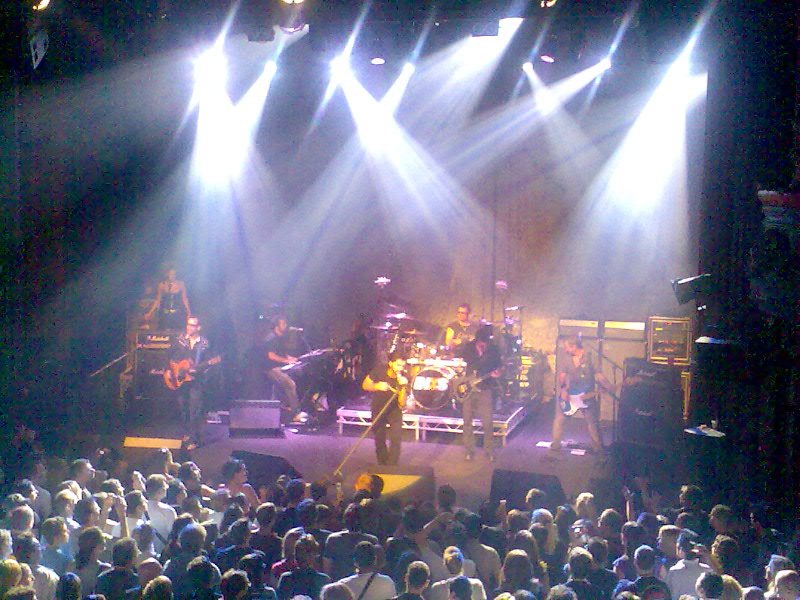
sourcesRolling Stone · Encyclopedia.com · uDiscover Music · Wikipedia
INXS formed in Sydney in 1977 as the Farriss Brothers, built around three musical siblings — Tim, Andrew, and Jon Farriss — plus Kirk Pengilly, Garry Gary Beers, and schoolmate Michael Hutchence, whose restless charisma made him frontman almost by default. Grinding through 250-plus pub shows a year under names like the Vegetables, they fused Australian hard-rock grit with soul, funk, and new wave, a combination Hutchence later described simply as 'the twain met in our heads, and we started mixing it together.' That synthesis crystallized commercially on 'Listen Like Thieves' (1985) and exploded worldwide with 'Kick' (1987), whose run of singles — 'Need You Tonight,' 'Devil Inside,' 'New Sensation,' 'Never Tear Us Apart' — made INXS the biggest rock export Australia had produced. Hutchence's death in 1997 ended the band's creative peak, though it toured on with other singers until 2012.
the sound in question
1987
Need You TonightINXS
walk the tributaries ↓
Roxy Music1970s–80s · Art rock / Glam rock / Sophisti-pop
Tim Farriss was a Christian youth-group leader until a copy of Roxy Music's 'For Your Pleasure' 'changed my life,' pulling him into playing bands with Kirk Pengilly and Garry Gary Beers. The pre-INXS lineups — the Farriss Brothers, then the Vegetables — built their pub sets largely out of Roxy Music covers padded with 'terrible originals,' meaning the group that became INXS literally learned to play as a band inside Roxy Music's songs before writing their own.
listen: upstream & here
1973
For Your PleasureRoxy Music
1987
Never Tear Us ApartINXS
listen forSet the title track 'For Your Pleasure' against 'Never Tear Us Apart': both let a cool, theatrical vocal float over a slow-building, cinematic arrangement, with a mournful saxophone (Andy Mackay there, Kirk Pengilly here) doing as much emotional work as the singer.
Chic1970s · Disco / Funk / R&B
INXS's turn toward outright dancefloor funk peaked on 'The Swing' (1984), whose lead single 'Original Sin' was produced by Chic co-founder Nile Rodgers, fresh off David Bowie's 'Let's Dance.' Band members later pointed to the 'Chic funk era' of the late 70s, alongside Talking Heads and Blondie, as proof a rock band could chase the dancefloor without losing its identity — and Rodgers brought Chic's own clipped rhythm-guitar 'chank' and elastic bass directly into the session.
listen: upstream & here
1979
Good TimesChic
1984
Original SinINXS
listen forLine up 'Good Times' with 'Original Sin': both are anchored by an insistent, syncopated bassline under a tightly muted rhythm-guitar chop, built to move a dancefloor first and a rock crowd second.
Sly and the Family Stone1960s-70s · Funk / Soul / Psychedelic rock / R&B
Michael Hutchence described the band's teenage listening as split between Australian hard rock and the soul and funk of Aretha Franklin and Sly Stone — 'somehow, the twain met in our heads, and we started mixing it together,' a fusion he called unusual for Australia's guitar-rock scene at the time. Sly and the Family Stone's interlocking, syncopated funk rhythm section became a direct model for the choppy, percussive guitar-and-bass interplay that carried INXS's mid-80s singles.
listen: upstream & here
1969
Thank You (Falettinme Be Mice Elf Agin)Sly and the Family Stone
1985
What You NeedINXS
listen forCompare 'Thank You (Falettinme Be Mice Elf Agin)' with 'What You Need': both ride a popping, syncopated bass locked tight against a clipped rhythm guitar, the groove itself doing the hook's job before the chorus even arrives.